6 Standing Workouts for a Stronger, Leaner Core in 30 Days After 50
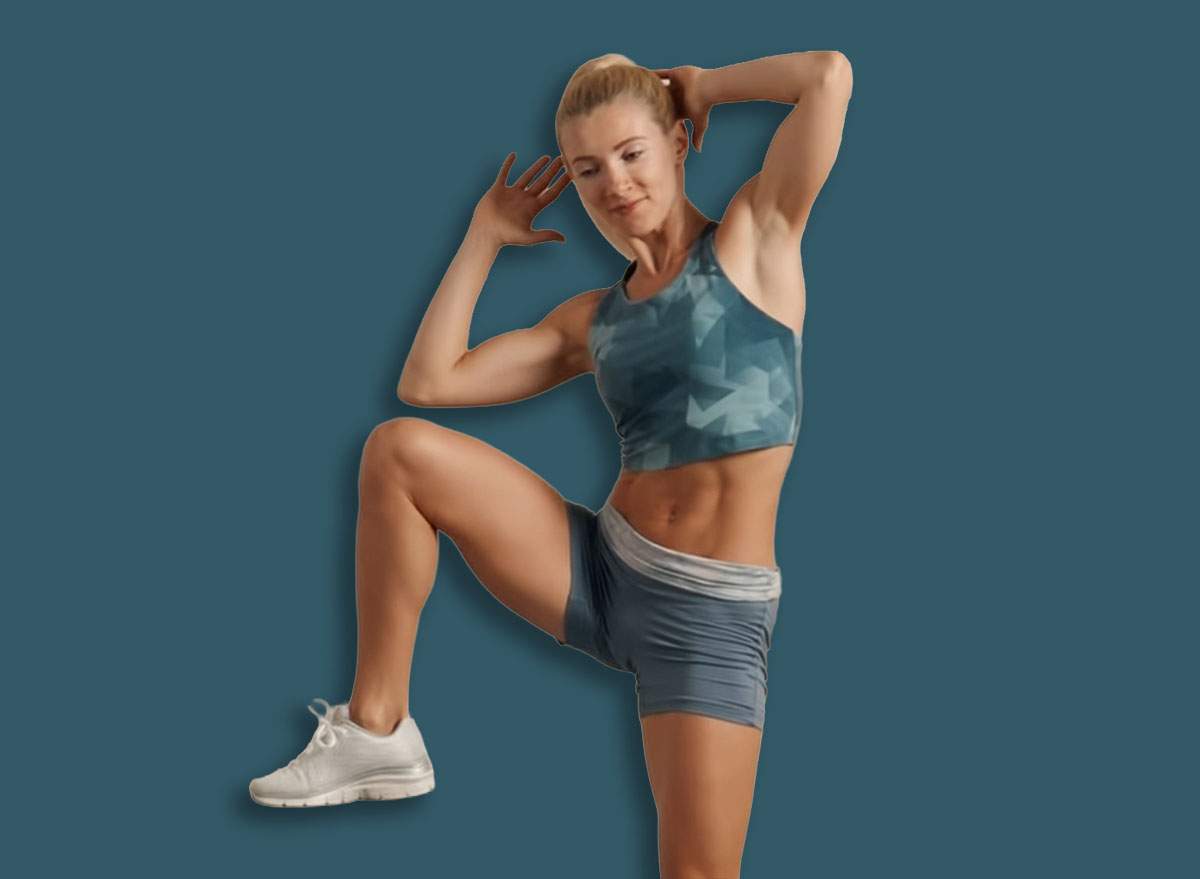

A stronger core after 50 doesn’t come from endless crunches, it comes from standing movements that force your entire body to stabilize, rotate, and control tension from head to toe. When you train on your feet, your core works the way it’s designed to: supporting balance, protecting the spine, and transferring force through natural movement patterns you use all day. This type of training wakes up muscles crunches barely touch, including deep stabilizers that pull your waistline tighter and make your midsection feel more powerful and connected. With consistent practice, your core will grow stronger in a way that actually shows up in daily life.
Standing core work also puts your posture front and center, which becomes crucial as you cross into your 50s and beyond. Long hours sitting at a desk or leaning over a phone weaken your hips, slow down your stabilizers, and collapse your torso, all of which contribute to belly overhang, back tightness, and balance issues. These standing workouts reverse that pattern by demanding tall alignment, controlled mechanics, and coordinated movement. Each rep trains your core to support better posture automatically, even when you’re not thinking about it.
This routine targets your obliques, lower abs, hips, and deep core fibers simultaneously, creating a full 360-degree training effect. Instead of isolating one area, you strengthen the system as a whole, which naturally tightens your waist, improves mobility, and boosts everyday strength. Every workout stacks tension and control in a way that reshapes your midsection over 30 days when you stay consistent. Stand tall, brace your core, and work through each move with slow precision, your body will adapt quickly.
Standing Cross-Body Knee Lifts
This pattern blends rotation, stability, and lower-body control to activate your entire midsection from multiple angles. As your knee drives upward and your torso rotates toward it, your obliques fire hard while your hips work to stabilize underneath you. The standing position forces deeper engagement through the core than floor variations because you must control shifting weight and maintain posture throughout the movement. This creates a powerful tightening effect through your waist while also strengthening your hip flexors and lower abs, which tend to weaken after 50.
How to Do It:
- Stand with feet hip-width apart and hands at your temples.
- Drive your right knee toward your left elbow as you rotate your torso.
- Return to standing tall.
- Switch sides and continue alternating.
- Move for 40–60 seconds.
Standing Oblique Reach Pulls
This move sculpts your waistline by creating length, tension, and contraction through the obliques with every rep. The overhead reach stretches your side body while the pull-down motion forces your core to compress and stabilize. Unlike crunches, this standing version strengthens your obliques through full range of motion, which improves mobility and tightens your midsection from all angles. The rhythmic pattern also engages your hips and shoulders, making it a powerful full-body core drill.
How to Do It:
- Stand tall with arms overhead.
- Reach to the right as you pull your left knee upward.
- Bring your hands down toward your knee in a controlled crunching motion.
- Return to standing tall.
- Continue alternating sides for 40–60 seconds.
Standing Hip-Hinge Rotations
This drill strengthens your deep core while improving hip movement, a combination that dramatically improves posture and functional strength. The hinge position loads your posterior chain, forcing your core to brace harder than a traditional rotation. As you twist with control, your obliques and transverse abdominis activate to prevent your spine from collapsing or over-rotating. This tension creates a strong tightening effect around your midsection while teaching your body to stabilize under dynamic movement, something floor exercises can’t replicate.
How to Do It:
- Stand with feet slightly wider than hips.
- Hinge forward slightly with a flat back.
- Extend your arms and rotate slowly to one side.
- Rotate to the other side with control.
- Continue for 30–45 seconds.
Side-Step Crunch Lifts
This standing move targets your obliques, hips, and lower abs with a combination of lateral movement and controlled compression. As you step to the side and lift your knee, your core adjusts to keep your torso tall while creating a tightening effect through the waistline. This pattern improves coordination, strengthens the muscles responsible for balance, and trains your core to support movement from multiple angles. The standing mechanics also boost calorie burn and challenge stabilizers often missed after age 50.
How to Do It:
- Stand tall with hands behind your head.
- Step to the right and lift your right knee toward your elbow.
- Return to center and repeat on the left.
- Keep your core tight throughout.
- Continue for 40–60 seconds.
Standing Lean-Back Holds with Pulses
This drill fires your deep core muscles through isometric tension and small-range pulses that challenge your stabilizers. As you lean back slightly, your transverse abdominis switches on to support your spine, creating a concentrated contraction through your lower abs. The pulses intensify the demand without stressing your lower back, making this move safe and highly effective for core strengthening after 50. The standing angle adds a balance component, which increases stabilizer activation even more.
How to Do It:
- Stand tall with hands crossed over your chest.
- Lean back slightly while keeping your spine long.
- Pulse forward and back in small, controlled motions.
- Maintain tension throughout your core.
- Continue for 30–45 seconds.
Standing Twist Taps
This rotational pattern sculpts your obliques while training your core to resist momentum and maintain control through movement. As you twist and tap your hand toward your opposite knee, your waist tightens and your hips stabilize underneath you. This move wakes up deep rotational muscles that support your spine and naturally pull your midsection inward. It’s a simple but powerful way to improve mobility, increase calorie burn, and build a leaner, more responsive core.
How to Do It:
- Stand with feet hip-width apart.
- Twist your torso as you tap your hand toward your opposite knee.
- Return to standing and switch sides.
- Keep your core braced the entire time.
- Continue for 40–60 seconds.