The 7-Minute Morning Routine That Restores Leg Strength Faster Than Squats After 55
Morning sets the tone for how your legs feel all day. After 55, stiffness can creep in quickly, and long gaps between movements often make it harder to feel strong once you finally get going. A short, intentional routine early in the day helps wake up the hips, knees, and ankles while reinforcing balance and control before fatigue shows up. That early movement also improves circulation and joint lubrication, which makes everyday tasks feel smoother from the first step out of bed.
Leg strength at this stage of life responds best to consistency and quality. You don’t need long workouts or heavy loading to remind your body how to produce force and stay stable. Simple movements performed with control help restore coordination between muscles that support your hips and knees. Over time, that coordination leads to better walking mechanics, stronger posture, and more confidence when changing direction or standing up from low positions.
This seven-minute routine brings those pieces together. It uses two foundational exercises that strengthen, balance, and stabilize your hips without overwhelming your joints. Below, you’ll find the habits that make morning routines stick, followed by a quick workout you can repeat daily to rebuild lower-body strength and start your day feeling capable.
The Habits That Establish a Strong Morning Routine

Strong legs will thrive with daily patterns that support movement quality and recovery. Morning routines work as they reduce decision fatigue and help your body relearn how to move well before the stress of the day builds. When these habits stay consistent, leg strength improves faster and feels more sustainable.
- Start small and repeat daily: Short routines are easier to stick with and create momentum without draining energy.
- Move through full ranges: Controlled motion through comfortable depth improves joint health and muscle activation.
- Focus on balance and control: Stability challenges train your nervous system and support safer movement patterns.
- Breathe with each rep: Steady breathing helps reduce stiffness and improve coordination.
- Finish feeling better than you started: The goal is readiness, not fatigue.
The Wake Up Legs Flow

What you need
Just your body and a clear floor space. Optional support from a chair or wall is fine if balance feels limited. The routine takes seven minutes, start to finish.
The Routine
- Alternating Reverse Lunge: Perform 40 seconds of work, followed by 20 seconds of rest.
- Glute Bridge: Perform 40 seconds of work, followed by 20 seconds of rest.
Complete three total rounds. Rest as needed between rounds.
Directions
Move slowly and stay controlled throughout each exercise. Focus on smooth transitions and steady breathing. If any movement feels uncomfortable, shorten the range or use light support. Read on for the detailed instructions.
Alternating Reverse Lunge
Reverse lunges strengthen single legs while reducing joint stress. Stepping backward allows better control through the hips and knees, which helps reinforce balance and coordination. This movement strengthens the quads and glutes while also challenging stability through your ankles and core. Over time, it improves confidence during walking, stair climbing, and direction changes.
How to do it:
- Stand tall with your feet hip-width apart.
- Step one foot back and lower into a comfortable lunge.
- Keep your chest upright and your front heel grounded.
- Press through your front foot to return to standing.
- Alternate legs with each repetition.
Best variations:
- Supported reverse lunge, holding a chair
- Short step reverse lunge
- Slow tempo reverse lunge.
Glute Bridge
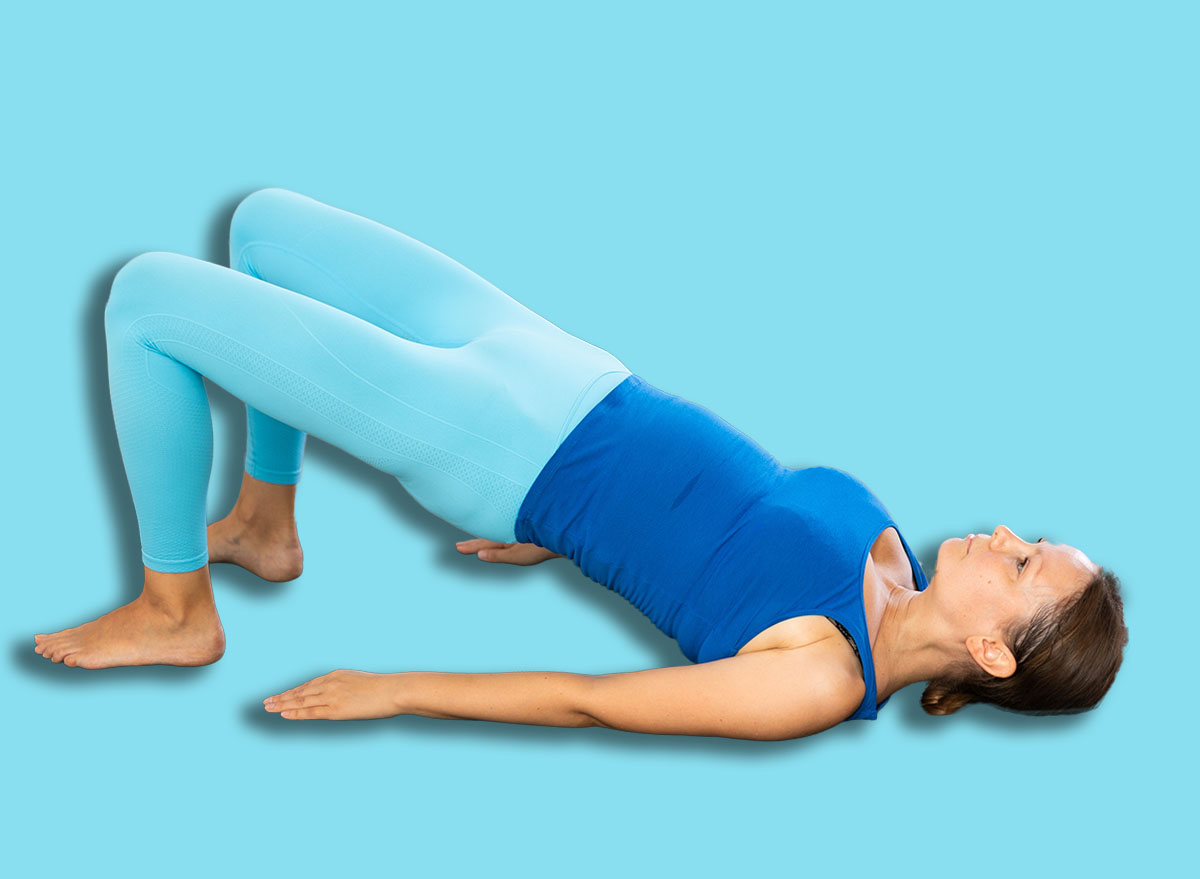
Glute bridges strengthen the muscles that protect your hips and lower back. They reinforce hip extension, which plays a major role in standing, walking, and maintaining posture. This exercise also helps counteract stiffness from prolonged sitting and improves pelvic control. When performed daily, it supports smoother movement and better power transfer through the legs.
How to do it:
- Lie on your back with knees bent and feet flat on the floor.
- Place your arms at your sides and gently brace your core.
- Press through your heels and lift your hips.
- Squeeze your glutes at the top without arching your back.
- Lower slowly and repeat.
Best variations:
- Single-leg glute bridge
- Bridge hold with slow breathing
- Elevated feet glute bridge.
The Best Tips for Rebuilding Leg Strength After 55

Rebuilding leg strength works best when daily movement pairs with smart recovery and awareness. These small adjustments help your routine deliver consistent progress without wearing you down. Over time, they make strength feel natural again instead of forced.
- Move every morning: Even brief routines reinforce signals of strength to your nervous system.
- Respect joint comfort: Smooth motion beats depth or speed every time.
- Stay upright during the day: Good posture supports better leg mechanics.
- Walk with purpose: Short, intentional walks reinforce the strength built during your routine.
- Fuel and hydrate early: Proper nutrition supports muscle repair and energy.
Stick with this seven-minute flow, and your legs will feel steadier, stronger, and more responsive as the days stack up.
References
- Pedersen H, Saeterbakken AH, Fimland MS, Iversen VM, Schoenfeld BJ, Stien N and Andersen V (2022) Effects of one long vs. two short resistance training sessions on training volume and affective responses in resistance-trained women. Front. Psychol. 13:1010596. doi: 10.3389/fpsyg.2022.1010596
- García-Hermoso, Antonio et al. “Muscular Strength as a Predictor of All-Cause Mortality in an Apparently Healthy Population: A Systematic Review and Meta-Analysis of Data From Approximately 2 Million Men and Women.” Archives of physical medicine and rehabilitation vol. 99,10 (2018): 2100-2113.e5. doi:10.1016/j.apmr.2018.01.008