If You Can Hold a Bridge This Long After 55, Your Core Strength Is Stronger Than 90% of Peers
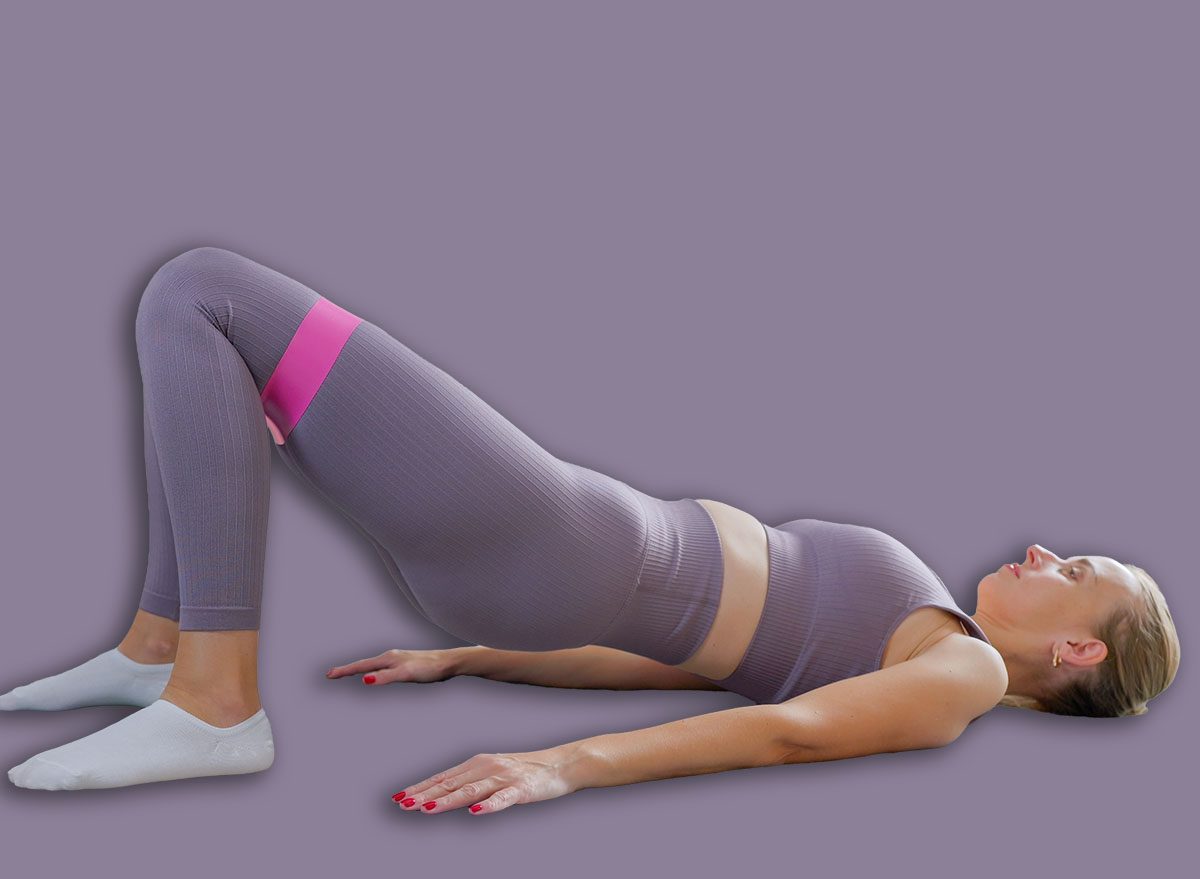

If you’re looking for a powerful exercise that fires up your lower body, consider adding the bridge to your workouts. Strong glutes and thighs are essential for performing daily tasks like walking and climbing stairs. But that’s not all this simple bodyweight exercise can do. The bridge can improve posture, activate the core, and help open up the hips. It’s an excellent move to prioritize if your job requires you to sit at a desk all day.
Whether or not you already include the bridge in your fitness routine, it’s a great way to test your core strength. We spoke with Nico Gonzalez, Balanced Body Educator and Global Movement Trainer & Educator, certified through ACE (the American Council on Exercise) for Personal Training and through NCPT for Pilates, who says that if you can hold a bridge this long after 55, your core strength is stronger than 90% of your peers.
Why Is the Bridge Effective for Building Core Strength?
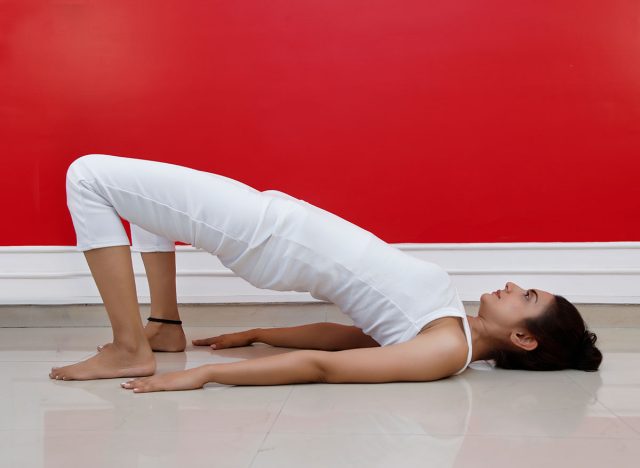
The bridge is a simple yet effective floor exercise that can contribute to better core strength—and experts love it.
“I’m 50 years old, and after 25 years of teaching Pilates, this is the move I still come back to more than any other—not because it’s flashy, but because it fixes the thing most core work ignores: your ability to stabilize your spine while your limbs are moving. That’s functional strength,” explains Gonzalez. “That’s what lets me carry equipment into the studio, get up off the floor without using my hands, and still teach six classes a day without my back staging a protest.”
How To Perform a Bridge
Here’s how to perform a bridge with proper form—and how long to hold it.
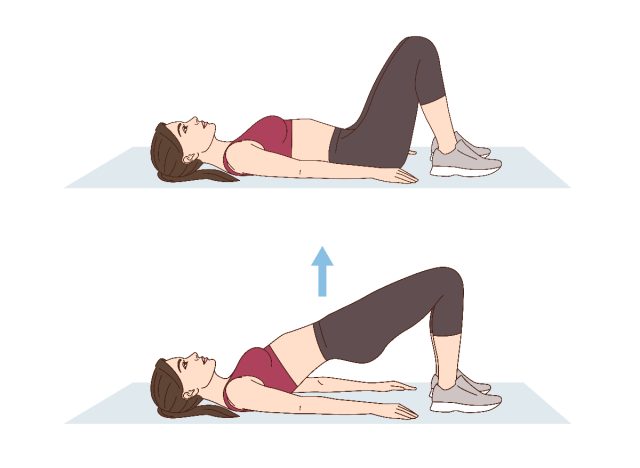
- Begin by lying flat on your back with bent knees and feet flat on the mat, hip-width apart.
- Place your arms at your sides, palms facing down and pressing into the mat.
- Press through your feet and lift your hips to form a straight line from shoulders to knees.
- Squeeze your glutes at the top without overarching your lower back.
- For a modification, once you reach a stable bridge, extend one leg straight out, holding for 2 to 3 seconds.
- Return that foot to the mat, and switch legs.
- A solid benchmark is completing 2 to 3 sets of 8 to 10 reps on each side.
How Long To Hold It
If you’re a beginner, skip the leg extension and simply aim to hold a classic bridge for 20 to 30 seconds to build a solid foundation. If you feel it in your lower back, consider placing a Pilates ball or small pillow between your knees for additional glute activation.
For those who are more advanced, try adding a resistance band just above the knees to further challenge your hip stability. Or, perform your glute bridges on an unstable surface, like a Pilates pad or folded towel, to rev up the demand on your core.
Why These Pro Tips Work
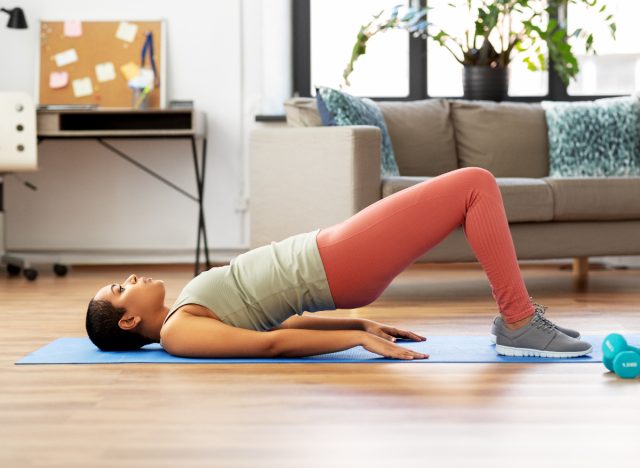
Gonzalez trains his core in a manner real life demands it—not through crunches, but by building “stability under movement.”
“This move strengthens the glutes and hamstrings, which are often the first to weaken as we age, and it protects the lower back in a way that’s kept me teaching without injury for two and a half decades. It’s low-impact on the joints, which matters more every year, but it builds real, usable strength—the kind that shows up when I’m demonstrating a class, not just when I’m looking in the mirror,” Gonzalez adds.