5 Chair Exercises That Restore Balance Faster Than Tai Chi After 60

Tai Chi offers a wonderful way to build body awareness, coordination, calm breathing, and smooth movement. For many adults over 60, chair exercises provide an even more approachable starting point for rebuilding balance because the support is right there. A sturdy chair gives you confidence while your feet, ankles, hips, legs, and core practice the control that steady movement requires.
Balance improves when your body gets regular chances to shift weight, lift one leg, control posture, and stay tall through small changes in position. Chair exercises make those skills easy to practice every day. You can train seated, standing, or lightly supported, which allows you to build strength and steadiness at your own pace.
When I coach balance work, I look for exercises that help people feel successful right away. A strong routine should build confidence, improve control, and make everyday movement feel smoother. These five chair exercises train the key pieces of balance: leg strength, hip stability, ankle control, posture, and single-leg confidence.
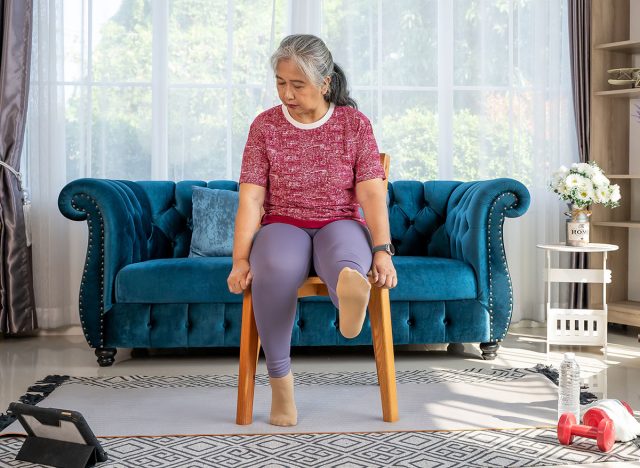
Seated Marches
Seated marches train your hip flexors, quads, and core while providing a supported way to practice lifting one leg at a time. Stronger hip flexors help you walk with a cleaner stride, step over objects, and climb stairs with better control. The chair allows you to sit tall and focus on smooth knee lifts, which build coordination through your hips and midsection. This simple drill sets the tone for better balance because each rep teaches your body to move one leg while staying steady.
Muscles Trained: Hip flexors, quadriceps, core.
How to Do It:
- Sit tall near the front edge of a sturdy chair.
- Plant your feet flat on the floor.
- Brace your core and lift your chest.
- Raise one knee toward your chest.
- Lower your foot with control.
- Alternate legs in a steady rhythm.
Recommended Sets and Reps: Perform 3 sets of 10 to 12 reps per leg. Rest for 30 seconds between each set.
Best Variations: Paused seated marches, slower seated marches, banded seated marches.
Form Tip: Keep your posture tall as your knee lifts.
Sit-to-Stand
Sit-to-stands train your glutes, quads, hamstrings, and core while helping you practice one of the most important balance skills after 60. Every rep builds strength in a seated position, which carries over to standing up from the couch, getting out of the car, and rising from the dinner table. The chair gives you a clear target and helps you control the lowering phase. Smooth sit-to-stands build leg strength, improve posture, and boost confidence in a single practical movement.
Muscles Trained: Glutes, quadriceps, hamstrings, core.
How to Do It:
- Sit near the front edge of a sturdy chair.
- Place your feet flat on the floor, about hip-width apart.
- Brace your core and lean your torso slightly forward.
- Press through your feet to stand tall.
- Squeeze your glutes at the top.
- Lower back to the chair with control.
Recommended Sets and Reps: Perform 3 sets of 8 to 12 reps. Rest for 45 seconds between each set.
Best Variations: No hands sit-to-stands, slower sit-to-stands, paused sit-to-stands.
Form Tip: Press through your whole foot and stand tall at the top.
Chair-Supported Single-Leg Balance
Chair-supported single-leg balance trains your feet, ankles, calves, hips, and core while giving you a safe support point. Standing on one leg helps your body make small corrections from the ground up, which builds better control for walking, turning, and stepping off curbs. The chair adds confidence while your standing leg learns to hold position. A light touch works well because your body still practices balance while the support stays close.
Muscles Trained: Foot stabilizers, calves, glutes, hip stabilizers, core.
How to Do It:
- Stand behind a sturdy chair and place your hands lightly on the backrest.
- Shift your weight onto one foot.
- Lift your opposite foot slightly off the floor.
- Brace your core and keep your hips level.
- Hold the position while breathing steadily.
- Switch sides after each hold.
Recommended Sets and Reps: Perform 3 rounds of 15 to 30 seconds per leg. Rest for 30 seconds between rounds.
Best Variations: Fingertip support holds, knee-lift holds, longer balance holds.
Form Tip: Keep your weight centered over your standing foot.
Standing Heel Raises
Standing heel raises train your calves, ankles, and foot stabilizers, while the chair provides steady support. Your lower legs play a major role in balance by helping control each step and stabilizing your body as your weight shifts. Raising and lowering your heels builds strength in your ankles and calves, which can make walking and climbing stairs feel smoother. Use slow reps and pause at the top to make the movement more effective.
Muscles Trained: Calves, ankles, foot stabilizers, core.
How to Do It:
- Stand behind a sturdy chair with your hands lightly on the backrest.
- Place your feet about hip width apart.
- Brace your core and stand tall.
- Rise onto the balls of your feet.
- Pause briefly at the top.
- Lower your heels with control.
Recommended Sets and Reps: Perform 3 sets of 12 to 15 reps. Rest for 30 seconds between each set.
Best Variations: Seated heel raises, single-leg heel raises, paused heel raises.
Form Tip: Lift straight up through your big toes, keeping your ankles steady.
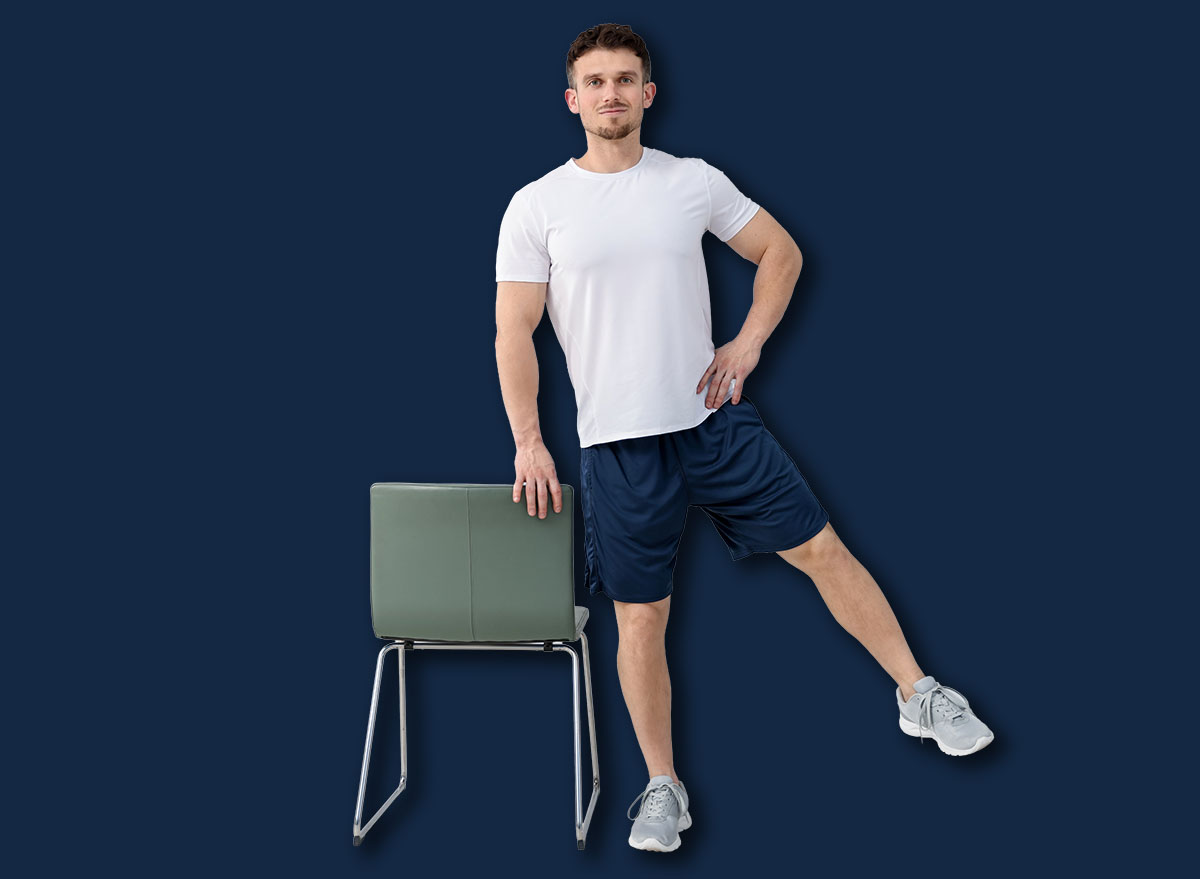
Chair-Supported Side Leg Raises
Chair-supported side leg raises target your outer hips and glutes, helping keep your pelvis steady during walking and weight shifts. Strong outer hips support side-to-side balance, a skill that matters when you step around objects, move across uneven ground, or change direction. The chair gives you support so you can focus on lifting from the hip with control. Smooth reps help your hips build strength while your standing leg practices staying steady.
Muscles Trained: Outer glutes, hip stabilizers, core.
How to Do It:
- Stand behind a sturdy chair with your hands lightly on the backrest.
- Shift your weight onto one foot.
- Brace your core and stand tall.
- Lift your opposite leg out to the side.
- Pause briefly at the top.
- Lower your leg with control and switch sides after your reps.
Recommended Sets and Reps: Perform 3 sets of 10 to 12 reps per side. Rest for 30 seconds between each set.
Best Variations: Mini band side leg raises, paused side leg raises, and slower side leg raises.
Form Tip: Keep your toes facing forward and lift from your hip.
How to Build Better Balance From a Chair
Chair balance work builds confidence through steady practice. The chair gives you support while your legs, hips, ankles, and core develop the strength and control needed for daily movement. Treat each rep as a chance to move more smoothly, stand taller, and improve your body’s response to weight shifts.
- Use light support: Keep your hands on the chair for confidence while your body does the work. A light touch helps your balance system stay active.
- Practice slow movement: Slower reps give your muscles more time to control each position. Smooth movement builds better coordination.
- Train your ankles and hips: Heel raises strengthen the lower legs, while side leg raises strengthen the outer hips. Both areas help your body stay steady.
- Build standing confidence: Single-leg balance and sit-to-stands help you practice the positions that appear often during daily life.
- Repeat the routine often: A few minutes of balance work most days can build steady progress. Short sessions fit easily into the morning, afternoon, or evening.
A chair can become one of the most useful balance tools in the house. Use it for support, move with control, and let these exercises help you feel steadier through every step, stand, and turn.
References
- Choudhary PK, Choudhary S, Saha S, Katanić B, İlbak İ, Tornóczky GJ. Effectiveness of Balance- and Strength-Based Exercise Interventions for Fall Prevention in Community-Dwelling Older Adults: A Systematic Review of Randomized Controlled Trials. Life (Basel). 2025 Dec 26;16(1):41. doi: 10.3390/life16010041. PMID: 41598197; PMCID: PMC12842942.
- Klempel N, Blackburn NE, McMullan IL, Wilson JJ, Smith L, Cunningham C, O’Sullivan R, Caserotti P, Tully MA. The Effect of Chair-Based Exercise on Physical Function in Older Adults: A Systematic Review and Meta-Analysis. Int J Environ Res Public Health. 2021 Feb 16;18(4):1902. doi: 10.3390/ijerph18041902. PMID: 33669357; PMCID: PMC7920319.