5 Chair Exercises Trainers Now Recommend to Restore Thigh Muscle After 60
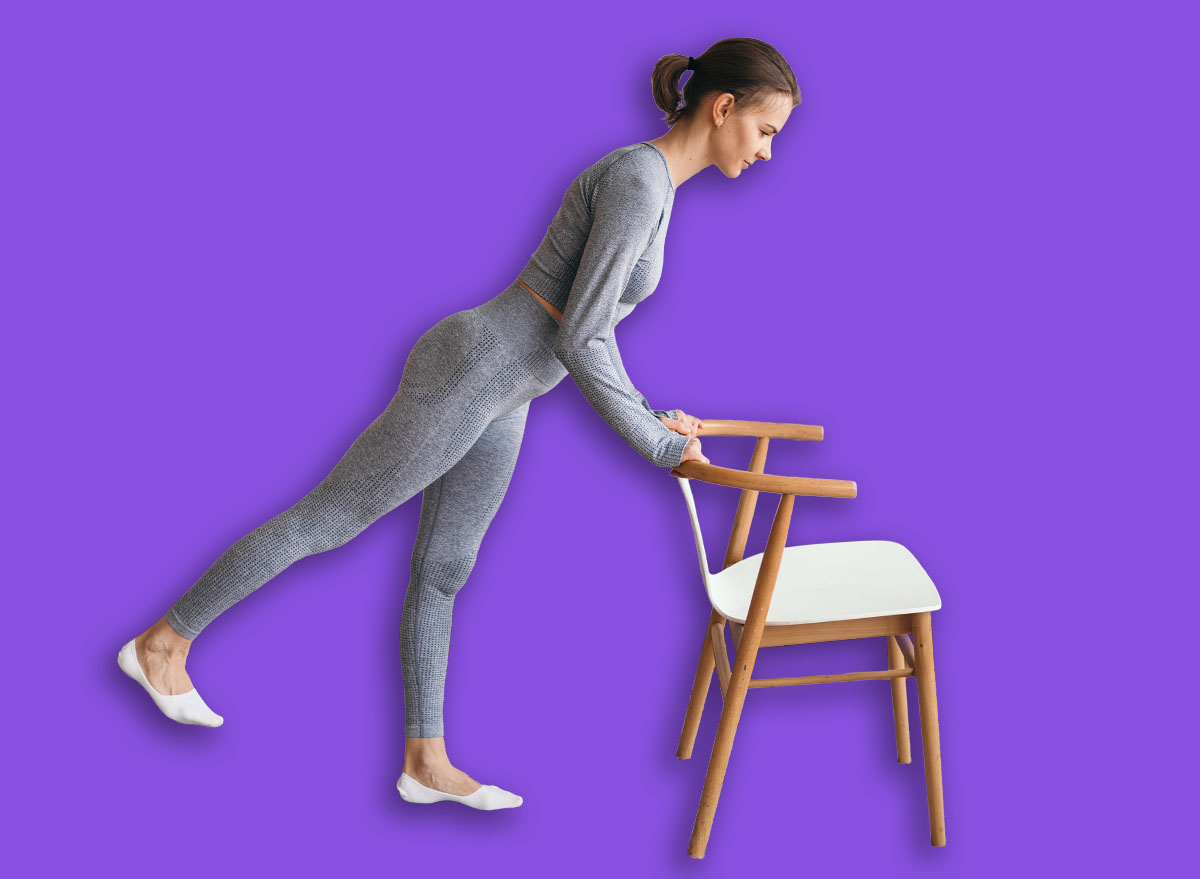

Once you hit your 30s, you start to naturally lose lean muscle mass and strength. This decline can be anywhere from 3% to 8% each decade. And after 60, that rate speeds up without regular resistance training. According to Layne Nordquist, Senior Vice President of Fitness at VASA Fitness, your muscles operate on a key principle: “Use them or lose them.” So, we’ve put together five chair exercises trainers recommend to help restore thigh muscle after 60.
“As we age, many people become less physically active due to busy lifestyles, injuries, or chronic health conditions. Less movement means less stimulus for the muscles, which gradually leads to muscle atrophy,” Nordquist tells us. “The good news is that this process is not inevitable. Performing resistance training just two to three times per week can help preserve—and often rebuild—muscle mass. Maintaining muscle is one of the most important factors for preserving mobility, preventing falls, supporting metabolic health, and maintaining independence as we age. It’s also strongly associated with improved longevity and overall quality of life.”
You may be wondering how a chair can be an effective tool for restoring and maintaining thigh strength.
According to Andrew Menechian, Co-Founder and Head of Fitness at FitCommit, who has over 12 years of experience in the fitness industry and has mentored more than 100 personal trainers through education roles at The Fitness Playground and Clean Health Fitness Institute, “The chair is a good starting point because it gives support without taking the work away. The goal is not to make the exercise easy. The goal is to make it controlled enough that the person can train consistently.”
Sit-to-Stand
Menechian says the sit-to-stand fires up the glutes and quads and directly carries over to everyday life.
- Begin seated at the front of a sturdy chair with your feet placed on the floor under your knees.
- Lean forward slightly.
- Try to stand up without using your knees, hands, or additional support.
- Use control to slowly sit back down.
- Perform 2 to 3 sets of 10 to 12 reps.
Pillow Squeeze
“The adductors matter more than people think because they help control the leg toward the midline,” Menechian points out.
- Begin seated on a chair with your feet on the ground.
- Place a folded towel or pillow between your knees.
- Squeeze for a few seconds before releasing.
Seated Marches
- Begin seated on a chair with your feet placed hip-width apart on the floor.
- Gently draw your lower belly inward.
- Slowly lift one knee up to hip height.
- Lower.
- Alternate sides in a “marching” fashion.
Chair-Assisted Single-Leg Balance
“Balance is one of the first physical abilities to decline with age, making this exercise especially valuable,” says Nordquist. “This movement strengthens the feet, glutes, inner thighs, and core while training the stabilizing muscles that help reduce fall risk and improve overall stability.”
- Begin standing beside a chair with one hand lightly resting on the back for support.
- Lift one knee up to approximately 90 degrees.
- Hold for 10 to 20 seconds before switching sides.
- Perform 2 to 3 sets per leg.
Standing Calf Raises
“Strong calves are essential for walking, climbing stairs, and maintaining balance,” Nordquist tells us. “This exercise strengthens the calves and feet while improving ankle stability and walking efficiency.”
- Begin by standing tall with your feet hip-width apart, facing a sturdy chair with your hands lightly resting on the backrest.
- Engage your core.
- Rise onto your toes slowly.
- Hold for 2 to 3 seconds at the top.
- Lower back down with control.
- Perform 2 to 3 sets of 12 to 15 reps.