The 10-Minute Chair Routine That Restores Leg Strength Faster Than Squats After 65
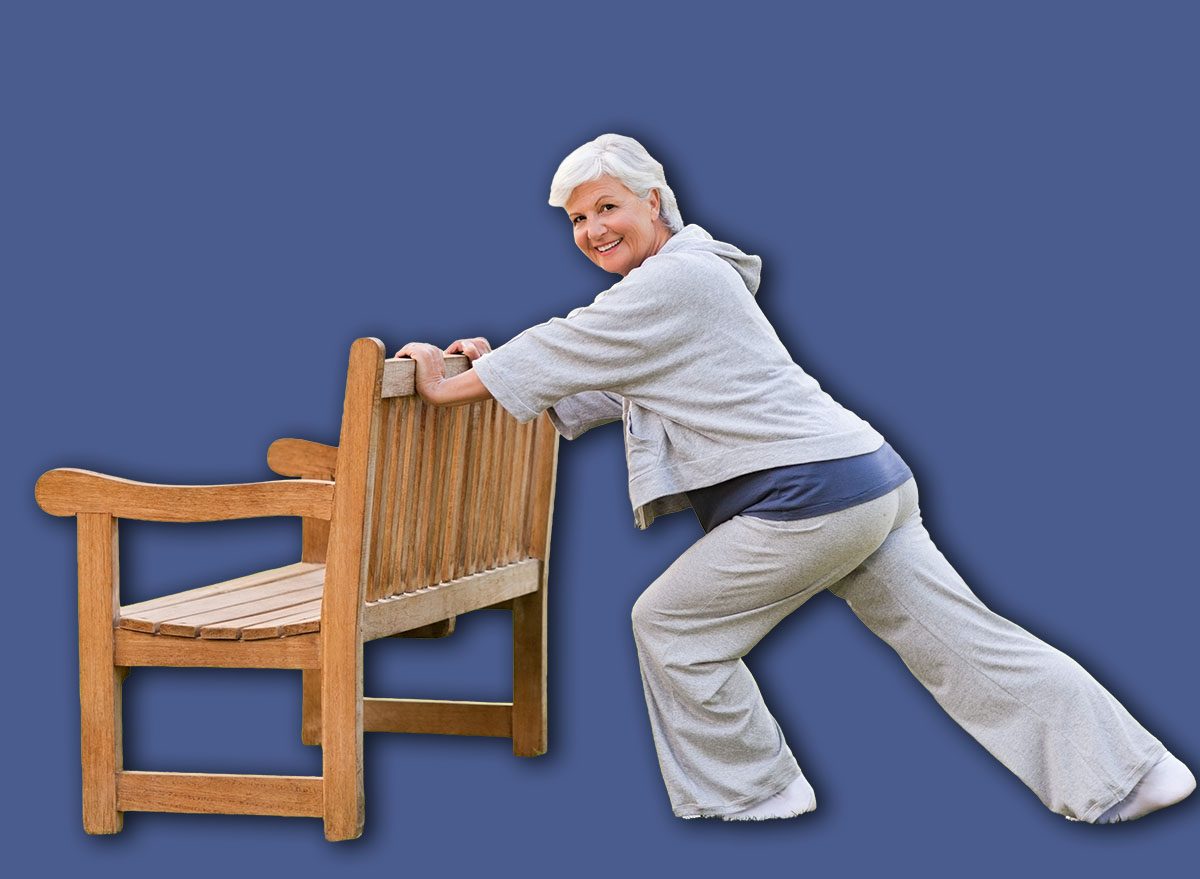

Leg strength after 65 can influence more of your day than you realize. It affects how steady you feel when you get out of a chair, how confident you feel stepping up onto a curb, and how much effort simple movement takes. When your legs feel stronger, the rest of your body usually feels more capable too.
A chair routine gives you a smart way to build that strength with control. The chair adds support, gives you a clear target, and helps you focus on better reps without making the workout feel intimidating. That’s especially helpful when your goal is to train consistently, because the best routine is the one you can repeat without dreading it.
This 10-minute workout keeps things simple with two exercises that cover a lot of ground. The chair sit-to-stand strengthens the pattern you use every time you rise from a seat. The chair-supported reverse lunge adds single-leg work, which helps each leg build strength and balance on its own.
Keep the pace steady and treat each round as practice. You’re building stronger legs through clean movement, better control, and small improvements that start to show up during everyday tasks.
The 10-Minute Chair Leg Strength Routine

What you need: A sturdy chair and enough space to stand in front of it and step back safely. Choose a chair that stays planted and gives you reliable support. This routine takes 10 minutes and alternates between two chair-supported leg exercises.
The Routine:
- Chair Sit-to-Stand: 5 rounds of 40 seconds
- Chair-Supported Reverse Lunge: 5 rounds of 40 seconds
Directions
Set a timer for 10 minutes. Perform Chair Sit-to-Stands for 40 seconds, then spend 20 seconds breathing and setting up for reverse lunges. Perform Chair-Supported Reverse Lunges for 40 seconds, then spend 20 seconds returning to the chair and resetting.
Alternate between the two exercises until you complete five rounds of each. Move with control, use the chair as needed for balance, and keep every rep within a range that feels strong. Here’s how to do it.
Chair Sit-to-Stand
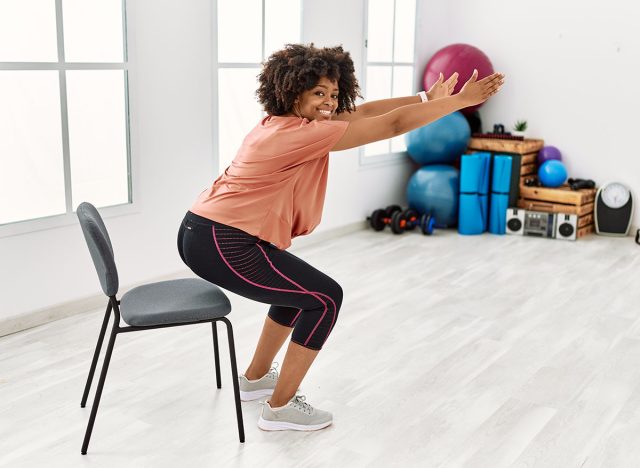
The chair sit-to-stand builds leg strength through a movement you already use every day. You practice shifting weight into your feet, standing tall, and lowering back down with control. That makes it useful for the quads and glutes, and it also helps your knees feel more supported during simple daily tasks. The chair gives each rep a clear starting and ending point, which makes progress easier to feel over time.
How to do it:
- Sit near the front edge of a sturdy chair.
- Place your feet flat on the floor about hip-width apart.
- Lean forward slightly so your weight shifts into your feet.
- Press through the floor and stand tall.
- Slowly lower yourself back toward the chair.
- Lightly touch the seat and stand again.
Best Variations: Hands-assisted sit-to-stand, slow-tempo sit-to-stand, sit-to-stand with a pause above the chair.
Chair-Supported Reverse Lunge
The chair-supported reverse lunge gives each leg focused strength work while the chair helps you stay balanced. Stepping backward keeps the movement controlled, and your front leg handles most of the work as you return to standing. This exercise helps rebuild strength through the thighs, glutes, and hips, which can make walking, climbing stairs, and getting around feel more confident. Keep the step small at first, then build the range as the movement feels smoother.
How to do it:
- Stand beside a sturdy chair and hold it lightly with one hand.
- Stand tall with your feet about hip-width apart.
- Step one foot back.
- Bend both knees slightly.
- Press through your front foot to return to standing.
- Alternate sides with control for the full 40 seconds.
Best Variations: Small step-back lunge, supported split squat, reverse lunge with a pause.
How to Make This Routine Work Better After 65
This routine works best when you treat it as practice, not a test. Ten minutes gives your legs enough work to build strength while keeping the session manageable enough to repeat several times per week. That consistency matters because leg strength after 65 responds well to clean reps, steady effort, and small progressions. The chair helps you stay confident as your legs take on more of the work over time. Keep the pace smooth, use a range of motion you can control, and let the final round feel stronger than the first.
- Use a sturdy chair: Pick one that stays planted and gives you reliable support.
- Start with a comfortable range: The sit-to-stand and reverse lunge should feel controlled before you make either move deeper.
- Keep your hand support light: Hold the chair for balance, then gradually use less help as your confidence improves.
- Track smoother reps: Progress can mean better control, steadier balance, or fewer pauses between reps.
- Repeat it consistently: Aim for three to five sessions per week so the routine becomes familiar and easy to stick with.
References
- Strasser, Barbara et al. “Role of Dietary Protein and Muscular Fitness on Longevity and Aging.” Aging and disease vol. 9,1 119-132. 1 Feb. 2018, doi:10.14336/AD.2017.0202
- Klempel, Natalie et al. “The Effect of Chair-Based Exercise on Physical Function in Older Adults: A Systematic Review and Meta-Analysis.” International journal of environmental research and public health vol. 18,4 1902. 16 Feb. 2021, doi:10.3390/ijerph18041902
- Burtscher, Johannes et al. “How much resistance exercise is beneficial for healthy aging and longevity?.” Journal of sport and health science vol. 12,3 (2023): 284-286. doi:10.1016/j.jshs.2022.11.004