4 Morning Exercises That Rebuild Lower Back Strength Faster Than Gym Sessions After 60
Your lower back can set the tone for the whole morning. When it feels stiff or undertrained, even the first few minutes of the day can feel slower than they should. A short routine won’t solve everything at once, but it can give your back and hips the kind of steady work they need to feel more reliable.
Lower back strength after 60 usually improves when you train the muscles around the spine and hips together. That doesn’t require a long gym session. It requires simple movements that help you brace, hinge, extend, and create tension without rushing through reps.
I prefer morning work for clients because the goal is practice, not punishment. You’re giving your body a few good reps at a consistent time before the day asks more of it.
Use these four exercises three to five mornings per week. Keep the weights light at first, move through a range that feels comfortable, and let the routine build gradually.
Goblet Hold Good Morning
The goblet hold good morning helps rebuild lower back strength by training the hinge pattern in a controlled way. Holding the weight at your chest gives your torso a clear job while your hips move behind you. This exercise fits well after 60 because it strengthens the backside of the body without needing a barbell or a heavy load. It also teaches the lower back to stay strong while the hips do more of the movement.
Muscles Trained: Lower back, glutes, hamstrings, core.
How to Do It
- Stand with your feet about hip-width apart.
- Hold a dumbbell or kettlebell at chest height.
- Soften your knees and brace your core.
- Push your hips back as your torso leans forward.
- Stop when you feel gentle tension through the back of your legs.
- Drive your hips forward to stand tall.
Recommended Sets and Reps: Perform 2 to 3 sets of 8 to 10 reps.
Best Variations: Bodyweight good mornings, hands-on-chest good mornings, light kettlebell good mornings.
Form Tip: Keep the weight close to your chest so your lower back stays supported through the hinge.
Bodyweight Glute Bridge
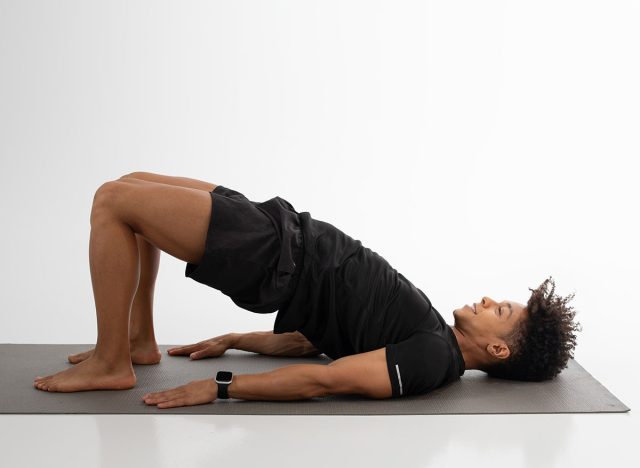
The bodyweight glute bridge helps your lower back by strengthening the hips that support it. After 60, weak glutes can make the lower back feel like it has to handle too much during simple movement. This exercise gives the hips direct work while keeping the setup easy and low stress. It’s a good morning choice because it gets the backside firing without needing equipment.
Muscles Trained: Glutes, hamstrings, lower back, core.
How to Do It
- Lie on your back with your knees bent.
- Place your feet flat on the floor about hip-width apart.
- Rest your arms by your sides.
- Brace your core lightly.
- Press through your feet and lift your hips.
- Lower back down with control.
Recommended Sets and Reps: Perform 2 to 3 sets of 10 to 15 reps.
Best Variations: Glute bridge hold, single-leg glute bridge, glute bridge march.
Form Tip: Finish the rep with your hips lifted, not your lower back arched.
Back Extensions
Back extensions give the muscles along your spine focused work, which makes them a strong fit for rebuilding lower back strength after 60. These muscles help your torso stay upright and resist fatigue during the day. The exercise also keeps the load low, which makes it easier to practice regularly. When done with control, it can help your lower back feel more supported without turning the routine into a heavy gym session.
Muscles Trained: Lower back, glutes, hamstrings.
How to Do It
- Lie face down on the floor with your legs extended.
- Place your hands by your sides or lightly behind your head.
- Brace your core and keep your neck long.
- Lift your chest a few inches off the floor.
- Pause briefly at the top.
- Lower back down slowly.
Recommended Sets and Reps: Perform 2 to 3 sets of 8 to 12 reps.
Best Variations: Smaller-range back extensions, prone cobra holds, stability ball back extensions.
Form Tip: Lift only as high as you can without feeling pressure or pinching in your lower back.
Dumbbell Hip Thrust
The dumbbell hip thrust gives your glutes a stronger job than the bodyweight bridge. That extra hip strength can support the lower back because the hips should help drive bending, standing, and lifting patterns. This move also lets you add resistance without making the spine the main loading point. Use it as the strongest exercise in the routine and keep the weight manageable.
Muscles Trained: Glutes, hamstrings, lower back, core.
How to Do It
- Sit on the floor with your upper back against a sturdy bench, couch, or low chair.
- Place a dumbbell across your hips.
- Bend your knees and keep your feet flat on the floor.
- Brace your core.
- Press through your feet and lift your hips.
- Lower your hips with control and repeat.
Recommended Sets and Reps: Perform 2 to 3 sets of 8 to 12 reps.
Best Variations: Bodyweight hip thrusts, glute bridge with dumbbell, hip thrust holds.
Form Tip: Keep your ribs down at the top so the movement stays in your hips.
How to Make These Morning Exercises Work After 60
Lower back strength builds best when the routine feels repeatable. You don’t need to turn every morning into a hard workout, especially when your back feels stiff early in the day. Start with bodyweight versions when needed, then add light resistance once the movements feel familiar. The goal is to finish with your back and hips feeling more awake, steady, and ready for the day. If the dumbbell hip thrust or goblet hold good morning feels more demanding, use those on alternating mornings and keep the other moves lighter.
- Start gently: Give your back a few easy reps before adding effort.
- Use light weights first: Lower back training responds well to control, especially early in the morning.
- Let your hips help: Stronger glutes can make your lower back feel less overworked.
- Keep the routine short: Two rounds can be enough when the reps feel clean.
- Pay attention to warning signs: Sharp pain, numbness, or symptoms down the leg mean it’s time to stop and check in with a qualified professional.
References
- Gordon, Rebecca, and Saul Bloxham. “A Systematic Review of the Effects of Exercise and Physical Activity on Non-Specific Chronic Low Back Pain.” Healthcare (Basel, Switzerland) vol. 4,2 22. 25 Apr. 2016, doi:10.3390/healthcare4020022
- Chang, Wen-Dien et al. “Core strength training for patients with chronic low back pain.” Journal of physical therapy science vol. 27,3 (2015): 619-22. doi:10.1589/jpts.27.619