The 6-Minute Wall Routine That Firms Belly Pooch Faster Than Crunches After 60
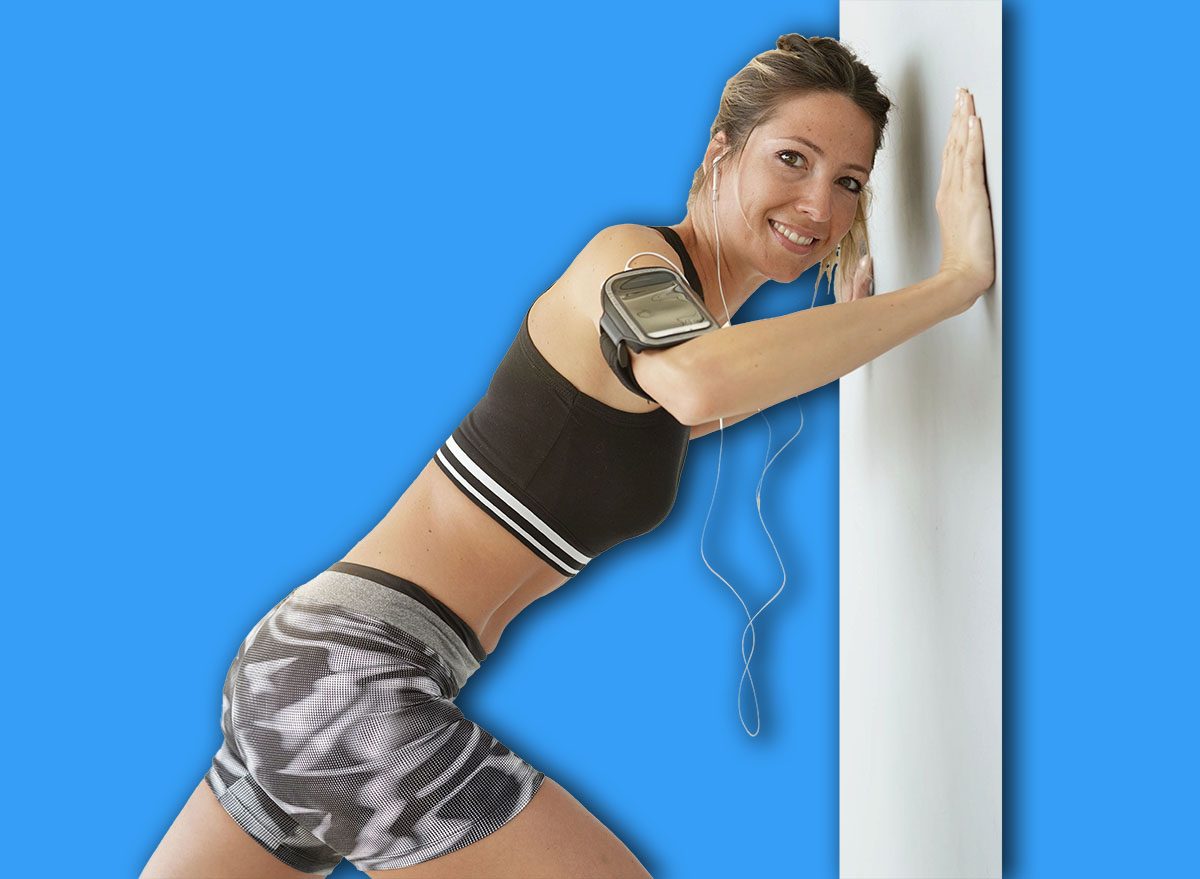

You may not realize it, but crunches can take a toll on your body after 60. According to the Mayo Clinic, the repetitive spinal flexion created from core exercises like crunches is one of the more common contributors to lower back strain, which is exactly why so many people over 60 abandon ab routines that leave them sore in the wrong places rather than firmer in the right ones.
The good news is that a wall can do almost everything a mat can, minus the spinal wear and tear. Research shows that standing, wall-supported exercises let you brace your core isometrically, meaning you hold tension rather than repeatedly bending your spine, which keeps the pressure off your discs while still working your entire midsection hard.
To learn more, we spoke with James Brady, CPT, a certified personal trainer at OriGym, who built a six-minute wall routine around exactly this idea. “I’d recommend performing each exercise for 45 seconds, followed by 15 seconds of rest before moving on to the next,” says Brady. “This creates a simple six-minute routine that’s ideal for adults over 60, strengthening the entire core while placing far less strain on the spine than traditional crunches.”
Read on for the workout and step-by-step instructions. When you’re finished, don’t miss these 4 Nightly Stretches That Loosen Your Body Better Than a Massage After 60.
Wall Plank
The wall plank is one of the safest ways to build core strength, especially if getting down on the floor feels challenging or uncomfortable. Bracing your body against a wall allows you to engage your ab muscles without any strain on your wrists, neck, or lower back.
How to do it:
- Stand facing a wall and place your forearms against it at shoulder height.
- Step your feet back until your body forms a straight line from head to toe.
- Keep your neck neutral and your gaze straight ahead at the wall.
- Flex your core muscles.
- Squeeze your glutes to lock in the position.
- Make sure your hips don’t sag.
- Breathe steadily through your nose during the hold.
- Hold for 45 seconds and rest for 15 seconds before moving on to the next exercise.
Wall Marches
Wall marches build on the plank by adding movement, which forces your core to stabilize your body with every step. Lifting one knee at a time also challenges your balance and coordination, both of which tend to decline with age.
How to do it:
- Place both palms on the wall at shoulder height.
- Lean slightly forward and engage your core.
- Keep your torso still and your back straight.
- Lift one knee to hip height.
- Lower it back down with control.
- Repeat the movement on the opposite side.
- Continue alternating legs at a steady, controlled pace.
- Continue for 45 seconds, then rest for 15 seconds before moving on.
Wall Dead Bug Press
The wall dead bug press trains your midsection to remain stable while your limbs move, which is exactly the kind of control that protects your lower back during everyday tasks. “The goal is to keep your body stable rather than allowing it to sway from side to side,” explains Brady.
How to do it:
- Stand facing the wall with your palms pressed firmly against it.
- Maintain steady pressure through your hands throughout the exercise.
- Keep your core braced and your hips level.
- Slowly raise one knee until it reaches hip height.
- Lower it back down with control.
- Raise your opposite knee to hip height.
- Continue alternating sides without letting your torso sway.
- Perform for 45 seconds and rest for 15 seconds before moving on.
Wall Sit With a Core Brace
This classic wall exercise strengthens your legs while the added core brace keeps your core working throughout the hold. It’s a two-for-one move that builds lower-body endurance and core stability at the same time, with the wall taking the pressure off your knees.
How to do it:
- Stand with your back flat against the wall.
- Slide down until your knees are bent to roughly 90 degrees (or slightly higher if that’s more comfortable).
- Keep your weight even through both feet.
- Press your lower back gently into the wall.
- Flex your abs.
- Hold the position while breathing normally.
- Keep your knees tracking in line with your toes.
- Hold for 45 seconds, then rest for 15 seconds before moving on.
Standing Wall Knee Drives
Standing wall knee drives combine core engagement with single-leg balance to help you build stability and balance, which is essential for walking and climbing stairs. “Focus on slow, controlled movements rather than rushing through the repetitions,” advises Brady.
How to do it:
- Stand side-on to the wall with one hand resting lightly against it for balance.
- Stand tall with your core engaged.
- Drive one knee up toward your chest.
- Tighten your core as you lift.
- Lower your leg slowly back down with control.
- Complete all your reps on one side.
- Turn around and repeat on the opposite leg.
- Continue for 45 seconds, then rest for 15 seconds before moving on to the next exercise.
RELATED: 4 Standing Exercises That Firm Belly Overhang Faster Than Pilates After 60
Wall Push-up
“This final exercise combines upper-body strength with core stability to finish the routine by engaging multiple muscle groups at once,” Brady says.
How to do it:
- Stand facing the wall with your palms at shoulder height and width.
- Step your feet back to a comfortable angle.
- Lower your chest toward the wall in a controlled push-up.
- Press back to the starting position.
- Repeat for 45 seconds to finish the circuit.