4 Chair Exercises That Rebuild Upper-Body Strength Faster Than Push-Ups After 60
Push-ups have earned their reputation, and most people have tried them. They’re simple on paper, but they ask a lot from the wrists, shoulders, core, and chest all at once. After 60, upper-body training often works better when the exercises feel strong from the first few reps.
That’s where a chair can help. I use chair-based strength workouts with clients when I want them to press, pull, and stabilize with more control. The setup feels familiar, the movements are easy to adjust, and the right exercises can light up the muscles in your arms, shoulders, chest, and upper back.
Push-ups mostly train a pressing pattern. This chair workout gives your upper body a fuller plan by pairing pressing strength with pulling work. That balance helps your shoulders feel better supported while your arms and back get stronger.
The four exercises below use a sturdy chair, a resistance band, and light dumbbells if you have them. You’ll train triceps strength with chair dips, build overhead pressing power, strengthen your back with rows, and finish with pull-aparts to help your shoulders move and feel better.
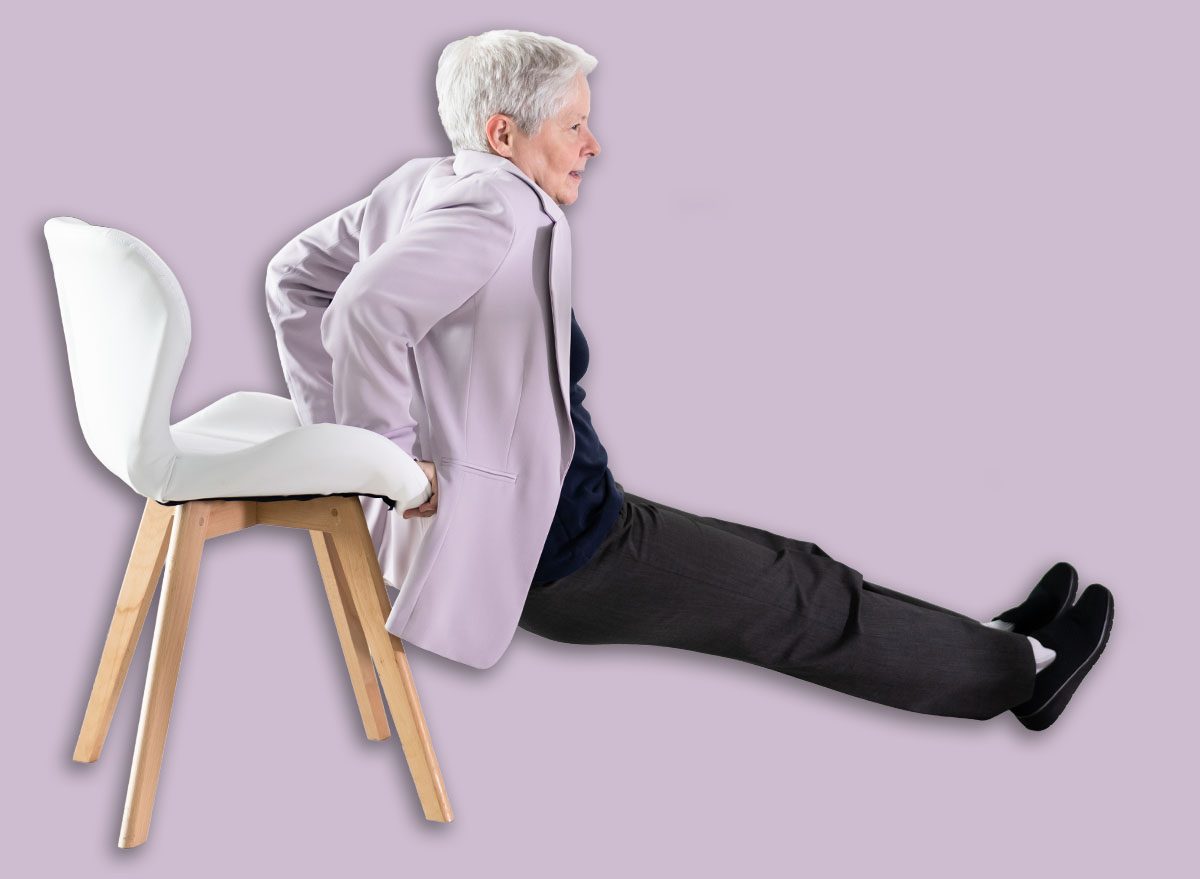
Chair Dips
Getting out of a chair, pushing up from the floor, or pressing yourself away from a surface all require strong arms. Chair dips target that pushing strength directly. Keep the range comfortable and let your triceps do most of the work as you lower and press back up. A smaller dip with good control will usually beat a deeper rep that irritates the shoulders.
Muscles Trained: Triceps, shoulders, chest, upper back.
How to Do It
- Sit on the front edge of a sturdy chair.
- Place your hands beside your hips and grip the front of the seat.
- Walk your feet forward slightly.
- Slide your hips just off the chair.
- Bend your elbows and lower a few inches.
- Press through your hands to return to the top.
Recommended Sets and Reps: Perform 2 to 3 sets of 6 to 10 reps.
Best Variations: Smaller-range chair dip, bent-knee chair dip, slower chair dip.
Form Tip: Keep your elbows pointing back as you lower.
Seated Shoulder Press
Overhead strength should feel smooth before it feels heavy. The seated shoulder press gives you a stable base so you can focus on moving the weights straight up with control. I like this option for clients who need more confidence reaching overhead because the chair removes extra balancing demands. Start light, keep your ribs stacked, and press with a steady tempo.
Muscles Trained: Shoulders, triceps, upper back, core.
How to Do It
- Sit tall near the front edge of the chair.
- Hold a dumbbell in each hand at shoulder height.
- Set your feet flat on the floor.
- Brace your core lightly.
- Press the weights overhead.
- Lower the weights back to shoulder height with control.
Recommended Sets and Reps: Perform 2 to 3 sets of 8 to 12 reps.
Best Variations: Single-arm seated shoulder press, lighter dumbbell press, band shoulder press.
Form Tip: Keep your ribs down as the weights move overhead.
Seated Band Row
Pulling strength deserves as much attention as pressing strength. A seated band row trains the upper back, which helps your shoulders feel stronger and better supported during daily movement. Anchor the band in front of you or loop it around your feet, then pull with your elbows instead of yanking with your hands. Pause when your shoulder blades squeeze together.
Muscles Trained: Upper back, lats, rear delts, biceps.
How to Do It
- Sit tall on a sturdy chair.
- Anchor a resistance band in front of you or loop it around both feet.
- Hold one end of the band in each hand.
- Start with your arms extended.
- Pull your elbows back toward your ribs.
- Return to the starting position with control.
Recommended Sets and Reps: Perform 2 to 3 sets of 10 to 15 reps.
Best Variations: Lighter band row, paused band row, single-arm band row.
Form Tip: Pull your elbows back and keep your shoulders relaxed.
Seated Band Pull-Apart
This is a great finisher when your shoulders need clean, focused work. Pull-aparts strengthen the rear delts and upper back, which help your shoulders sit in a better position for pressing, reaching, and carrying. Keep the band light enough that every rep feels smooth. If your shoulders creep toward your ears, ease the tension and reset.
Muscles Trained: Rear delts, upper back, shoulders, rotator cuff.
How to Do It
- Sit tall with your feet flat on the floor.
- Hold a resistance band with both hands in front of your chest.
- Set your hands slightly wider than shoulder-width.
- Pull the band apart until your hands move toward your sides.
- Pause briefly when your upper back tightens.
- Bring your hands back together with control.
Recommended Sets and Reps: Perform 2 to 3 sets of 12 to 15 reps.
Best Variations: Lighter band pull-apart, palms-up pull-apart, diagonal pull-apart.
Form Tip: Keep the movement smooth from the first rep to the last.
How to Rebuild Upper-Body Strength After 60
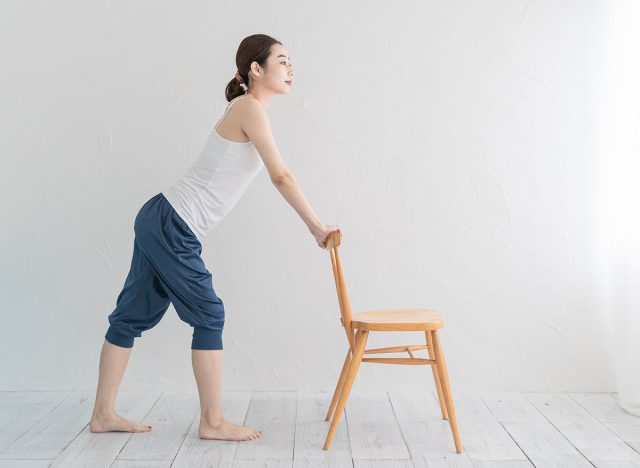
Upper-body strength builds best when the exercises feel controlled and repeatable. Use these chair exercises three to four days per week, either as a short session or as part of a fuller workout. Start with light resistance, make each rep clean, and add challenge once your shoulders and arms feel ready for more. The right pace will help your pressing, pulling, and reaching feel stronger during the day.
- Choose a sturdy chair: Use a chair that stays planted so you can focus on the exercise.
- Keep the dips comfortable: A shorter range can still build strong triceps when the reps stay controlled.
- Balance pressing with pulling: Pair shoulder presses with rows and pull-aparts to keep your shoulders feeling supported.
- Use lighter bands at first: Smooth band reps help your upper back do the work.
- Pause when the muscles engage: A brief squeeze during rows or pull-aparts makes each rep more effective.
- Progress gradually: Add reps, band tension, or weight once the current version feels strong.
References
- Pang, Jing et al. “Age-related change in muscle strength, muscle mass, and fat mass between the dominant and non-dominant upper limbs.” Frontiers in public health vol. 11 1284959. 23 Nov. 2023, doi:10.3389/fpubh.2023.1284959
- Hidayat, Rahmat et al. “Enhancing physical fitness in older adults: a six-month medium intensity training intervention yields significant improvements.” BMC sports science, medicine & rehabilitation vol. 17,1 338. 17 Nov. 2025, doi:10.1186/s13102-025-01401-1