5 Standing Exercises That Shrink Belly Pooch Faster Than Gym Classes After 55
Some weeks, the best workout is the one you can start before the day gets away from you. I’ve coached plenty of clients over 55 who enjoy classes, and the ones who stay most consistent usually have a simple standing option ready at home. For shrinking belly pooch, that repeatability only helps.
Standing exercises bring more of the body into the session right away. Reverse lunges, step-ups, high knees, and squat-to-press reps get the legs working while your core stays active through each position change. The workout feels athletic, but the movements stay easy to scale.
The visual change around the waist still comes from the bigger picture. Strength training, daily movement, and a calorie intake you can maintain all help drive fat loss. A short standing session supports that plan by giving you a practical way to build effort outside a class schedule.
The five exercises below give you a clear path when a gym class doesn’t fit the day. You’ll use lower-body strength, conditioning, and full-body power to make the session feel productive from the first few minutes.
Reverse Lunge to Knee Drive
Start with this when you want a strong lower-body move that also engages the waist. The reverse lunge loads the front leg, then the knee drive brings your core and hip flexors into the finish. It’s especially useful for belly-pooch goals because the movement raises effort without needing floor work. Hold a wall or chair lightly if you need a little help with balance.
Muscles Trained: Quads, glutes, hamstrings, abs, hip flexors.
How to Do It
- Stand tall with your feet under your hips.
- Step one foot back into a reverse lunge.
- Bend both knees to a comfortable depth.
- Press through your front foot to stand.
- Drive your back knee forward toward your chest.
- Step back into the next rep and continue before switching sides.
Recommended Sets and Reps: Perform 2 to 3 sets of 6 to 10 reps per side.
Best Variations: Step-back tap with knee drive, supported reverse lunge to knee drive, reverse lunge without the knee drive.
Form Tip: Keep your front foot planted as you drive back to standing.
Box Step-Up
Step-ups bring a practical strength challenge into a belly-focused workout. Each rep makes one leg lift your body while your core helps you stay tall through the climb. Choose a low box or sturdy step so the movement feels smooth from the floor to the top. If you feel yourself pushing hard off the back foot, lower the height and make the working leg earn the rep.
Muscles Trained: Quads, glutes, hamstrings, calves, abs.
How to Do It
- Stand facing a sturdy box or step.
- Place one foot fully on top.
- Press through that foot to stand on the box.
- Bring your other foot up with control.
- Step back down slowly.
- Complete your reps before switching sides.
Recommended Sets and Reps: Perform 2 to 3 sets of 8 to 10 reps per side.
Best Variations: Low step-up, supported step-up, step-up with knee drive.
Form Tip: Pause briefly at the top to keep each rep controlled.
Squat Jump
A little power can change the feel of the whole workout. Squat jumps raise your heart rate fast and turn a basic lower-body pattern into a more athletic effort. Keep the jump low and land softly, especially if you’re newer to impact. Aim for a crisp rep, not a big jump that feels hard to control.
Muscles Trained: Quads, glutes, calves, abs.
How to Do It
- Stand with your feet about shoulder-width apart.
- Bend your knees and lower into a comfortable squat.
- Swing your arms slightly behind you.
- Drive through your feet and jump straight up.
- Land softly with your knees slightly bent.
- Reset and repeat.
Recommended Sets and Reps: Perform 2 to 3 sets of 6 to 10 reps.
Best Variations: Squat to calf raise, low squat jump, bodyweight squat.
Form Tip: Land quietly and reset your balance before the next rep.
High Knees
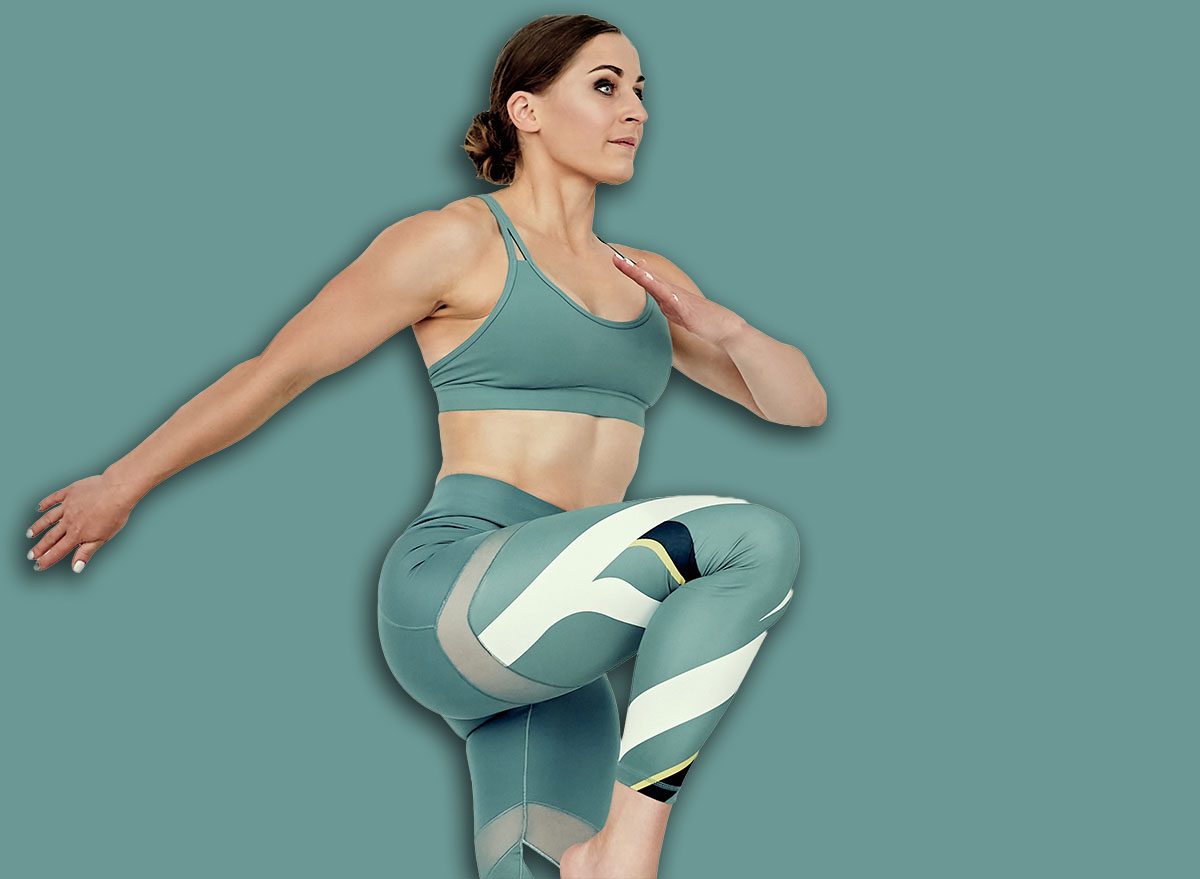
High knees add a quick conditioning hit to the routine. The pace raises your heart rate, while each knee lift keeps your abs engaged. Start with marching high knees if running in place feels too aggressive. Once the rhythm feels clean, increase the tempo and keep your posture tall.
Muscles Trained: Abs, hip flexors, quads, calves, glutes.
How to Do It
- Stand tall with your feet under your hips.
- Brace your core lightly.
- Lift one knee toward your waist.
- Lower that foot to the floor.
- Lift the opposite knee.
- Continue alternating at a steady pace.
Recommended Sets and Reps: Perform 2 to 3 sets of 20 to 40 seconds.
Best Variations: Marching high knees, supported high knees, faster high knees.
Form Tip: Keep your chest tall as your knees lift.
Dumbbell Squat to Press
Finish with a move that brings the whole body into the session. The squat builds lower-body effort, and the press adds upper-body work while your core keeps the dumbbells moving in a clean path. Start with light weights so each rep feels smooth from the squat to the overhead finish. A controlled pace will keep the exercise strong without turning it sloppy.
Muscles Trained: Quads, glutes, shoulders, triceps, abs.
How to Do It
- Stand with your feet about shoulder-width apart and hold a dumbbell in each hand at shoulder height.
- Brace your core.
- Lower into a comfortable squat.
- Press through your feet to stand.
- Press the dumbbells overhead.
- Lower the weights back to your shoulders and repeat.
Recommended Sets and Reps: Perform 2 to 3 sets of 8 to 12 reps.
Best Variations: Bodyweight squat to reach, lighter dumbbell squat to press, squat to single-arm press.
Form Tip: Stand fully before pressing the dumbbells overhead.
How to Make Standing Work Help Your Waistline
Standing exercises can help you build strength, increase your effort, and make belly-pooch training easier to fit into your week. Use them three to four days per week, and support the work with daily habits that help fat loss. Walk most days, build meals around protein, and keep your portions consistent enough to create progress. The workout gives your body a strong push, while the rest of the day helps determine how visible that work becomes.
- Start with low-impact versions: Step-back taps, marching high knees, and squat-to-calf-raise reps help you build control before adding speed or impact.
- Use lighter weights first: A smooth squat-to-press will do more for your workout than heavy dumbbells that pull you out of position.
- Keep rest short: Brief breaks help the session stay active while still giving you enough time to move well.
- Walk on most days: Daily walking adds low-stress movement and supports the calorie burn behind fat loss.
- Build meals around protein: Protein helps preserve muscle while you work toward a flatter midsection.
- Repeat the plan consistently: A few strong standing sessions each week can build real momentum when the exercises stay clean and doable.
References
- Vispute, Sachin S et al. “The effect of abdominal exercise on abdominal fat.” Journal of strength and conditioning research vol. 25,9 (2011): 2559-64. doi:10.1519/JSC.0b013e3181fb4a46
- Irving, Brian A et al. “Effect of exercise training intensity on abdominal visceral fat and body composition.” Medicine and science in sports and exercise vol. 40,11 (2008): 1863-72. doi:10.1249/MSS.0b013e3181801d40