5 Daily Exercises That Firm Tummy Roll Faster Than Gym Machines After 55

Belly fat and lower abdominal softness become increasingly stubborn after 55. Hormonal changes, muscle loss, reduced daily movement, and years of sitting all contribute to weakened core muscles and a thicker waistline. Many adults spend countless hours on gym machines hoping to flatten the midsection, yet most machines isolate movement patterns that fail to strengthen the entire core effectively. A firmer waistline depends on rebuilding muscular support, improving posture, and increasing total-body tension during movement.
Daily bodyweight exercises often outperform gym machines because they force the core to stabilize naturally while the body moves through real-world patterns. Instead of sitting in fixed positions, standing and floor-based movements activate the abdominals, glutes, hips, and lower back together. That full-body recruitment improves calorie burn while tightening the muscles underneath the stomach area. Consistency matters more than complicated equipment, especially after 55 when recovery and joint comfort become major priorities.
Research published in the Journal of Physical Therapy Science found that consistent core-focused training improved abdominal muscle thickness, posture, and trunk stability in older adults. Stronger core muscles also improve balance and reduce lower-back strain during everyday movement. The five exercises below challenge the entire midsection while building strength and muscular endurance without relying on expensive machines. Practice them daily, and your core will feel tighter, stronger, and more supportive during every movement.
Standing Knee Drives
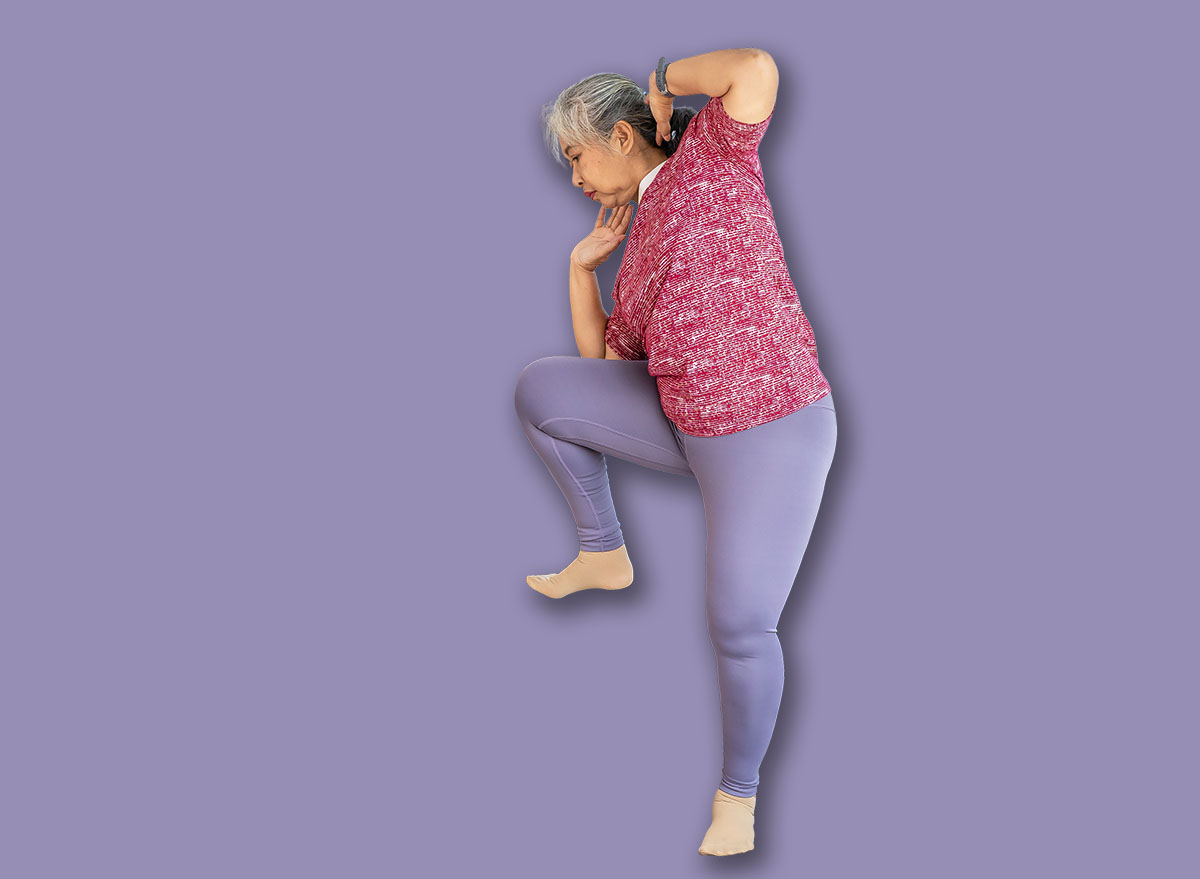
Standing knee drives challenge the core while forcing the lower abdominals to stabilize during dynamic movement. Many adults over 55 lose lower-core strength because traditional ab exercises place too much stress on the neck or lower back. This movement keeps the body upright while training the abs to resist rotation and maintain posture during repeated leg lifts. The standing position also increases calorie demand because the glutes, hips, and supporting leg remain active throughout the exercise. Over time, knee drives improve coordination, walking mechanics, and core endurance while tightening the muscles that support the stomach area. Performed with controlled intensity, this exercise creates far more real-world abdominal activation than many seated gym machines.
How to Do It
- Stand tall with feet hip-width apart
- Tighten your core gently
- Drive one knee upward toward your chest
- Swing the opposite arm naturally
- Lower slowly with control
- Alternate sides continuously
- Maintain tall posture throughout
- Perform 20 total repetitions.
Dead Bugs
Dead bugs strengthen the deep core muscles responsible for stabilizing the spine and flattening the midsection. Unlike crunch machines that encourage neck strain and momentum, this movement trains the abs to maintain control while the arms and legs move independently. Many adults over 55 struggle with lower-back discomfort because the core loses its ability to brace effectively during movement. Dead bugs rebuild that stability while teaching proper abdominal engagement without excessive spinal pressure. The slow tempo forces the deep abdominal muscles to remain active continuously, which improves posture and trunk control. This exercise also creates stronger movement coordination that carries directly into daily activities.
How to Do It
- Lie on your back with knees bent at 90 degrees
- Raise your arms toward the ceiling
- Tighten your core and flatten your lower back gently
- Extend one leg outward slowly
- Lower the opposite arm overhead
- Return to the starting position
- Alternate sides with control
- Complete 10 repetitions per side.
Glute Bridge Marches
Many people overlook the connection between weak glutes and a sagging midsection. When the glutes fail to stabilize the pelvis properly, the lower abs lose tension and the stomach pushes outward more easily. Glute bridge marches strengthen the backside while forcing the core to stabilize continuously during alternating leg lifts. The movement improves pelvic control, posture, and abdominal engagement without stressing the lower back. Adults over 55 benefit tremendously from exercises that train the glutes and core together because those muscle groups work as a team during nearly every daily movement. Expect stronger lower-abdominal activation and improved trunk stability after consistent practice.
How to Do It
- Lie on your back with knees bent
- Press your feet into the floor
- Lift your hips into a bridge position
- Tighten your glutes and core
- Lift one foot slightly off the floor
- Lower it slowly
- Alternate legs without dropping your hips
- Perform 10 marches per side.
Standing Side Crunches
Standing side crunches target the obliques and waistline while improving spinal mobility and core control. Many gym machines lock the body into rigid movement patterns that fail to train real-world stability. This exercise forces the core to engage dynamically while the body remains upright and balanced. The repeated side contraction strengthens the muscles that help tighten the waist and support better posture. Adults over 55 often notice reduced stiffness and stronger trunk control after adding rotational core work consistently. The standing setup also reduces pressure on the neck and lower back compared to traditional floor crunches.
How to Do It
- Stand tall with your hands behind your head
- Keep your chest lifted
- Raise one knee toward the side of your body
- Crunch the same-side elbow downward
- Squeeze through your obliques
- Return to the starting position slowly
- Alternate sides continuously
- Perform 20 total repetitions.
Bear Plank Holds
Bear plank holds create full-core tension that few gym machines can replicate. This exercise forces the abs, shoulders, hips, and glutes to stabilize together while the body hovers slightly above the floor. Many adults over 55 lose core firmness because the deep stabilizing muscles stop activating consistently during movement. Bear planks rebuild that lost tension while strengthening the muscles responsible for posture and abdominal control. The hovering position increases total-body engagement without requiring high-impact movement or complicated coordination. Even short holds produce intense abdominal activation that helps tighten the entire midsection over time.
How to Do It
- Start on all fours
- Position your hands under your shoulders
- Keep your knees under your hips
- Lift your knees a few inches off the floor
- Tighten your core and glutes
- Keep your back flat
- Breathe steadily throughout
- Hold for 20 to 30 seconds.