6 Daily Bodyweight Moves That Keep You Stronger Than Most 30-Year-Olds After 50

Developing strength after 50 helps you move with confidence, handle daily tasks with ease, and stay athletic in ways that surprise people half your age. Your body responds well to consistency, and the right combination of movements builds strength you feel every time you lift groceries, climb stairs, or take on a weekend hike. When you train your body daily, you build power, control, and durability that make you feel younger in a very real way.
Bodyweight exercises give you unmatched freedom. You train anywhere, adjust the difficulty instantly, and challenge your muscles through angles and patterns that machines never touch. Your joints stay healthy because your body naturally moves through ranges that match your structure. These movements sharpen mobility, stability, balance, and strength in a single session.
You will build strength that carries over to real life. You will feel the difference in your stride, your posture, and your ability to do things people notice. The following six movements test your upper body, legs, core, and back in ways that help you outperform most 30-year-olds. Let’s jump into the moves that deliver that level of strength.
Diamond Push-Up
Diamond push-ups challenge your triceps, chest, and shoulders while strengthening your entire torso. The tight hand position increases the load on your arms and forces your core to stabilize your body from head to toe. Your elbows track naturally, which keeps pressure off your shoulders and directs more work into your upper arms. This movement builds noticeable upper-body strength, improving your ability to push, pull, and stabilize during daily tasks.
Muscles Trained: Triceps, Chest, Anterior Deltoids, Core
How to Do It:
- Place your hands under your chest with your thumbs and index fingers touching.
- Extend your legs and brace your core.
- Lower your chest toward your hands while keeping your elbows close.
- Push yourself back up with control.
- Maintain a straight line from your head to your heels.
Recommended Sets and Reps: Perform 3 sets of 8 to 12 reps. Rest for 60 seconds between each set.
Best Variations: Elevated Diamond Push-Up, Kneeling Diamond Push-Up, Diamond Push-Up Hold
Form Tip: Squeeze your glutes during every rep to stabilize your hips.
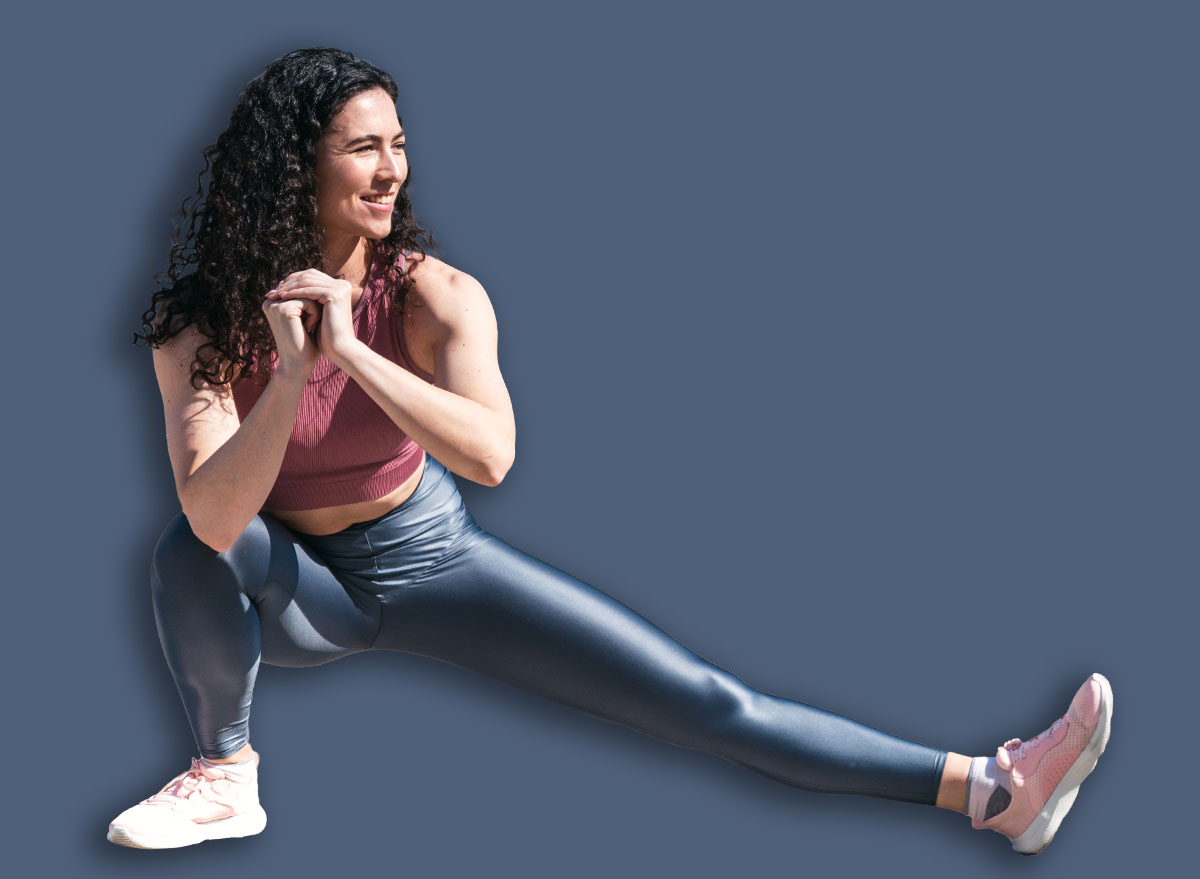
Cossack Squat
Cossack squats improve lower-body strength by providing a wide range of motion that targets your hips, quads, and glutes. Your legs work individually, which helps correct imbalances and improve athletic control. You increase mobility in your ankles and hips each time you sink into the side squat. This movement teaches your body to handle lateral shifts, which protects your knees and prepares you for real-world movement.
Muscles Trained: Quads, Glutes, Hamstrings, Adductors
How to Do It:
- Stand with your feet wider than shoulder width.
- Shift your weight to one side and lower into a deep squat.
- Keep your opposite leg straight with your toes pointing upward.
- Push through your planted foot to return to the center.
- Repeat on the other side.
Recommended Sets and Reps: Perform 3 sets of 6 to 8 reps per side. Rest for 60 seconds between each set.
Best Variations: Supported Cossack Squat, Heel-Elevated Cossack Squat, Alternating Low Cossacks
Form Tip: Keep your chest tall to maintain balance as you shift side to side.
Renegade Row
Renegade rows build full-body strength because your core, shoulders, back, and arms work together to keep you stable. Each row forces your body to fight rotation, which strengthens your midsection in a way few exercises match. Your hips and shoulders stay aligned while your back muscles work harder than they do in many machine variations. This movement improves real-world pulling strength and sharpens total-body control.
Muscles Trained: Lats, Rhomboids, Triceps, Core
How to Do It:
- Set up in a strong plank position with your hands under your shoulders.
- Shift your weight onto one hand.
- Pull your opposite hand toward your ribcage.
- Lower your hand back to the floor with control.
- Alternate sides without letting your hips sway.
Recommended Sets and Reps: Perform 3 sets of 10 reps per side. Rest for 45 seconds between each set.
Best Variations: Elevated Renegade Row, Slow-Tempo Renegade Row, Plank Row Reach
Form Tip: Press your supporting hand firmly into the floor to stabilize your torso.
Forward Lunge
Forward lunges strengthen your quads, glutes, and calves while improving balance and leg drive. Your front leg absorbs force and pushes you back to the starting position, which mimics real movement during walking, climbing, or carrying loads. Your core stays engaged to keep your torso upright through the entire pattern. This movement develops lower-body power, translating into stronger, more confident steps.
Muscles Trained: Quads, Glutes, Calves, Core
How to Do It:
- Stand tall with your core braced.
- Step forward with one leg and lower into a controlled lunge.
- Keep your front knee in line with your toes.
- Push through your front foot to return to standing.
- Alternate legs for every rep.
Recommended Sets and Reps: Perform 3 sets of 8 to 12 reps per leg. Rest for 60 seconds between each set.
Best Variations: Walking Lunge, Split Lunge, Forward Lunge to Knee Drive
Form Tip: Keep your front heel grounded to drive more force into your glutes.
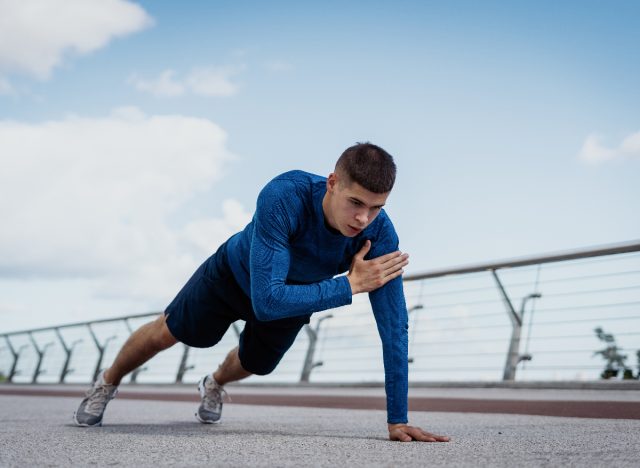
Plank with Shoulder Taps
Plank shoulder taps train your core to stay steady while your arms move. Your abs, obliques, and lower back fire together to prevent side-to-side sway. You improve spinal stability, shoulder control, and total body tension with every tap. This movement builds a stronger midsection that supports athletic movement and daily tasks.
Muscles Trained: Abs, Obliques, Shoulders, Lower Back
How to Do It:
- Start in a plank position with your feet slightly wider than your hips.
- Brace your core and lock your hips in place.
- Lift one hand to tap your opposite shoulder.
- Place your hand back down and switch sides.
- Keep your body still throughout the set.
Recommended Sets and Reps: Perform 3 sets of 20 total taps. Rest for 45 seconds between each set.
Best Variations: Slow-Tempo Shoulder Taps, Plank March, Shoulder Tap Hold
Form Tip: Press your toes into the floor to create more full-body tension.
Back Extensions
Back extensions strengthen the muscles that support your spine. Your lower back, glutes, and hamstrings work together to lift your torso, improving posture and reducing stiffness from long periods of sitting. You build strength in the muscles that stabilize you during walking, lifting, and carrying. This movement creates a strong base that improves your performance in every other exercise.
Muscles Trained: Lower Back, Glutes, Hamstrings, Core
How to Do It:
- Lie face down with your legs straight and your hands at your temples.
- Brace your glutes and tighten your core.
- Lift your chest a few inches off the floor.
- Hold briefly at the top.
- Lower with control.
Recommended Sets and Reps: Perform 3 sets of 12 to 15 reps. Rest for 60 seconds between each set.
Best Variations: Superman Hold, Reverse Hyper on Bench, Glute-Biased Back Extension
Form Tip: Squeeze your glutes during the lift to protect your lower back.
Best Daily Strength Tips for Staying Strong After 50
Your body stays strong when you train it consistently. Movement supports your muscles, joints, and metabolism in ways that compound over time. The right habits keep your strength levels high and your progress steady. You control your energy, your recovery, and your performance through simple daily actions that support every workout. These tips help you move with athletic confidence at any age.
- Train with purpose: Pick movements that challenge multiple muscle groups and improve your ability to move in real-world patterns.
- Move throughout the day: Short walks, posture resets, and brief mobility sessions keep your joints loose and your muscles ready for training.
- Stay hydrated: Water supports muscle contractions, energy levels, and recovery.
- Prioritize protein: Aim for protein at every meal to support muscle repair and strength development.
- Use intentional recovery: Focus on sleep, light stretching, and relaxation to help your body rebuild.
- Stay consistent: Daily effort builds the strength you feel in every part of your life.