5 Daily Hip Exercises That Protect Your Back After 50, According to a Trainer
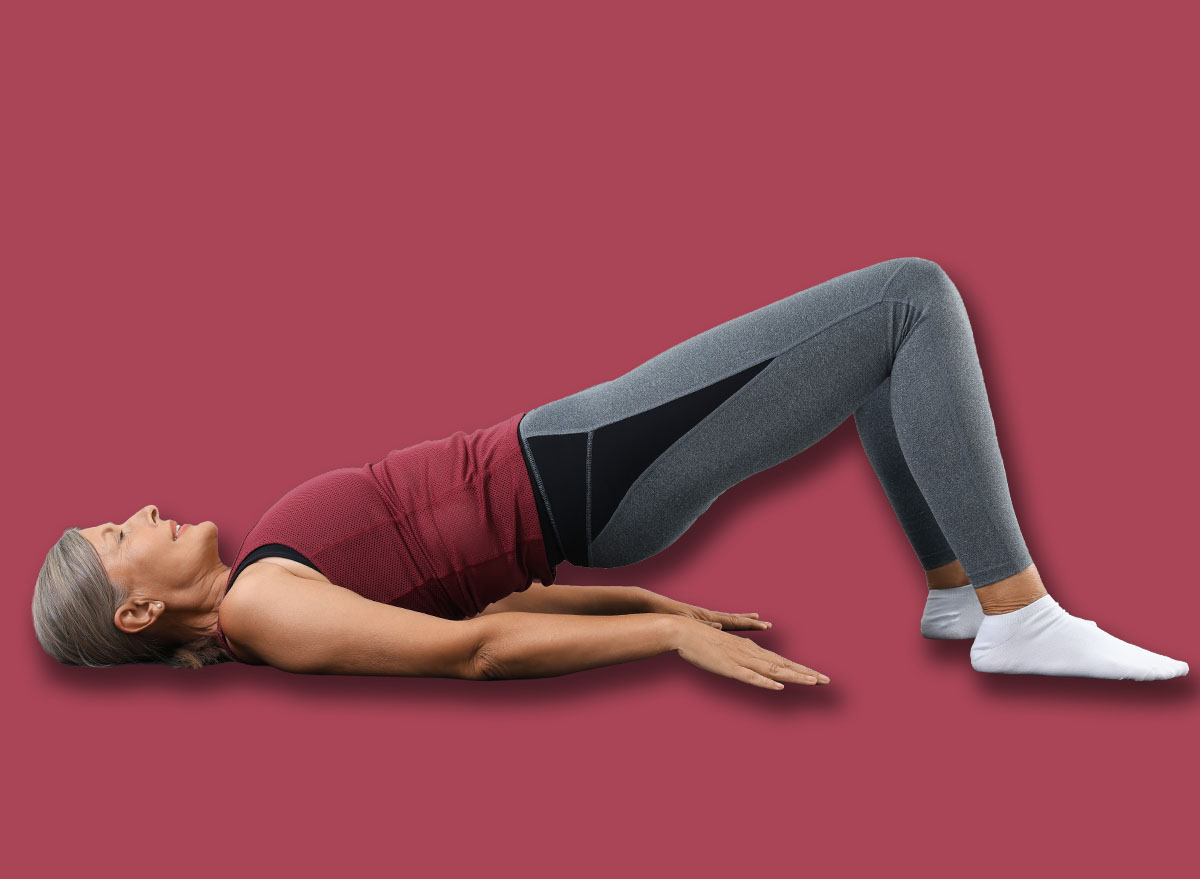

One common pattern I see with clients is knee pain and low back pain that isn’t actually starting in the knee or the spine. Oftentimes, it’s starting at the hip. And when I say hip, I’m not just talking about muscles getting weak. I’m talking about how the entire coxofemoral joint functions as a relational system, including muscle fibers, joint capsule tension, ligament support, femoral head alignment, neurological tension, and fascial load transfer.
When any piece of this complex relationship breaks down, the body continues to move, but the forces stop distributing the way they were designed to. That leads to compensatory patterns, and that’s when the knee and lumbar spine usually start paying the price.
The hip isn’t just a power joint. It’s a centration joint. Its job is to keep the femoral head balanced inside the acetabulum while forces travel through the pelvis and into the rest of the body. When the femoral head loses proper centration, the axis of rotation shifts, and the muscles around the joint lose their mechanical advantage. That’s usually when compensations start showing up in the knee and the lumbar spine.
With clients over 55, I’m rarely chasing compound muscle strength first. I’m usually focused on restoring segmental hip function and fascial continuity, because when the hip regains its ability to absorb and distribute force properly, the rest of the system usually starts calming down. Here are the four areas I focus on and exactly how I address them.
Activate the Gluteal Stabilizers
One of the first things I look for clinically is loss of segmental activation in the gluteal system, especially the gluteus medius and the deep lateral rotators.
From a relational anatomy standpoint, those muscles don’t just move the hip. They help stabilize the pelvis, control femoral rotation, and maintain tension through the lateral fascial chains that connect the hip to the thoracolumbar fascia and even into the opposite shoulder.
When those lateral fibers lose timing or recruitment, the pelvis tends to drop during gait. This is known as a Trendelenburg sign, which creates a lateral shifting of the pelvis and rotational stress down into the knee, as well as shear stress into the lumbar spine.
Restore the Adductor Complex
The next area I almost always assess is the adductor complex. The adductors are incredibly important because they serve as a medial stabilizing chain that connects directly into the pubic bone, the pelvic floor, and the deep abdominal system. Many of them also connect below the knee, making them a key stabilizer of the lower limb.
When the adductors lose segmental function, the femoral head often loses its ability to stay centered within the socket. That loss of centration increases compressive loading or laxity through the hip capsule and changes how force distributes through the knee and sacroiliac region.
So strengthening the adductors isn’t just about squeezing the legs together. It’s about restoring medial hip tension and balancing the fascial relationship between the pelvis and trunk.
Rebuild Glute Max Recruitment
The gluteus maximus is one of the most powerful muscles in the body, but also one of the most misunderstood. The glute max has multiple fiber directions that connect directly into the sacrum, the thoracolumbar fascia, the femur, and the iliotibial band. From a relational anatomy perspective, it functions as a major force transmitter between the lower body and the spine.
When the glute max loses segmental activation, I commonly see clients substituting with hamstrings or lumbar extensors. That shifts load directly into the low back and often changes how the pelvis rotates during walking and lifting.
Restoring segmental recruitment of the glute max helps reestablish posterior fascial tension and improves how load transfers through the pelvis into the spine.
Decompress the Anterior Hip Capsule
Another piece that gets overlooked constantly is the anterior hip capsule. Over time, especially with prolonged sitting, the anterior coxofemoral structures can become compressed and lose elasticity.
When the anterior capsule loses mobility, it can physically alter the axis of rotation of the femoral head. That change doesn’t just affect hip mobility. It changes proprioceptive input into the joint, which alters how the stabilizing musculature organizes around the hip.
That’s where ELDOA work becomes incredibly valuable, because it helps decompress the joint, restore capsular tension balance, and improve neurological awareness around the coxofemoral joint.
Address Myofascial Quality of the Glute Max
The last piece I usually address is the myofascial quality of the gluteus maximus. The glute max is a massive fascial hub that connects the sacrum, pelvis, thoracolumbar fascia, and even has indirect relationships with contralateral shoulder mechanics through fascial sling systems.
When that tissue becomes densified or loses pliability, it can restrict pelvic rotation, reduce hip extension, and increase tension through the lumbar spine.
Myofascial stretching helps restore hydration and elasticity within the fascial layers, which allows the glute max to function as both a stabilizer and a force transmitter.
When I combine these five strategies, what I’m really doing is restoring hip centration, rebalancing fascial load transfer, and improving the neurological coordination around the coxofemoral joint. And when that relationship improves, the knee and lumbar spine almost always experience less stress.