4 Home Exercises That Rebuild Lower Back Strength and Faster Than Gym Workouts After 60

Lower back strain is a real pain in the you-know-what. However, it doesn’t appear all at once and often shows up in small ways. A twinge when you bend over to tie your shoes, stiffness after sitting too long, or a little less confidence lifting a bag of groceries. And after 60, the muscles that support and stabilize your spine tend to lose strength, and when they do, daily movements that you once were able to do no problem start to feel less secure than they once did.
Your instinct to address a weak lower back might be to head to the gym and load up a machine, but rebuilding lower back strength doesn’t require either. In fact, the muscles required for lower back strength respond best to controlled, targeted bodyweight movements you can do on the floor at home. These moves strengthen your entire core, which is what research shows protects your lower back during daily life.
But with all the online noise out there, knowing which bodyweight exercises are best for rebuilding lower back strength can feel overwhelming. That’s why we spoke with James Brady, CPT, a certified personal trainer at OriGym, who compiled his four best home exercises that rebuild lower back strength using nothing more than the floor and your own body weight. Keep reading for the exercises and detailed step-by-step instructions. And when you’re done, don’t miss The 6-Minute Morning Routine That Restores Muscle Faster Than Weight Training After 60.
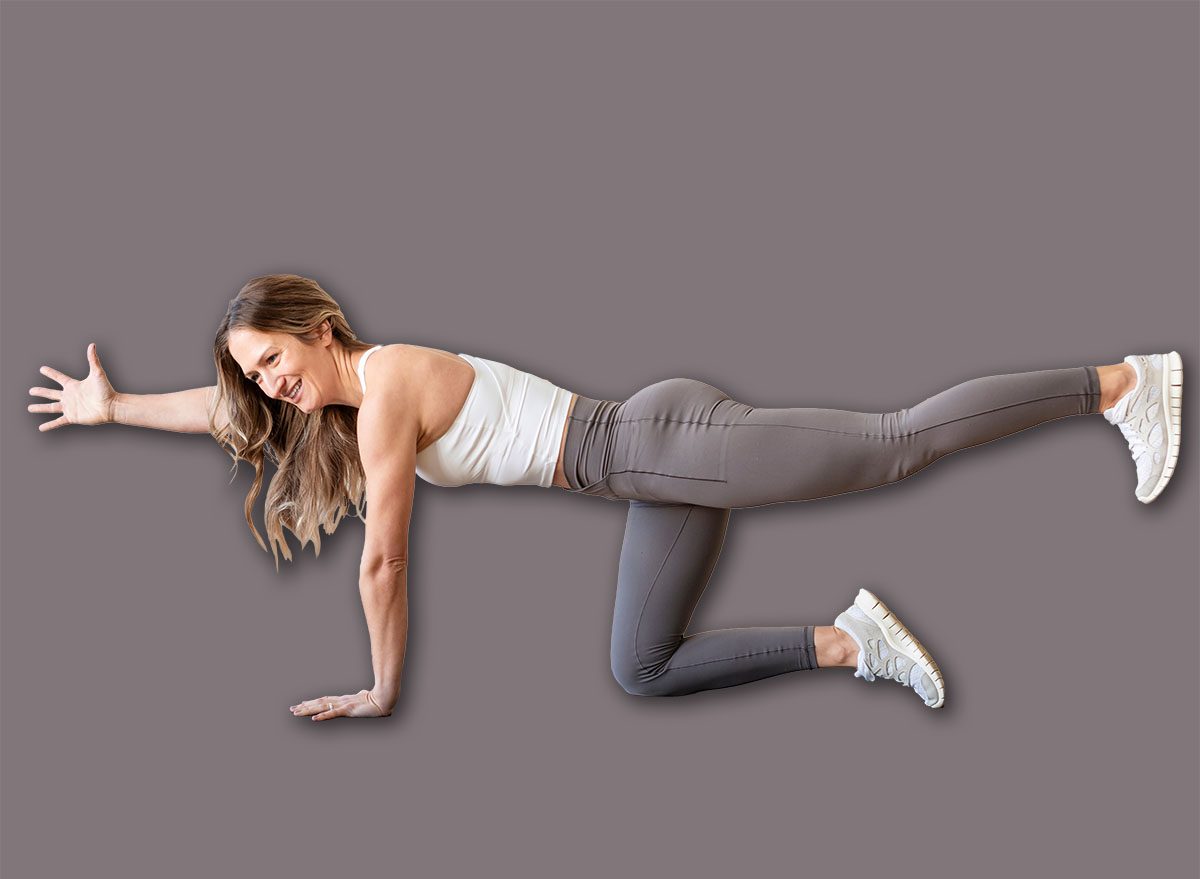
Bird Dogs
The bird dog is a simple and effective way to strengthen the muscles that support and stabilize your lower spine. Extending one arm and the opposite leg while keeping your back still forces those stabilizers to work, and it sharpens your core control at the same time.
How to do it:
- Start on your hands and knees with your back flat.
- Engage your core to keep your spine still.
- Extend one arm forward and the opposite leg back.
- Keep your hips and back straight without twisting your torso.
- Return slowly to the starting position then switch sides.
- Aim for two to three sets of 8 to 10 reps per side.
- Rest for 45 to 60 seconds between sets.
Glute Bridges
Glute bridges strengthen your glutes while recruiting the muscles around your lower back and core. Also, pressing through your feet to lift your hips trains your glutes to share the workload during everyday movements like standing and climbing stairs while alleviating strain on your lower back.
How to do it:
- Lie on your back with your knees bent and your feet flat on the floor.
- Rest your arms at your sides.
- Press through your feet to lift your hips.
- Pause for one to two seconds at the top while keeping your core braced.
- Lower your hips slowly, then repeat.
- Perform two to three sets of 10 to 15 reps.
- Rest for 45 to 60 seconds between sets.
Dead Bug
The dead bug is a dynamic core movement that strengthens the core muscles involved in protecting your lower back. That’s because lowering one heel at a time while keeping your core braced trains your trunk to stay steady as your limbs move.
How to do it:
- Lie on your back with your knees raised over your hips.
- Flex your core so that your lower back stays in contact with the floor.
- Slowly lower one heel toward the floor.
- Return that same leg to the start with control.
- Switch sides, alternating for the full set.
- Complete two to three sets of 8 to 10 reps per side.
- Rest for 45 to 60 seconds between sets.
Prone Back Extensions
You may not have heard of this next one. Prone back extensions target the muscles running along the back of your spine, which is crucial for lower back strength. Fortunately, you don’t need a large lift here, so keeping the movement small and controlled helps protect your back.
How to do it:
- Lie face down with your arms resting by your sides.
- Keep your neck in line with your spine and look down at the floor.
- Gently lift your chest a small distance off the floor.
- Pause for one to two seconds at the top of the movement.
- Lower your chest with control, then repeat.
- Aim for two to three sets of 8 to 12 reps.
- Rest for 45 to 60 seconds between sets.