5 Morning Exercises That Build Strength Faster Than Dumbbells After 60

Strength becomes more valuable with every passing decade. After 60, it determines how easily you climb stairs, carry groceries, get out of a chair, and enjoy the activities that make life fulfilling. As a trainer, I’ve found that many people assume they need a rack of dumbbells to build muscle and maintain independence. While weights certainly have their place, some of the most effective strength-building exercises rely on your own body weight and controlled movement instead.
The secret to getting stronger isn’t always adding more resistance. It’s teaching your muscles to work together through functional movement patterns that mirror real life. Bodyweight exercises recruit multiple muscle groups at once, improve coordination, and strengthen the stabilizing muscles that often get overlooked during traditional weight training. When performed consistently with good technique, they create a level of practical strength that carries over into everything you do.
I’ve spent years coaching adults over 60, and the strongest clients aren’t necessarily the ones lifting the heaviest weights. They’re the ones who master foundational movements and practice them regularly. These five morning exercises build total-body strength while improving balance, posture, and mobility at the same time. Make them part of your morning routine, and you’ll begin every day reinforcing the muscles that help you stay active and independent.
Sit-to-Stand
If I wanted to improve someone’s functional strength in the shortest amount of time, the sit-to-stand would almost always be my starting point. This movement strengthens the quadriceps, glutes, hamstrings, and core while directly improving one of the most important daily activities. Every repetition reinforces the ability to rise from a chair safely and confidently without relying heavily on the arms. I recommend this exercise to nearly every client because it strengthens several large muscle groups simultaneously while remaining accessible for most fitness levels. Stronger legs quickly translate into easier movement throughout the entire day.
How to Do It
- Sit near the front of a sturdy chair.
- Place your feet shoulder-width apart.
- Lean forward slightly.
- Press through your heels to stand.
- Lower yourself slowly.
- Complete 10 to 15 repetitions.
Wall Push-Ups
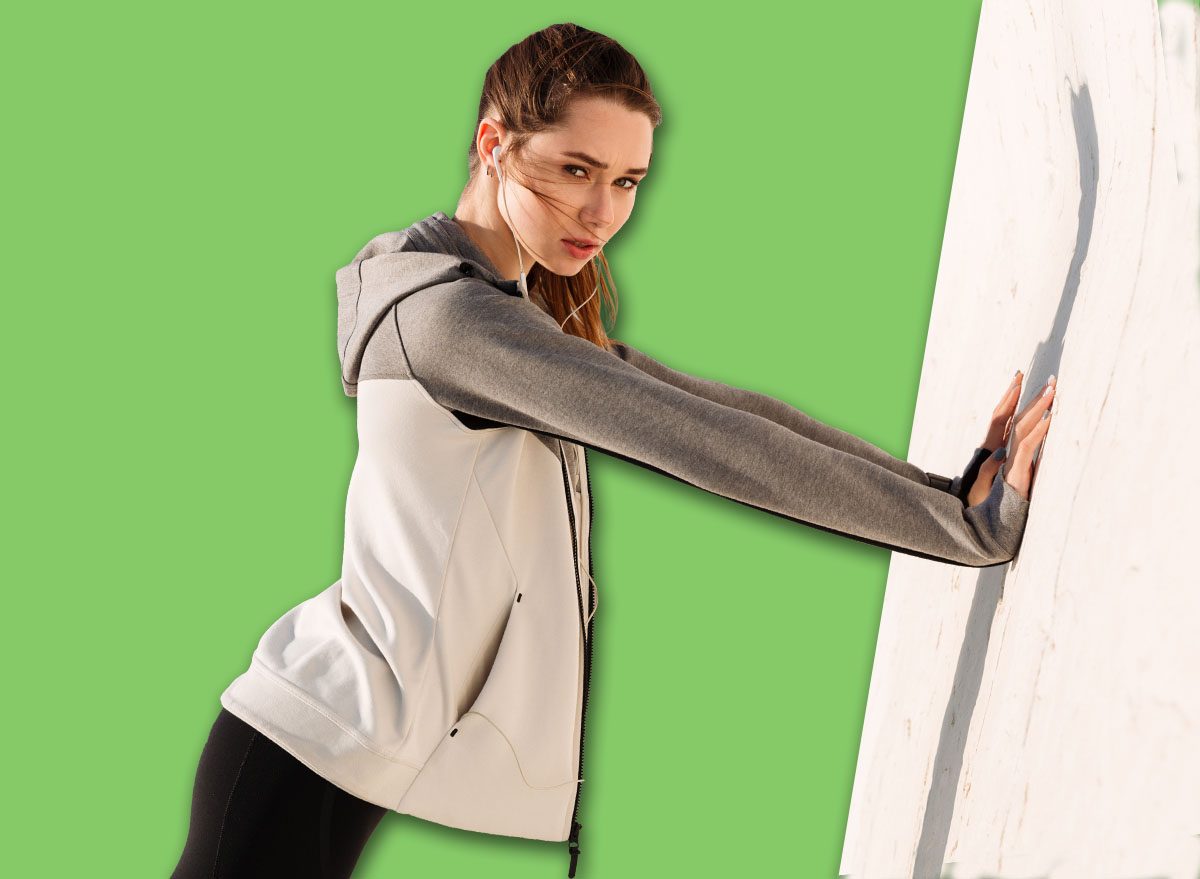
Upper-body strength often declines quietly after 60, making everyday pushing movements feel surprisingly difficult. Wall push-ups provide an excellent way to strengthen the chest, shoulders, triceps, and core without placing excessive stress on the wrists or shoulders. I frequently prescribe them because they allow clients to build strength gradually while maintaining perfect control. As confidence grows, adjusting foot position increases the challenge without adding equipment. Consistency with this movement helps preserve upper-body power that remains useful for years to come.
How to Do It
- Stand facing a wall.
- Place your hands slightly wider than shoulder-width apart.
- Step back comfortably.
- Bend your elbows.
- Push back to the starting position.
- Perform 12 to 15 repetitions.
Glute Bridges
Strong hips support nearly every movement you perform throughout the day. Unfortunately, prolonged sitting often weakens the glutes, forcing the lower back and knees to compensate. Glute bridges restore strength where many older adults need it most while also engaging the hamstrings and core. I often tell clients that healthier hips create stronger walking, easier stair climbing, and better posture. Few exercises activate these important muscles as effectively while remaining gentle on the joints.
How to Do It
- Lie on your back with knees bent.
- Keep your feet flat on the floor.
- Tighten your core.
- Lift your hips until your body forms a straight line.
- Lower with control.
- Complete 12 to 15 repetitions.
Bird Dog
One of the most overlooked aspects of strength involves stability. Without a strong core and coordinated movement, even powerful muscles can’t perform at their best. Bird dogs strengthen the deep muscles surrounding the spine while improving balance, posture, and body awareness. I regularly use this exercise because it teaches the upper and lower body to work together as a single unit. Clients often notice improvements in everyday movement long before they realize how much stronger they’ve become.
How to Do It
- Begin on your hands and knees.
- Extend your right arm forward.
- Extend your left leg backward.
- Hold briefly.
- Return slowly.
- Alternate sides for 10 repetitions each.
Bear Plank Hold
I like ending strength routines with an exercise that challenges nearly every major muscle group without requiring a single piece of equipment. The bear plank hold activates the shoulders, chest, core, hips, and legs simultaneously while encouraging excellent posture and stability. Although the movement looks simple, maintaining proper position demands total-body effort. Clients often discover muscles working that they didn’t even realize had grown weak. Holding this position for just a few seconds each morning builds the kind of functional strength that pays dividends throughout the day.
How to Do It
- Start on your hands and knees.
- Position your hands under your shoulders.
- Lift your knees one to two inches off the floor.
- Keep your back flat.
- Hold for 15 to 30 seconds.
- Repeat 3 to 5 times.