5 Bodyweight Exercises That Build Muscle Faster Than Dumbbells After 60

Building muscle after 60 doesn’t come down to what you hold in your hands; it comes down to how well you use the muscle you’ve got and how often you challenge it. Bodyweight training excels because it forces you to control your own position through space, which brings more muscle into play than most people expect. Instead of isolating one area at a time, these movements coordinate multiple joints and muscle groups together, which tends to create a stronger overall training effect.
What stands out over time is how much tension you can actually create without adding load. When you slow a movement down, hold positions, and move with control, your muscles stay engaged longer and have to work harder to finish each rep. That time under tension is a big piece of what drives muscle growth, and it’s something a lot of people miss when they rush through lighter movements.
Another benefit is how well these exercises carry over. Bodyweight exercises build strength in multiple positions, improving how your body stabilizes, balances, and generates force in everyday movement. That’s part of the reason bodyweight training holds up so well over time.
There’s also a consistency factor that’s hard to ignore. Bodyweight work is easy to repeat, requires no setup, and fits into your day with little thought. When something is that accessible, you end up doing it more often, and that’s what keeps progress moving forward.
Push-Ups
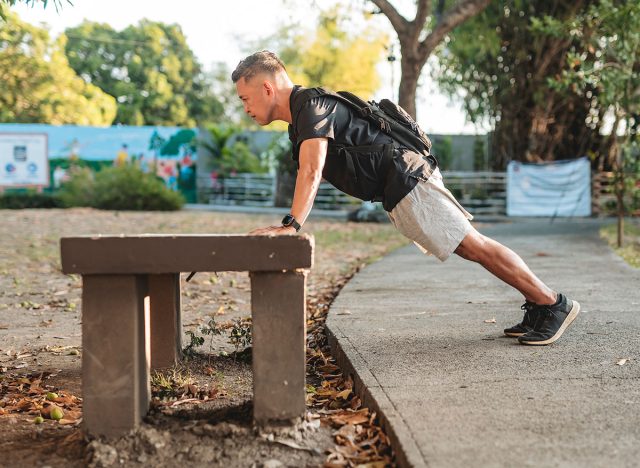
Push-ups bring your chest, shoulders, and triceps into play all at once, which makes them one of the most efficient upper-body movements you can do. When you stay controlled and keep your body in a straight line, your core also has to stay engaged, which adds to the overall demand. A lot of people rush through these, but when you slow them down, they become much more challenging. Keep your reps clean and you’ll feel the difference pretty quickly.
Muscles Trained: Chest, shoulders, triceps, core
How to Do It:
- Start in a plank position with your hands under your shoulders.
- Keep your body in a straight line from head to heels.
- Lower your chest toward the floor by bending your elbows.
- Press through your hands to return to the starting position.
- Maintain a steady pace and stay controlled.
Recommended Sets and Reps: Perform 3 sets of 8 to 12 reps. Rest for 60 seconds between each set.
Best Variations: Incline push-ups, knee push-ups, slow tempo push-ups
Form Tip: Keep your elbows angled slightly back instead of flaring them out.
Chin-Ups
Chin-ups are one of the most effective ways to build strength through your upper body, especially your back and arms. Lifting your bodyweight forces your muscles to work together, and that tends to create a strong training effect even with lower rep ranges. If full reps aren’t there yet, assisted variations still get the job done. Stay consistent with these, and you’ll start to feel your pulling strength improve.
Muscles Trained: Back, biceps, shoulders
How to Do It:
- Grab a pull-up bar with your palms facing toward you.
- Hang with your arms fully extended.
- Pull your chest toward the bar.
- Lower yourself back down with control.
- Repeat while maintaining good form.
Recommended Sets and Reps: Perform 3 sets of 5 to 8 reps. Rest for 60 seconds between each set.
Best Variations: Band-assisted chin-ups, negative reps, holds at the top
Form Tip: Think about pulling your elbows down instead of just lifting your chin.
Reverse Lunges
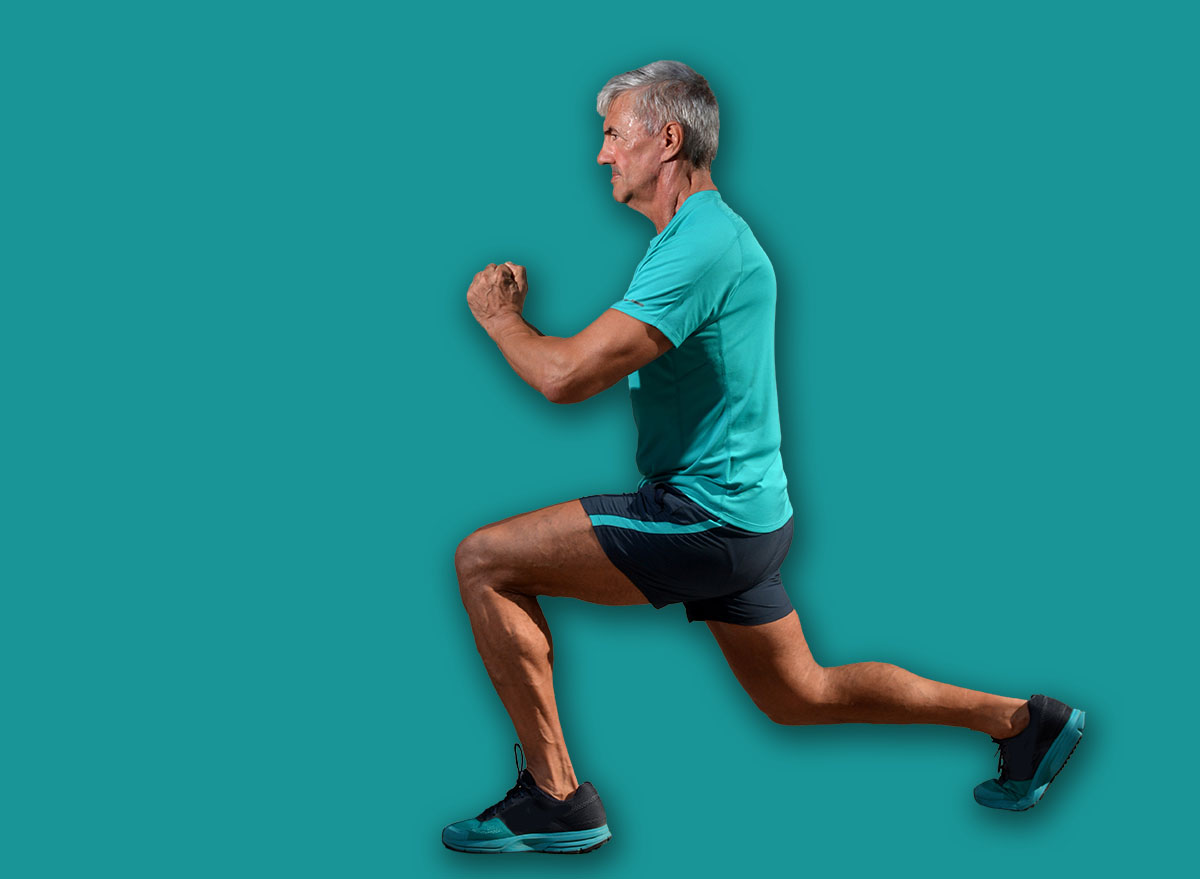
Reverse lunges build strength through your legs while also improving balance and control. Stepping back instead of forward keeps things a bit more controlled and easier on your knees. When you stay steady and push through your front heel, your glutes and legs take on the work. It’s a simple movement, but it carries over well into daily life.
Muscles Trained: Glutes, quadriceps, hamstrings
How to Do It:
- Stand tall with your feet together.
- Step one foot back into a lunge.
- Lower your back knee toward the ground.
- Push through your front foot to return to standing.
- Alternate legs with each rep.
Recommended Sets and Reps: Perform 3 sets of 8 to 10 reps per leg. Rest for 60 seconds between each set.
Best Variations: Short step lunges, assisted lunges, slower tempo reps
Form Tip: Keep your weight through your front heel and stay upright.
Bodyweight Squats
Bodyweight squats reinforce one of the most important movement patterns you use every day. Sitting down and standing up, picking something up, or getting out of a chair all rely on this motion. When you slow the movement down and stay in control, your legs stay engaged the entire time. That’s where the benefit really comes from.
Muscles Trained: Quadriceps, glutes, hamstrings
How to Do It:
- Stand with your feet about shoulder-width apart.
- Brace your core and keep your chest up.
- Lower into a squat by bending your knees and hips.
- Keep your weight balanced through your feet.
- Drive through your heels to stand back up.
Recommended Sets and Reps: Perform 3 sets of 10 to 15 reps. Rest for 60 seconds between each set.
Best Variations: Box squats, tempo squats, assisted squats
Form Tip: Keep your knees tracking in line with your toes.
Glute Bridge Holds
Holding the top position of a glute bridge keeps constant tension on your hips, which helps build strength without needing extra load. When you focus on squeezing your glutes and staying in position, it doesn’t take long before you feel the effort build. This is one of those movements that looks simple but works well when done with intention.
Muscles Trained: Glutes, hamstrings, core
How to Do It:
- Lie on your back with your knees bent and feet flat on the floor.
- Press through your heels and lift your hips upward.
- Hold the top position while squeezing your glutes.
- Keep your core engaged and your hips level.
- Lower back down when the set is complete.
Recommended Sets and Reps: Perform 3 sets of 20 to 30 second holds. Rest for 60 seconds between each set.
Best Variations: Single-leg holds, longer duration holds, elevated feet holds
Form Tip: Avoid arching your lower back and keep the tension in your glutes.
What Helps You Build On This
This is where most people either start seeing progress or lose momentum. The exercises themselves matter, but how you perform them and how often you come back to them make the bigger difference. Bodyweight training works best when you stay consistent and focus on quality over quantity. When each rep has intention behind it, your muscles have a reason to adapt.
- Stay consistent across the week: A few sessions spread out will go further than one hard workout.
- Slow your reps down: Control keeps the muscles engaged longer.
- Work within a range you can control: Clean reps beat forced reps every time.
- Adjust the difficulty as needed: Use incline, assistance, or tempo to keep things challenging.
- Stay active outside of workouts: Daily movement supports muscle and overall strength.
References
- Strasser, Barbara et al. “Role of Dietary Protein and Muscular Fitness on Longevity and Aging.” Aging and disease vol. 9,1 119-132. 1 Feb. 2018, doi:10.14336/AD.2017.0202
- Archila, Linda R et al. “Simple Bodyweight Training Improves Cardiorespiratory Fitness with Minimal Time Commitment: A Contemporary Application of the 5BX Approach.” International journal of exercise science vol. 14,3 93-100. 1 Apr. 2021, doi:10.70252/WEQD2681