5 Chair Exercises That Restore Walking Strength Faster Than Gym Workouts After 60

Never underestimate the importance of walking strength—especially after 60. It’s what keeps you active, independent, and free from falls. In fact, your walking speed is referred to as the “sixth vital sign.” How fast you walk can reveal how healthy your heart, muscles, and nervous system are. Plus, it serves as an accurate predictor of cognitive decline, functional capabilities, and even longevity.
“‘Walking strength‘ is not one muscle. It is the quads helping you stand, the glutes and hamstrings keeping the hips from collapsing, the calves giving you push-off, and the trunk keeping you from wobbling with every step. A lot of people lose the walk before they lose the will to walk. The body just starts making the stride shorter and safer,” explains Andrew Menechian, Co-Founder and Head of Fitness at FitCommit, who has over 12 years of experience in the fitness industry and has mentored more than 100 personal trainers through education roles at The Fitness Playground and Clean Health Fitness Institute.
Since getting in your steps each day isn’t enough movement for building strong legs, we are here with another treat to add to your routine. Check out these five chair exercises that can help restore your walking strength faster than gym workouts after 60. The best part is, all you need is a sturdy chair in your home to get started!
“Walking drops off with age because strength, power, balance, joint range, and confidence usually fade together. Daily walks help, but they do not always give enough resistance to keep those muscles strong. Chair exercises are a good bridge: safe enough to start, but easy to progress by adding reps, slowing the lowering, using less hand support, or moving to standing versions,” says Menechian.
Below, he breaks down five stellar chair exercises to add to your routine.
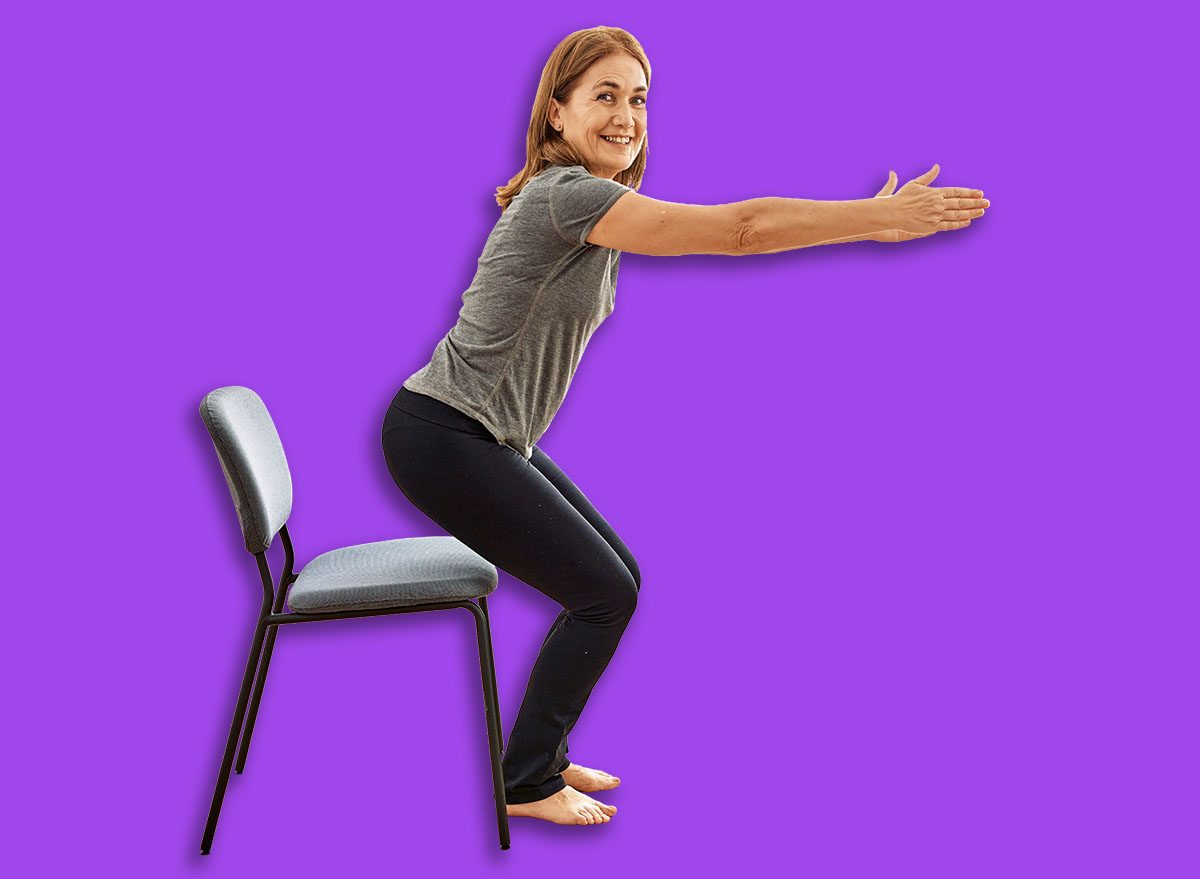
Sit-to-Stands
“Use the hands if needed, but try to use less help over time. This is the one I care about most because it looks a lot like real life,” Menechian tells us.
- Begin by standing tall in front of a sturdy chair with your feet hip-width apart on the ground.
- Activate your core and keep your chest lifted.
- Bend at the knees and hips and lower slowly into a squat—as if you’re about to sit down. Make sure your weight stays in your heels.
- Lightly touch the surface of the chair with your glutes.
- Press through your heels to rise back up.
Seated March
“If the hip flexors are weak, people often shuffle because they do not pick the foot up well,” Menechian points out.
- Begin seated with your feet placed hip-width apart on the floor.
- Lift your left knee up to hip height.
- Lower.
- Then, lift your right knee up to hip level.
- Lower.
- Maintain solid posture as you continue to “march.”
Seated Heel Raises
“This exercise is simple, almost boring, but the calves are a big part of push-off. Weak calves make walking feel flat,” Menechian says.
- Sit tall in the chair with your feet flat on the ground and knees bent to 90 degrees.
- Hold onto the sides of the chair for support.
- Lift both heels off the ground, rising onto the balls of your feet. Go as high as possible—picturing reaching the sky with your toes.
- Hold at the top for 2 seconds.
- Lower your heels back to the start position.
Seated Leg Extensions
- Begin sitting tall with your back supported against the chair.
- Place your feet flat on the floor.
- Hold the sides of the chair for added stability.
- Lift your legs in front of you until your knees are completely extended. For max quad engagement, keep your toes flexed toward your shins the entire time.
- Use control to lower.
RELATED: 5 Daily Walking Drills That Flatten Belly Overhang Better Than Ab Workouts After 45
Standing Hip Hinges With Chair Support
“This teaches the person to use the hips instead of dumping everything into the knees,” Menechian tells us.
- Stand tall with your feet hip-width apart.
- Hold onto the chair for support.
- Soften your knees and press your hips back while maintaining a tall chest.
- As you hinge forward, feel a solid stretch in your hamstrings.
- Activate your hamstrings and glutes to drive your hips forward.