5 Morning Exercises That Restore Core Strength Faster Than Ab Workouts After 55

Core strength keeps you steady when you’re walking, supports your spine when you’re lifting or carrying something, and helps your body stay connected when you move. When your core is doing its job, you notice it in small ways, better balance, less strain through your back, and more control during everyday tasks.
Over time, that strength can start to slip if it isn’t used consistently. Daily movement becomes more limited, posture drifts, and much of traditional ab work turns into quick reps with little focus on control. The end result is a core that isn’t contributing much, even if you’re still doing a few exercises here and there.
A short morning routine can help bring things back online. It gives your core a chance to engage early, reinforces stability, and builds control through positions that actually carry over into daily movement. These exercises focus on holding position, resisting movement, and staying connected from start to finish. Stay consistent with them, and you’ll start to feel a difference in how your body moves and supports itself.
Bird-Dogs
Bird-dogs teach your core how to stay stable while your arms and legs are moving, which is exactly what your body has to handle during most daily tasks. Once you slow it down and focus on staying level, you’ll feel your core working to keep everything from shifting or rotating. That level of control carries over into how you walk, lift, and change direction. When you stay patient with each rep, it builds a kind of stability that shows up outside of the workout.
Muscles Trained: Core, glutes, lower back, shoulders
How to Do It:
- Start on all fours with your hands under your shoulders and knees under your hips.
- Extend one arm forward and the opposite leg back.
- Keep your hips and shoulders level as you reach.
- Hold briefly at full extension.
- Return to the starting position and switch sides.
Recommended Sets and Reps: Perform 3 sets of 8 to 10 reps per side. Rest for 30 seconds between each set.
Best Variations: Paused bird-dogs, slow tempo reps, band-resisted bird-dogs
Form Tip: Keep your hips square and avoid shifting side to side.
Plank with Shoulder Taps
Plank shoulder taps add just enough movement to challenge your core while keeping your position steady. Each time you lift a hand, your body must resist rotation, keeping your core engaged the entire time. When the taps are controlled, you’ll feel your midsection working to hold everything in place. That carryover shows up in better balance and more control during other movements.
Muscles Trained: Core, shoulders, chest
How to Do It:
- Start in a high plank position with your hands under your shoulders.
- Keep your body in a straight line from head to heels.
- Lift one hand and tap the opposite shoulder.
- Place your hand back down and repeat on the other side.
- Continue alternating while staying steady.
Recommended Sets and Reps: Perform 3 sets of 10 to 12 taps per side. Rest for 30 seconds between each set.
Best Variations: Wider stance plank taps, slower tempo taps, incline plank taps
Form Tip: Keep your hips as still as possible throughout the movement.
Side Plank Holds
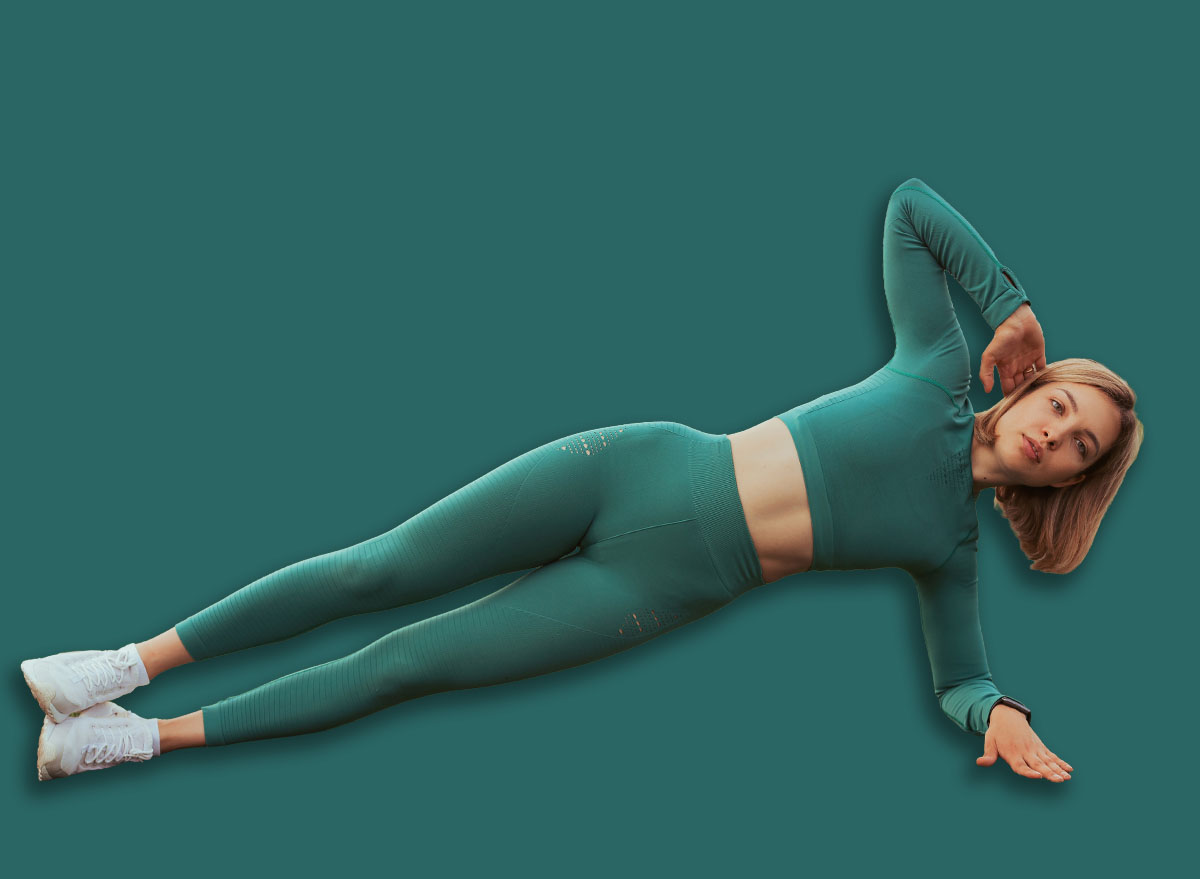
Side planks train the muscles along the sides of your core, which help you stay stable when you’re standing, walking, or carrying uneven loads. These muscles often get overlooked, and that can show up as a lack of balance or control. Holding this position builds strength where it’s needed and helps your body stay aligned. When you stay tight through your core, you’ll feel those muscles kick in quickly.
Muscles Trained: Obliques, core, shoulders
How to Do It:
- Lie on your side with your legs stacked.
- Place your forearm under your shoulder.
- Lift your hips off the ground to form a straight line.
- Hold the position while keeping your body tight.
- Lower back down and switch sides.
Recommended Sets and Reps: Perform 3 sets of 20 to 30 seconds per side. Rest for 30 seconds between each set.
Best Variations: Bent-knee side plank, extended hold, reach-through variation
Form Tip: Push your hips up, as if there were a string pulling them to the ceiling, and avoid letting them drop.
Deep Breathing Forearm Planks
This version of the plank adds a breathing element, which helps you stay engaged without locking everything up. A lot of people hold their breath or brace too hard, which reduces the movement’s effectiveness. When you focus on steady breathing while holding a position, your core learns to stay active under more natural conditions. That tends to carry over better into everyday movement and other exercises.
Muscles Trained: Core, shoulders
How to Do It:
- Start in a forearm plank with your elbows under your shoulders.
- Keep your body in a straight line from head to heels.
- Inhale through your nose and fill your abdomen with air.
- Exhale slowly while keeping your core engaged.
- Continue breathing steadily while holding the position.
Recommended Sets and Reps: Perform 3 sets of 20 to 30 seconds. Rest for 30 seconds between each set.
Best Variations: Longer holds, elevated feet plank, slow breathing patterns
Form Tip: Stay braced through your midsection while breathing naturally.
Dead Bugs
Dead bugs tie movement and control together in a way that carries over well into daily activity. Your arms and legs are moving while your core works to keep your lower back stable, which is a position your body finds itself in more often than you might think. When you slow it down and stay connected, the movement becomes much more effective. Over time, that control shows up in how you move and how your back feels during the day.
Muscles Trained: Core, hip flexors, shoulders
How to Do It:
- Lie on your back with your arms extended toward the ceiling and knees bent at 90 degrees.
- Press your lower back gently into the floor.
- Extend one arm and the opposite leg toward the ground.
- Keep your core engaged and avoid arching your back.
- Return to the starting position and switch sides.
Recommended Sets and Reps: Perform 3 sets of 8 to 10 reps per side. Rest for 30 seconds between each set.
Best Variations: Paused dead-bugs, slow tempo reps, band-resisted dead-bugs
Form Tip: Keep your lower back pressed into the floor throughout.
The Best Tips for Restoring Core Strength After 55

Building your core back up comes down to how often you engage it with intention and how well you control those movements. It may not require full-on ab workouts, but it does take consistency and attention to how each rep feels. When these exercises become part of your morning routine, your core starts to feel more connected, and that carries over into everything else you do.
- Make it part of your morning routine: A few minutes each day keeps your core active and engaged.
- Focus on control instead of speed: Slower reps help you stay connected to the movement.
- Stay consistent with your breathing: Proper breathing helps maintain tension without over-bracing.
- Keep your movements clean: Good form makes each rep more effective.
- Stay active throughout the day: General movement supports overall strength and stability.
References
- Rodríguez-Perea, Ángela et al. “Core training and performance: a systematic review with meta-analysis.” Biology of sport vol. 40,4 (2023): 975-992. doi:10.5114/biolsport.2023.123319
- Schumacher, Leah M et al. “Consistent Morning Exercise May Be Beneficial for Individuals With Obesity.” Exercise and sport sciences reviews vol. 48,4 (2020): 201-208. doi:10.1249/JES.0000000000000226