5 Morning Exercises That Restore Shoulder Strength Faster Than Weight Training After 55

In a society filled with sitting and screen time, your shoulders tend to get stiff before they get weak. It usually starts with less movement throughout the day, a little more time spent sitting, and fewer positions that take the arms overhead or behind the body. Over time, that lack of movement chips away at both mobility and strength, which is why simple things like reaching, lifting, or even sleeping comfortably can start to feel off.
A short morning routine can go a long way here. It gives your shoulders a chance to move through different positions before the day picks up, which helps restore range of motion and wake the muscles up. These aren’t heavy lifts or high-effort workouts. The goal is to get things moving, build control, and layer back in the strength that’s been missing.
Each of these exercises targets the shoulder blades along with the muscles that support them. When those areas start working together again, the shoulders feel more stable, move more freely, and handle everyday tasks with less effort. Stay consistent with them, and you’ll start to notice that difference carry over into the rest of your day.
Down Dog
The down dog puts you in a position where your upper body must support your weight while your shoulder blades move and stabilize simultaneously. That combination helps wake up the muscles that often go quiet after long periods of sitting. You’ll also feel a stretch through your lats and upper back, which can open things up if your shoulders tend to feel tight first thing in the morning. When you spend a little time here and focus on your position, it sets the tone for how your shoulders move the rest of the day.
Muscles Trained: Shoulders, upper back, lats, core
How to Do It:
- Start in a plank position with your hands under your shoulders.
- Push your hips up and back to form an inverted V shape.
- Press your hands firmly into the ground.
- Let your head relax between your arms.
- Hold the position while breathing steadily.
Recommended Sets and Reps: Perform 3 sets of 20 to 30 seconds. Rest for 30 seconds between each set.
Best Variations: Pedaling heels, bent-knee down dog, elevated hands on a bench
Form Tip: Push the floor away and keep your shoulders active, rather than sinking into them.
Quadruped Scapula Circles
This one looks simple, but it does a great job of getting your shoulder blades moving the way they’re supposed to. Instead of just bending your arms, you’re teaching your shoulders to glide, rotate, and control movement under light load. That’s something most people lose over time, especially if they spend a lot of time in one position during the day. When you slow it down and stay deliberate, you’ll start to feel parts of your upper back working that don’t always get much attention.
Muscles Trained: Scapular stabilizers, shoulders, upper back
How to Do It:
- Start on all fours with your hands under your shoulders and knees under your hips.
- Keep your arms straight and your core engaged.
- Gently shift your shoulders forward, then to one side, then back, and around in a circle.
- Move slowly and keep the motion controlled.
- Reverse the direction after completing your reps.
Recommended Sets and Reps: Perform 2 to 3 sets of 5 to 8 circles in each direction. Rest for 30 seconds between each set.
Best Variations: Larger circles, slower tempo circles, pause at each point
Form Tip: Keep your elbows locked and let the movement come from your shoulder blades.
Scapula Push-ups
Scapula push-ups help you separate shoulder-blade movement from arm movement, which a lot of people lose without realizing it. Instead of bending your elbows, you’re focusing on protracting and retracting your shoulder blades while staying in a stable position. That builds control and strength through the upper back and helps your shoulders feel more connected during pressing movements. Once that control comes back, a lot of other exercises start to feel smoother.
Muscles Trained: Serratus anterior, shoulders, upper back, core
How to Do It:
- Start in a high plank position with your hands under your shoulders.
- Keep your arms straight and your body in a straight line.
- Let your chest sink slightly as your shoulder blades come together.
- Press through your hands and spread your shoulder blades apart.
- Repeat the motion while keeping your core engaged.
Recommended Sets and Reps: Perform 3 sets of 10 to 12 reps. Rest for 30 seconds between each set.
Best Variations: Incline scapula push-ups, knee-supported version, slower tempo reps
Form Tip: Avoid bending your elbows and focus on moving only through your shoulder blades.
Band Pull-Aparts
Band pull-aparts target the muscles that help keep your shoulders pulled back and supported. When those muscles are weak or underused, your shoulders tend to drift forward, which can make everything feel tighter and less stable. This movement brings things back into balance by strengthening the upper back and improving posture. When you stay controlled and keep the tension on the band, you’ll feel those muscles start to wake up quickly.
Muscles Trained: Rear delts, upper back, rhomboids
How to Do It:
- Hold a resistance band in front of you at shoulder height.
- Keep your arms straight with a slight bend in your elbows.
- Pull the band apart by moving your arms out to your sides.
- Squeeze your shoulder blades together at the end of the movement.
- Return to the starting position with control.
Recommended Sets and Reps: Perform 3 sets of 12 to 15 reps. Rest for 30 seconds between each set.
Best Variations: Overhand grip, underhand grip, diagonal pull-aparts
Form Tip: Keep your shoulders down and avoid shrugging as you pull. Think of tucking your shoulder blades into your “back pockets” at the start of each rep.
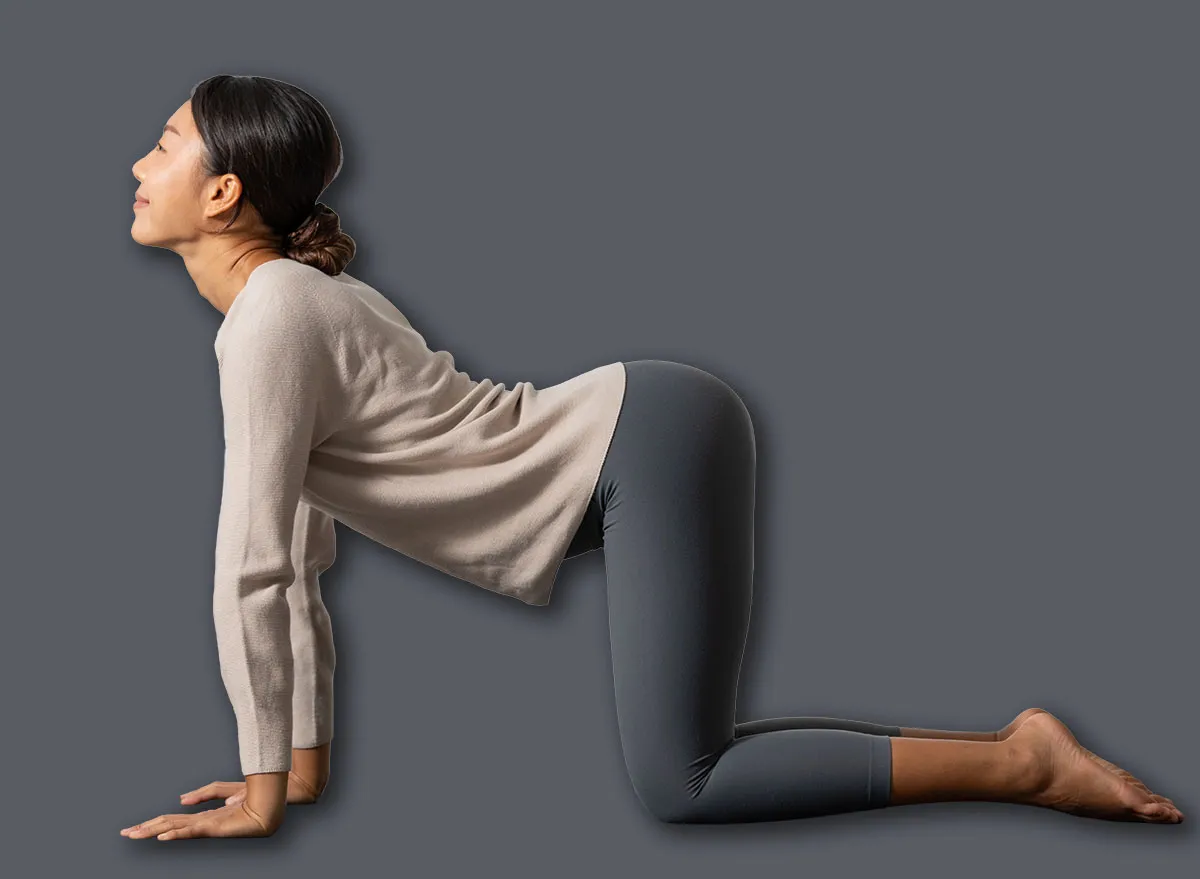
Cat-Cows
Cat-cows help your spine and shoulders move together, which is important for restoring smooth, natural motion. When your upper back loosens up, your shoulders tend to follow, and that can make a noticeable difference in how everything feels. This movement also encourages controlled breathing, which helps you relax into the positions instead of forcing them. It’s a simple way to get things moving without rushing into more demanding exercises.
Muscles Trained: Spine, shoulders, core
How to Do It:
- Start on all fours with your hands under your shoulders and knees under your hips.
- Inhale and drop your belly while lifting your chest and tailbone.
- Exhale and round your back while tucking your chin.
- Move slowly between the two positions.
- Continue for the desired number of reps.
Recommended Sets and Reps: Perform 2 to 3 sets of 8 to 10 reps. Rest for 30 seconds between each set.
Best Variations: Slower tempo, paused positions, extended range cat-cows
Form Tip: Move with your breath and avoid rushing through the positions.
The Best Tips for Restoring Shoulder Strength After 55

Getting your shoulders feeling strong again takes a combination of how often you move them through a full range and how well you control that movement. Instead of long sessions or complicated programming, consistency and a bit of patience will help loosen up and strengthen your shoulders. When you build these movements into your mornings and stay consistent, the improvements tend to carry over into everything from workouts to daily tasks.
- Make it part of your morning routine: a few minutes each day, keep your shoulders moving and prevent stiffness from building up.
- Focus on quality over speed: Slowing things down helps you stay in control and get more out of each rep.
- Work through a comfortable range: Move as far as you can without forcing it, then build from there over time.
- Stay consistent with light resistance work: Bands are a simple way to add tension and reinforce shoulder strength.
- Pay attention to posture throughout the day: How you sit and stand affects how your shoulders feel and move.
References
- Schory, Abbey et al. “A SYSTEMATIC REVIEW OF THE EXERCISES THAT PRODUCE OPTIMAL MUSCLE RATIOS OF THE SCAPULAR STABILIZERS IN NORMAL SHOULDERS.” International journal of sports physical therapy vol. 11,3 (2016): 321-36.
- Wu, Dianxuan et al. “Specific modes of exercise to improve rotator cuff-related shoulder pain: systematic review and meta-analysis.” Frontiers in bioengineering and biotechnology vol. 13 1560597. 8 Apr. 2025, doi:10.3389/fbioe.2025.1560597