If You Can Complete These 3 Morning Exercises After 55, You’re Stronger Than Most People Your Age
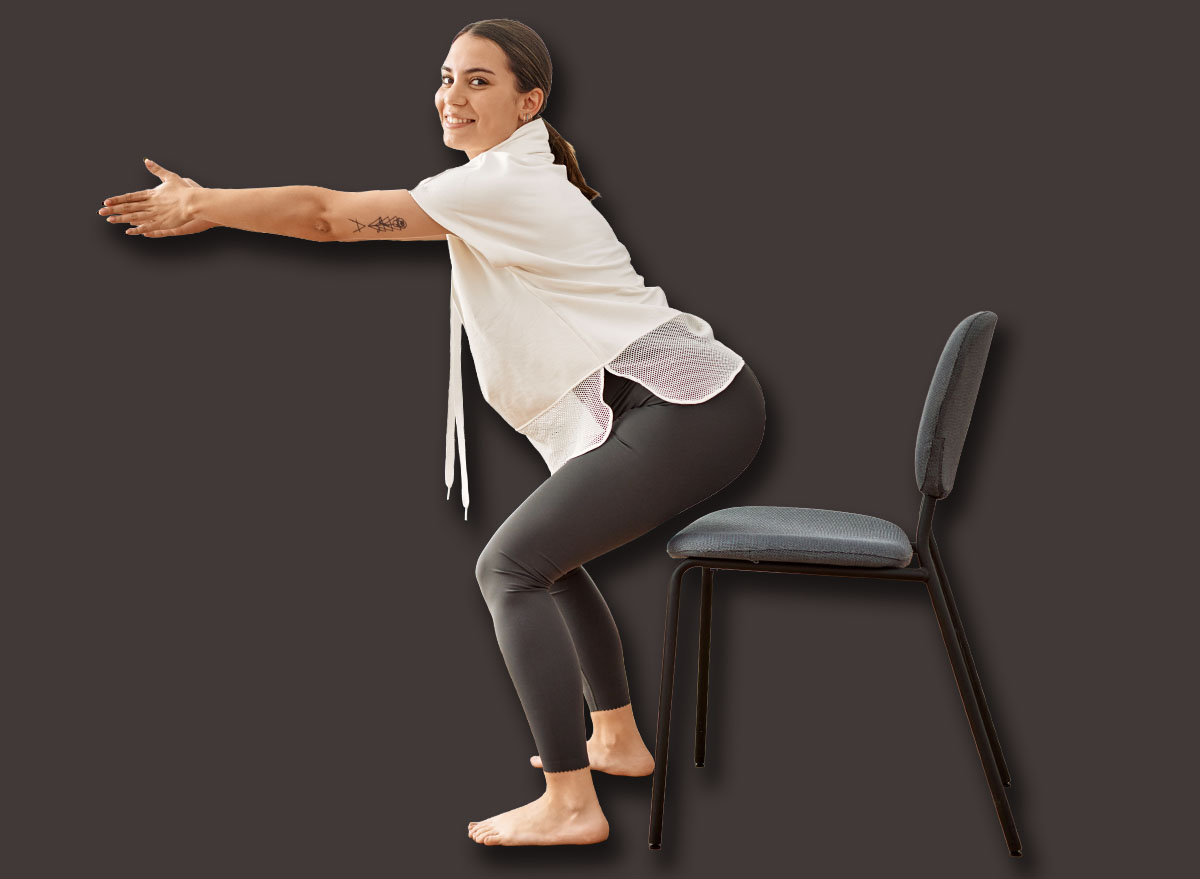

Waking up with stiff joints and tight muscles becomes increasingly common as we age. Our joints and muscles can stiffen more while we sleep, and as we age our neuromuscular coordination slows down. When we exercise in the morning we help wake our body, get blood flow into our muscles and help our joints loosen up. Morning movement can help older adults feel more mobile, steady and energized for the day. Here are three simple tests that reveal whether you’re stronger than most people your age—and what to do if you’re not quite there yet.
Why Morning Exercise Is So Beneficial For You

Morning exercise reduces stiffness, warms up our joints and improves our mobility for the entire day. It will also enhance our balance and stability at a time when fall risk is a little higher. The morning movement will help boost energy, cognition and mood by increasing circulation and alertness. It essentially helps you get a jump start on your day by getting your body fired up. It sets a strong foundation physically and mentally for the day.
Chair Sit To Stand Test
What it tests: Lower body strength and muscular endurance
How to do it:
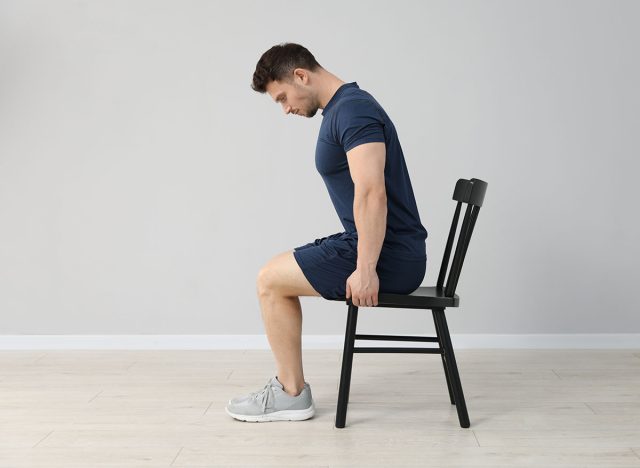
- Sit on any standard chair with feet hip width apart
- Keep your arms to your side or crossed but don’t use them to help you stand up
- Set a timer for 30 seconds
- See how many times you can fully stand up and sit back down in those 30 seconds
The goal: The average for a senior is between 10-19 total reps.
Common mistakes to avoid:
- Don’t use your arms to help you stand up—keep them at your sides or crossed
- Don’t shorten the range of motion—make sure you stand fully for each rep
8 Foot Up And Go Test
What it tests: Balance, agility and mobility
How to do it:
- Set a chair and a cone 8 feet apart
- Start seated in the chair like the chair sit to stand test
- When you are ready, stand up from the chair and walk around the cone as fast as possible
- Come back and sit in the chair
- Time how long it takes you to complete this
The goal: 6-8 seconds.
Common mistakes to avoid:
- Don’t restrict your arms—let them swing naturally as you stand and walk
- Don’t rush the turn around the cone
- Make sure you walk on an even surface at a comfortable pace
RELATED: 5 Chair Exercises That Build Leg Muscle Faster Than Weight Training After 50
6-Minute Walk Test

What it tests: Endurance and cardio
How to do it:
- Set up a walking space—aim for at least 30-50m of space
- Set a timer for 6 minutes
- Walk at a simple safe pace for the 6 minutes
The goal: Complete around 450-600 meters in the 6 minutes. If you are on a track the goal is to complete at least one lap (400m) in that time.
Common mistakes to avoid:
- Don’t rush or pace yourself inconsistently—walk at your normal pace to assess your true ability
- Don’t restrict your arms—keep them swinging naturally
- Make sure you walk on even ground
- Don’t forget to hydrate appropriately
How To Interpret Your Results
If you are within the norm on all 3 then that means you have strong lower body strength, good balance and mobility and great endurance for your age. If that is you, I would say keep doing what you are doing.
For the tests individually:
- If you perform below average on the sit to stand, that means you are lacking some lower body strength
- If you perform below average on the 8 foot up and go test, that means you are lacking in balance and coordination
- If you are below average on the 6-minute walk, you just need to work on building up your stamina and aerobic fitness
The good news is if we perform poorly on any of the tests, we can train our weak links and be back where we need to be.
Can’t Do These Yet? Here’s How To Improve
For the sit-to-stand test:
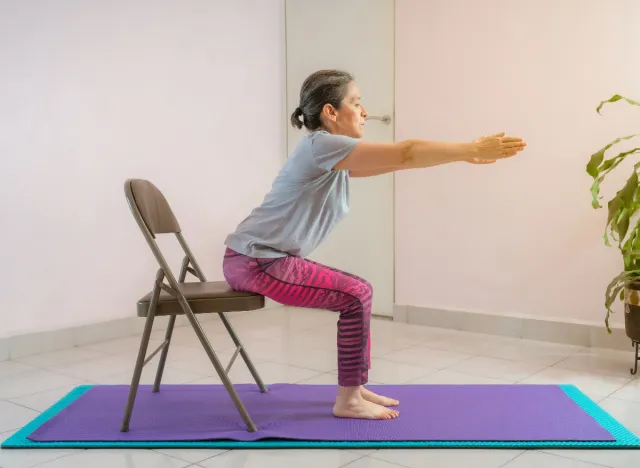
- Start with using your arms to help you stand up—this will take pressure off our legs and allow us to work up to it
- Do this for 3-4 rounds of 30-45 seconds as a progression
- If needed, you can even raise the seat height a little as well—that will make it a little easier on your lower body
- When you’re ready, practice standing up without your arms every chance you get
- Ease into the test by giving yourself a minute to complete it
- As you get stronger and build more confidence, dwindle that down to 30 seconds and you will hit the averages in no time
For the 8-foot up and go test:
- The easiest way to get better is just practice with a shorter distance
- Start with the cone 5-6 feet away—this makes it less of a challenge and can give you a lot easier reps as you build up your strength and coordination
For the 6-minute walk test:
- This being an endurance test, the best progression would be to start with shorter walks of 2-3 minutes
- As you get comfortable with those, build them up over time weekly or even biweekly till you are hitting 6 minutes