6 Morning Exercises That Fight Aging Faster Than Cardio After 55

Cardio absolutely has a place after 55. Walking, cycling, rowing, and jogging can support your heart, improve endurance, and help with body composition. But aging well asks for more than a strong engine. You also need strength, mobility, balance, power, core control, and joints that still feel like they belong to you when you get out of bed.
That’s where a smart morning routine can carry a lot of weight. The first few minutes of the day are a great time to open up stiff areas, wake up the glutes and core, and remind your body how to move through different directions. You’re not trying to crush yourself before coffee. You’re giving your body a daily nudge toward moving better, standing taller, and keeping the muscles that support healthy aging involved.
The beauty of these moves is how much ground they cover without turning your morning into a full workout. You’ll lunge, reach, hinge, brace, rotate, and stabilize in ways that wake up more than one system at a time. That’s the sweet spot after 55: enough work to feel productive, enough control to move well, and a routine you can actually repeat before the day gets rolling.
Reverse Lunge with Overhead Reach
Reverse lunges with an overhead reach train your glutes, quads, hips, shoulders, and core while opening the front of your body. Stepping back challenges your balance, and the reach adds a mobility piece through your hips, ribs, and shoulders. That makes the move especially useful after 55 because it blends strength and flexibility into a single pattern rather than treating them separately. Better control here carries over to walking, stairs, reaching overhead, and moving with more confidence first thing in the morning.
Muscles Trained: Glutes, quadriceps, hamstrings, hip flexors, shoulders, core
How to Do It:
- Stand tall with your feet hip-width apart.
- Step your right foot back into a reverse lunge.
- Lower your back knee toward the floor with control.
- Reach both arms overhead as you lower.
- Press through your front foot to return to standing.
- Repeat on the other side.
Recommended Sets and Reps: Perform 3 sets of 6 to 8 reps per side. Rest for 30 to 45 seconds between each set.
Best Variations: Assisted reverse lunge with reach, shorter-step reverse lunge, bodyweight reverse lunge
Form Tip: Keep your ribs down as you reach so your lower back doesn’t arch.
RELATED: 5 Bed Exercises That Burn Belly Fat Better Than HIIT Workouts After 60
Down Dog to Cobra
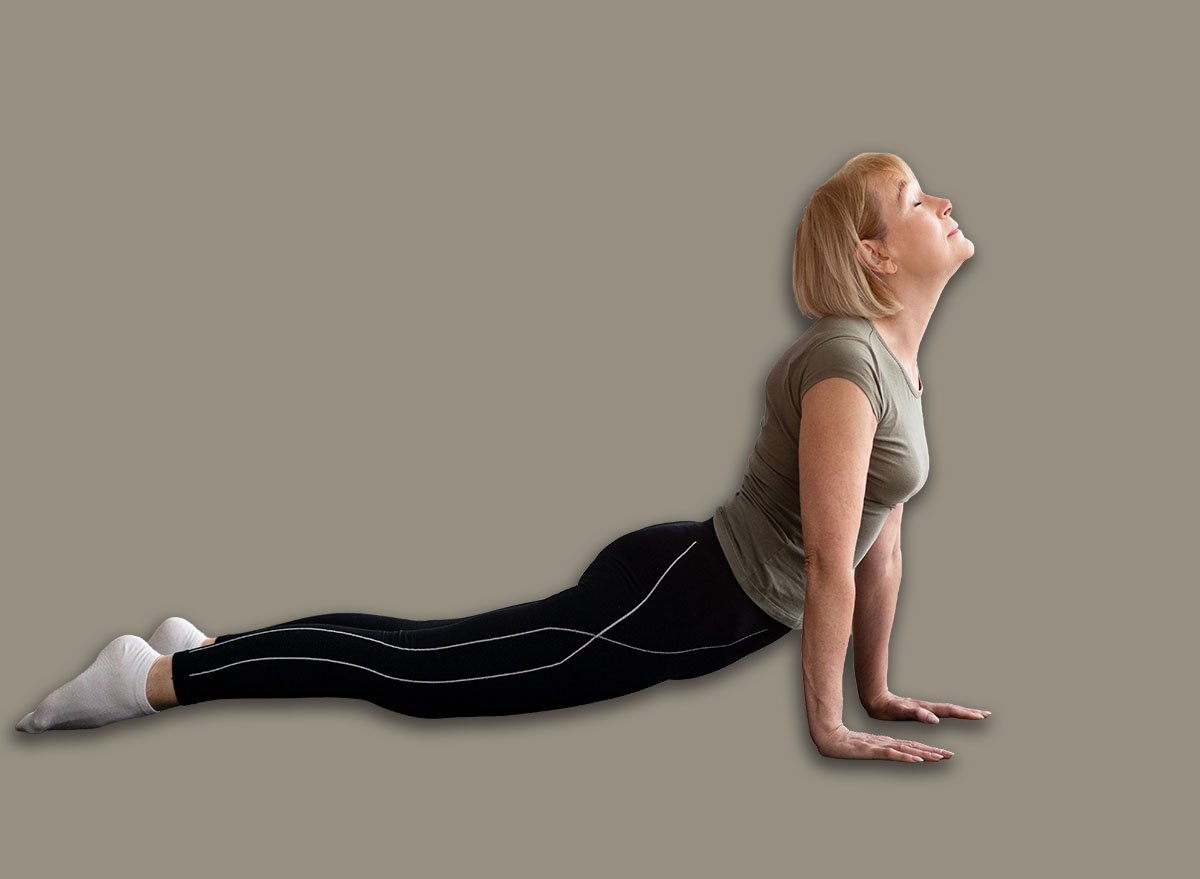
Down dog to cobra trains your shoulders, spine, hips, chest, and core through a smooth, flowing mobility. Pressing back into down dog opens the hamstrings and shoulders, while shifting into cobra extends the spine and opens the front of the body. This helps fight the stiff, folded-forward posture that tends to creep in with age and too much sitting. Move slowly and let each position do its job, rather than rushing through the transition.
Muscles Trained: Shoulders, upper back, chest, hips, core
How to Do It:
- Start in a high plank position with your hands under your shoulders.
- Push your hips up and back into down dog.
- Press your hands into the floor and lengthen your spine.
- Shift your body forward toward plank.
- Lower your hips and lift your chest into cobra.
- Return to down dog with control.
Recommended Sets and Reps: Perform 3 sets of 6 to 8 reps. Rest for 30 seconds between each set.
Best Variations: Elevated hands down dog to cobra, shorter range reps, slower tempo reps
Form Tip: Move through your shoulders and hips instead of dumping into your lower back.
Lateral Lunges
Lateral lunges train your glutes, quads, inner thighs, hips, and core in a side-to-side pattern. Most daily movement happens forward, but aging well also requires the ability to shift sideways, change direction, and control your hips outside a straight line. Lateral lunges fill that gap by building strength and mobility through the hips and inner thighs. Stronger side-to-side control helps with balance, walking on uneven ground, and feeling more athletic throughout the day.
Muscles Trained: Glutes, quadriceps, inner thighs, hamstrings, core
How to Do It:
- Stand tall with your feet together.
- Step your right foot out to the side.
- Push your hips back and bend your right knee.
- Keep your left leg straight and your chest lifted.
- Press through your right foot to return to standing.
- Repeat on the other side.
Recommended Sets and Reps: Perform 3 sets of 6 to 10 reps per side. Rest for 45 seconds between each set.
Best Variations: Short-range lateral lunges, assisted lateral lunges, alternating lateral lunges
Form Tip: Sit back into your hip and keep your knee tracking with your toes.
Plank with Shoulder Taps
Plank shoulder taps train your core, shoulders, chest, triceps, and glutes while your body fights rotation. Every time one hand leaves the floor, your midsection has to brace harder to keep your hips from rocking. That’s a major piece of aging well because strong core control supports balance, posture, and upper-body strength. Compared with steady cardio, this move challenges your body to stabilize while your arms move, which carries over to daily tasks like reaching, bracing, and catching yourself.
Muscles Trained: Core, shoulders, chest, triceps, glutes
How to Do It:
- Start in a high plank position with your hands under your shoulders.
- Set your feet slightly wider than hip-width apart.
- Brace your core and squeeze your glutes.
- Tap one hand to your opposite shoulder.
- Place your hand back on the floor with control.
- Alternate sides while keeping your hips steady.
Recommended Sets and Reps: Perform 3 sets of 8 to 12 taps per side. Rest for 45 seconds between each set.
Best Variations: Incline shoulder taps, wider-stance shoulder taps, slower shoulder taps
Form Tip: Keep your hips quiet while your hands move.
Glute Bridge Walkouts
Glute bridge walkouts train your glutes, hamstrings, core, and hips while keeping your backside under tension. As your feet walk away from your body, your hamstrings have to work harder to keep your hips lifted. This helps fight age-related muscle loss in the posterior chain, which plays a big role in walking, standing, climbing stairs, and protecting your lower back. Keep the steps small and stop before your hips start to drop.
Muscles Trained: Glutes, hamstrings, core
How to Do It:
- Lie on your back with your knees bent and your feet flat on the floor.
- Press through your heels and lift your hips.
- Brace your core and squeeze your glutes.
- Walk your feet forward one small step at a time.
- Walk your feet back toward your body while keeping your hips lifted.
- Lower your hips with control after each set.
Recommended Sets and Reps: Perform 3 sets of 6 to 8 walkouts. Rest for 45 to 60 seconds between each set.
Best Variations: Glute bridge holds, shorter walkouts, single-leg bridge holds
Form Tip: Keep your hips high and avoid letting your lower back take over.
Bird-Dogs
Bird-dogs train your core, glutes, shoulders, and lower back while teaching your body to stay steady as your arms and legs move. The movement looks simple, but clean reps require control through your hips, spine, and shoulders. That makes bird-dogs a strong morning exercise for aging well because they build coordination and stability without beating up your joints. Better control here helps with walking, balance, lifting, and staying supported through your lower back.
Muscles Trained: Core, glutes, lower back, shoulders
How to Do It:
- Start on all fours with your hands under your shoulders and knees under your hips.
- Brace your core and keep your back flat.
- Extend your right arm forward and your left leg straight back.
- Hold briefly while keeping your hips level.
- Return to the starting position with control.
- Repeat on the opposite side.
Recommended Sets and Reps: Perform 3 sets of 8 to 10 reps per side. Rest for 30 seconds between each set.
Best Variations: Paused bird-dogs, slower bird-dogs, banded bird-dogs
Form Tip: Reach long through your arm and leg without twisting your hips.
How to Make Morning Movement Fight Aging
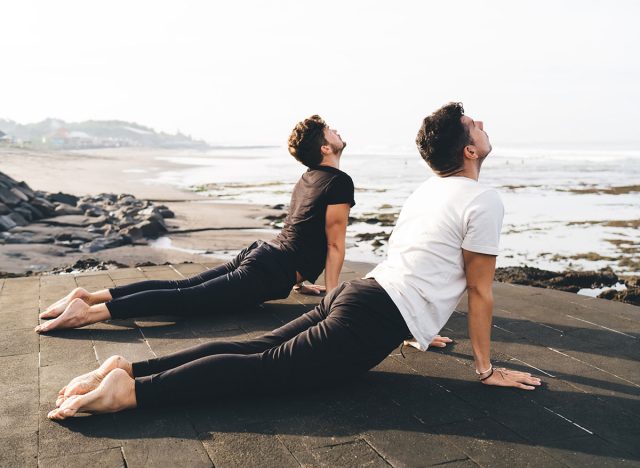
A good morning routine should help your body feel stronger, looser, and more prepared for the day ahead. Cardio supports your heart and endurance, but strength, mobility, balance, and core control help you keep moving well. These exercises cover the qualities that tend to fade when they are no longer given regular attention.
- Move through multiple directions: Lunges, lateral lunges, and bird-dogs help your body control forward, backward, side-to-side, and cross-body movement. That gives you more usable strength than repeating one pattern every day.
- Train your core to stabilize: Shoulder taps, bird-dogs, and bridge walkouts teach your midsection to hold position while your arms and legs move. That skill matters for balance, posture, and lower-back support.
- Keep the hips active: Reverse lunges, lateral lunges, and glute bridge walkouts strengthen the muscles that power walking, climbing stairs, and getting up from a seated position.
- Use control instead of speed: Slow reps help you feel the right muscles working and keep your joints in better positions. Rushing through morning movement usually steals the benefit.
- Stay consistent without turning it into a full workout: Five to 10 focused minutes can go a long way when the movements are done well. Morning routines work because they’re easy to repeat.
Think of these moves as your daily reset button. A few clean reps can wake up your hips, core, shoulders, and legs before the day starts asking more from them.
References
- Schumacher, Leah M et al. “Consistent Morning Exercise May Be Beneficial for Individuals With Obesity.” Exercise and sport sciences reviews vol. 48,4 (2020): 201-208. doi:10.1249/JES.0000000000000226
- Ferrucci, Luigi et al. “Age-Related Change in Mobility: Perspectives From Life Course Epidemiology and Geroscience.” The journals of gerontology. Series A, Biological sciences and medical sciences vol. 71,9 (2016): 1184-94. doi:10.1093/gerona/glw043