If You Can Hold a Plank This Long After 60, Your Core Strength Is Elite
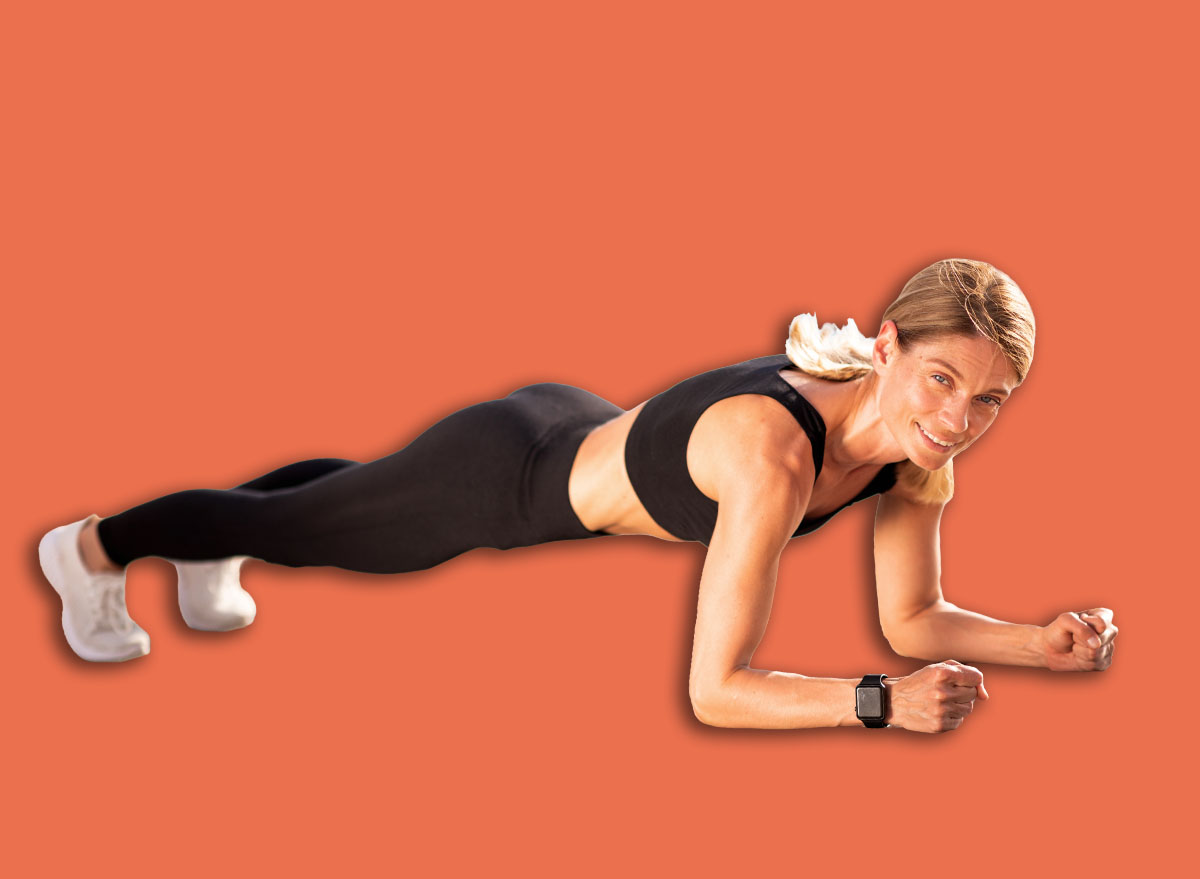

Core strength becomes one of the biggest predictors of movement quality after 60. A strong core supports posture, balance, walking mechanics, spinal stability, and overall independence during daily life. Many adults focus heavily on arm or leg strength while overlooking the muscles surrounding the trunk and pelvis. That mistake often leads to lower-back discomfort, poor posture, slower movement, and reduced balance over time.
The plank remains one of the most effective ways to measure real-world core strength because it challenges the entire body at once. Unlike crunches that isolate small movement patterns, planks force the abs, hips, shoulders, glutes, and lower back to stabilize together under tension. That full-body demand makes the exercise an excellent benchmark for functional strength and muscular endurance after 60. Holding a strong plank position also reflects body control, coordination, and postural stability.
Most adults over 60 struggle to maintain proper plank form for long periods because the core weakens naturally with age and inactivity. Elite-level performance comes from maintaining total-body tension without allowing the hips to sag or the shoulders to collapse forward. If you can reach the benchmark below with strong form, your core strength stands well above average for your age group.
How to Do the Plank Properly
The plank looks simple, but proper form changes everything. Many people hold the position incorrectly by lifting the hips too high or allowing the lower back to collapse under fatigue. Strong technique keeps the core fully engaged while protecting the spine and shoulders throughout the hold. Adults over 60 benefit most from shorter high-quality holds rather than forcing long sloppy attempts with poor alignment. Every muscle from the shoulders down to the calves should stay active during the exercise. Controlled breathing also helps maintain abdominal tension and overall stability as fatigue builds.
How to Do It
- Start on your forearms and toes
- Position your elbows directly under your shoulders
- Keep your legs straight
- Tighten your glutes and core
- Maintain a straight line from head to heels
- Avoid letting your hips sag or rise too high
- Breathe steadily throughout the hold
- Hold the position as long as possible with proper form
What Your Results Mean
Under 20 Seconds
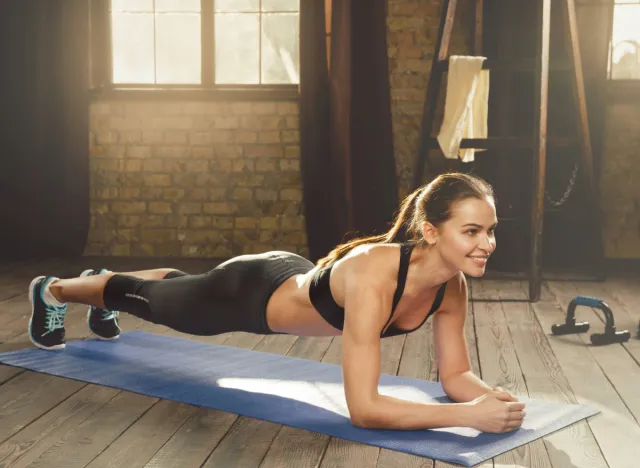
This range signals weak core endurance and limited trunk stability. Many adults in this category struggle with posture, balance, and lower-back support during everyday movement. The abdominal muscles fatigue quickly, forcing the hips and spine to compensate during standing and walking. Improving core endurance should become a major priority because stronger trunk stability supports nearly every movement pattern in daily life.
20 to 45 Seconds
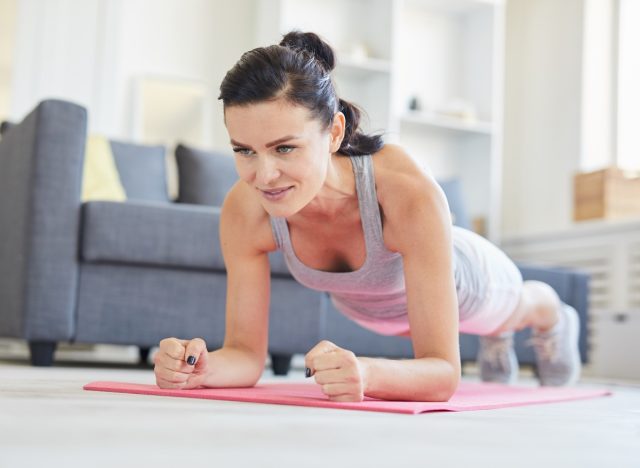
This range reflects decent foundational strength but still leaves significant room for improvement. The core handles moderate tension, yet muscular endurance and stabilization strength likely fade during longer activity. Many adults in this range function well during daily movement but notice fatigue during longer walks, lifting tasks, or sustained standing. Consistent training can improve endurance and postural control rapidly at this level.
45 to 90 Seconds
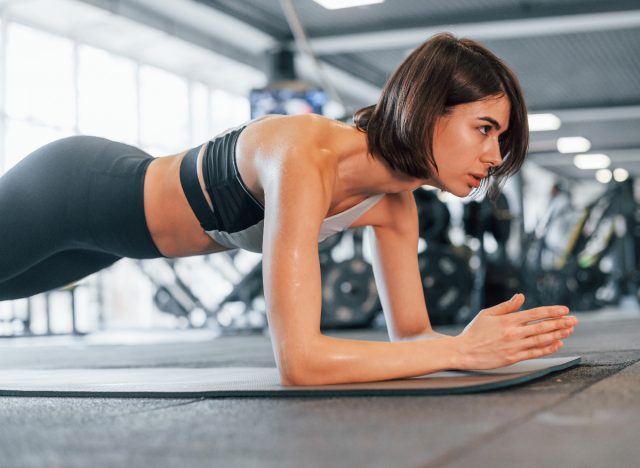
This range places you above average for most adults over 60. Your core muscles stabilize the spine effectively while maintaining strong muscular coordination throughout the hold. People in this category often move with better posture, stronger balance, and greater overall body control during daily activity. Reaching this level typically reflects consistent movement habits and strong muscular endurance through the trunk and hips.
Over 90 Seconds
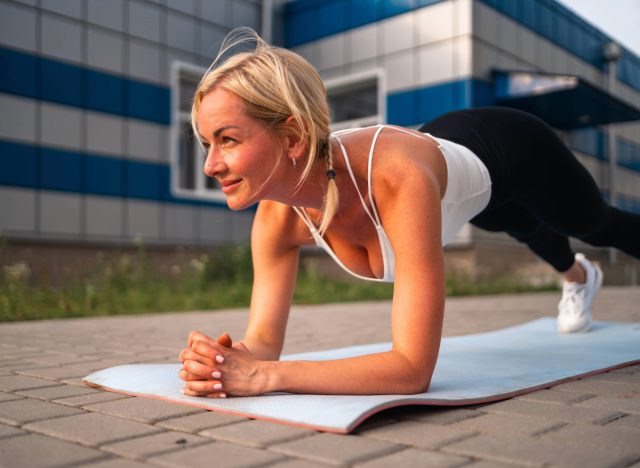
This level qualifies as elite core endurance after 60. Holding a plank this long with strong form demonstrates exceptional trunk stability, muscular endurance, and total-body coordination. Your core muscles resist fatigue efficiently while supporting excellent posture and movement control under tension. Adults who achieve this level often display stronger balance, smoother walking mechanics, and better overall movement quality compared to their peers.
How to Improve Your Results
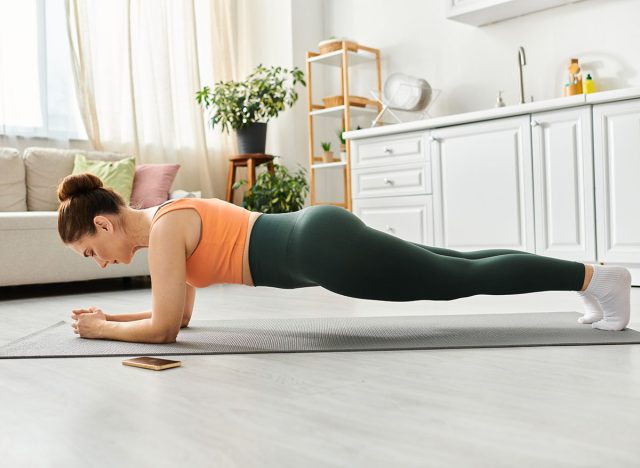
Improving plank performance after 60 depends on building total-body tension and core endurance gradually instead of forcing maximum holds every day. Short high-quality planks performed consistently create far better results than occasional long attempts with poor form. Focus heavily on keeping the glutes, abs, and shoulders engaged throughout every repetition. Controlled breathing also helps maintain muscular tension and prevents unnecessary fatigue during longer holds.
Exercises like dead bugs, glute bridges, standing marches, and bird dogs strengthen the stabilizing muscles that support stronger plank performance. Walking daily and improving posture throughout the day also contribute heavily to better trunk endurance over time. Many adults improve their plank holds dramatically once the hips and glutes start contributing more effectively during stabilization. Consistency matters far more than intensity when rebuilding elite-level core strength after 60.
Try testing your plank once every few weeks rather than every day. That approach allows the muscles to recover and adapt while giving you a clear picture of your progress over time. Even small improvements in hold time often translate into noticeable gains in posture, balance, and movement confidence during everyday life.