The 6-Minute Morning Routine That Restores Hip Mobility Faster Than Floor Stretches After 55

If the first few steps in the morning feel stiff and cumbersome, you’re not alone. The hips are one of your body’s most essential joints for movement, and often lose mobility with age due to reduced physical activity, muscle tightness, and natural changes in joint structure.
Studies suggest that reduced hip mobility can affect everyday movements like walking, climbing stairs, bending down, and getting in and out of a car. Over time, this stiffness can also place additional strain on surrounding areas of your body, including your knees and lower back.
Fortunately, restoring hip mobility doesn’t require long stretching routines on the floor. Instead, performing dynamic movements while standing may be a more effective and sustainable approach for improving hip mobility and joint health in the morning, since they can help improve hip joint range of motion and while activating multiple muscle groups that support the hip joint.
Below, we chatted with James Bickerstaff, CPT, a personal trainer at OriGym, who reveals a highly effective 6-minute morning routine that restores hip mobility in no time. “Gentle standing movements can help wake up the hips and encourage them to move more freely,” Bickerstaff explains. “They promote circulation and help the joints move through their natural range of motion.”
Read on for the exercises and detailed instructions. (Next up: If You Can Hold a Bridge This Long After 55, Your Core Strength Is Top-Tier.)
Standing Hip Circles
Hip circles are a dynamic movement that allows your hip joints to move through multiple directions. “Standing hip circles provide a gentle way to wake up your hip joints first thing in the morning by providing lubrication to avoid stiffness,” says Bickerstaff.
How to do it:
- Stand tall with your feet hip-width apart.
- Place your hands on your hips and keep your shoulders relaxed.
- Engage your core slightly to stabilize your upper body.
- Slowly move your hips in a circular motion.
- Draw a large circle with your pelvis while keeping your torso relatively still.
- Complete 8 to 10 circles, then switch directions.
- Complete 2 sets in each direction, resting for 20 to 30 seconds between sets.
Standing Knee Drive
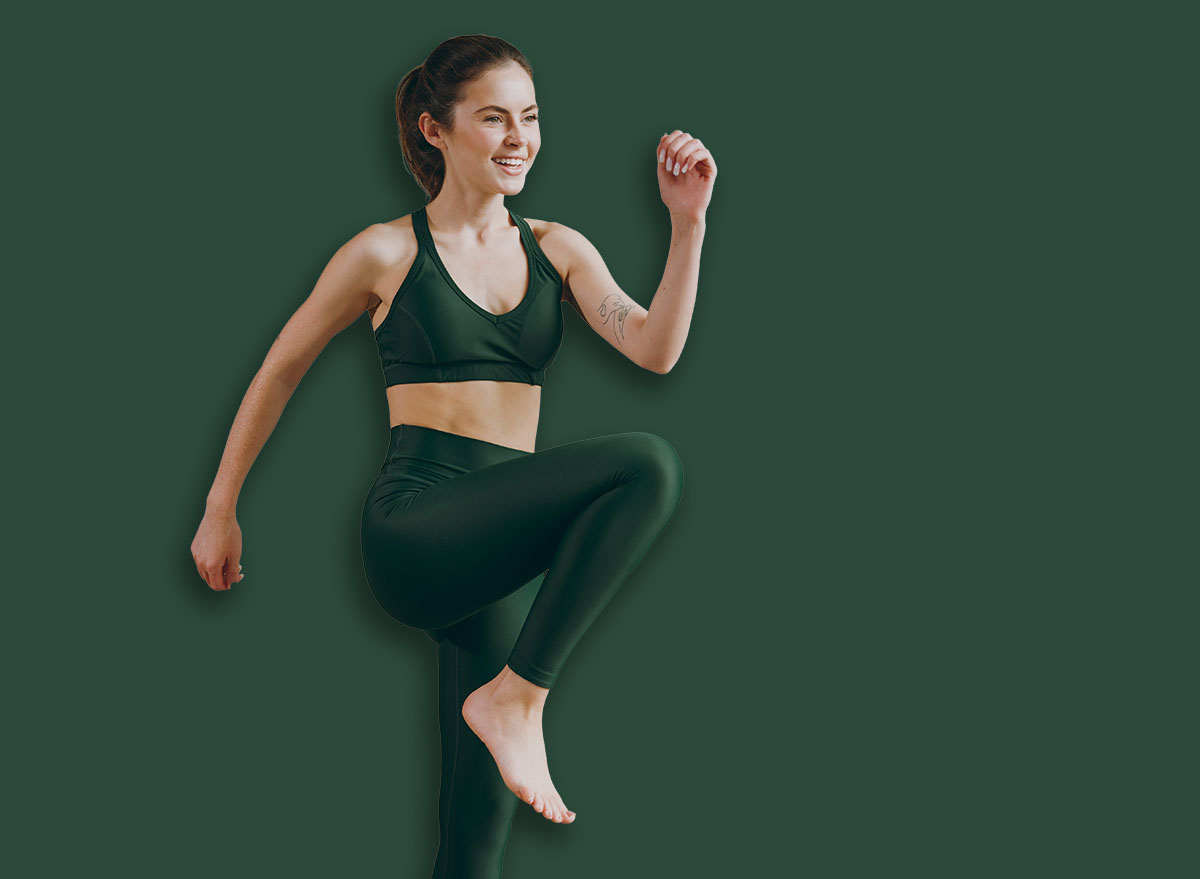
The standing knee drive activates your hip flexors, the muscles responsible for lifting your thigh. These muscles are crucial for walking, climbing stairs, and maintaining balance.
“Standing knee drives activate the hip flexors encouraging them to move through the full range, all while improving your balance,” says Bickerstaff.
How to do it:
- Stand upright with your feet hip-width apart.
- Keep your posture tall and your shoulders relaxed.
- Engage your core to stabilize your torso.
- Slowly drive one knee upward toward your chest.
- Pause for one to two seconds at the top of the movement.
- Lower your leg back down with control.
- Repeat the movement with the opposite leg.
- Perform 2 sets of 10 to 12 reps per leg. Rest for 30 to 45 seconds between sets.
Standing Hip Hinges
Hip hinges are essential for safe bending, lifting, and many everyday tasks as you get older. “These restore your functional hip mobility, by teaching the hips to move independently from the lower back, helping with different tasks like bending and lifting,” Bickerstaff explains.
How to do it:
- Stand with your feet shoulder-width apart.
- Place your hands on your hips.
- Keep your spine neutral and your chest tall.
- Push your hips back while maintaining a slight bend in your knees.
- Lower your torso slightly forward as your hips move back.
- Stop when you feel a stretch in the back of your hips or hamstrings.
- Return to standing by squeezing your glutes.
- Do 2 sets of 10 to 12 reps, resting for 30 to 45 seconds between sets.
Side Leg Swings
Side leg swings help open your outer hips. “Side leg reduce stiffness and improve lateral mobility, which are essential for everyday movements like getting in and out of a car,” says Bickerstaff.
How to do it:
- Stand next to a wall or chair for support.
- Keep your torso upright and your core tight.
- Shift your weight onto one leg.
- Swing your opposite leg out to the side.
- Bring your leg back toward the midline of your body.
- Maintain a smooth, controlled motion throughout the movement.
- Avoid swinging too quickly or twisting your torso.
- Complete 2 sets of 12 to 15 swings per leg. Rest for 20 to 30 seconds between sets.