If You Can Hold a Plank This Long After 55, Your Core Strength Is Stronger Than 90% of Peers
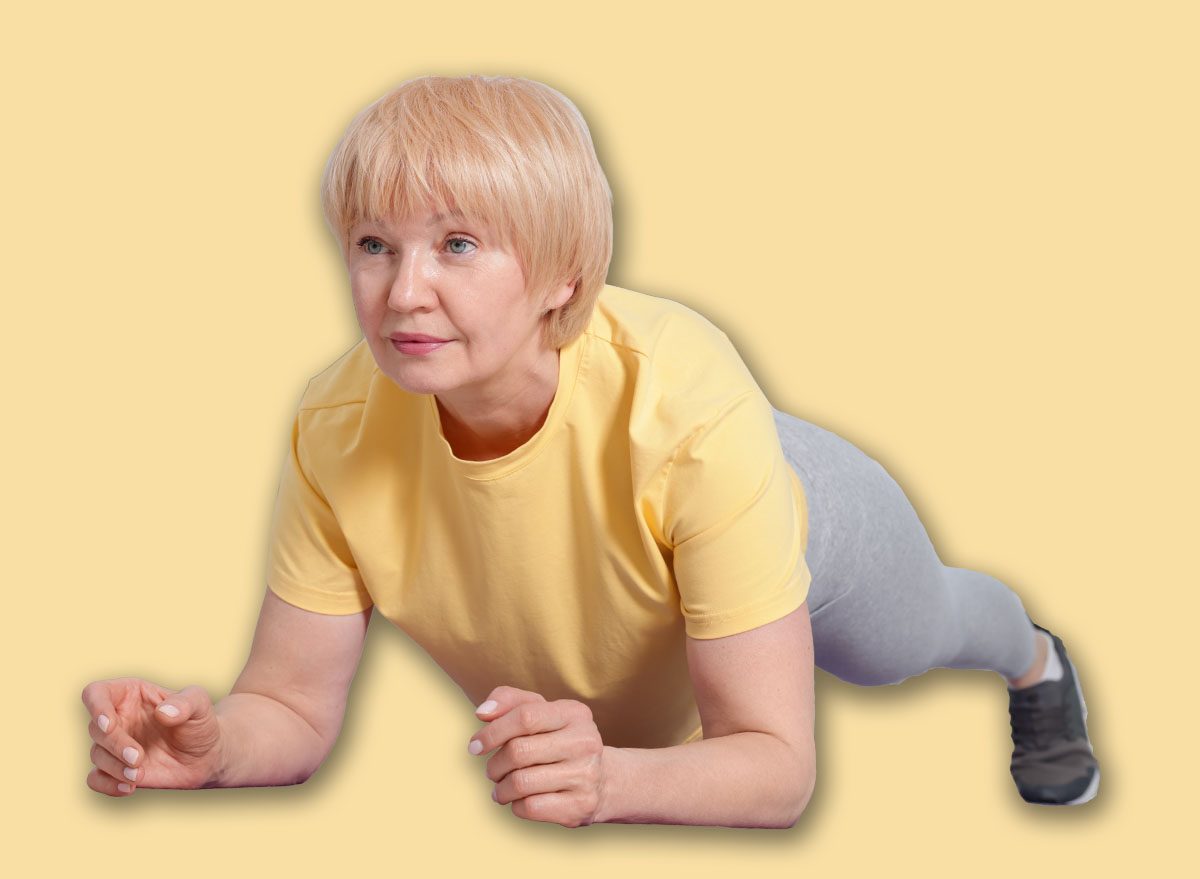

The first thing I look for in a plank isn’t the time. It’s the setup. I want to see someone create a strong brace, settle their hips into the right position, and keep breathing without turning the whole thing into a strain-fest. After 55, that tells you a lot. A plank asks your core to hold your body together while your shoulders, hips, and legs stay involved, which makes it a much better test than most people give it credit for.
A strong plank carries over into more than workouts. Your midsection supports your spine when you walk, helps you stay steady when you carry something heavy, and gives your arms and legs a stronger base to move from. When your core has endurance, you don’t lose position as quickly during longer efforts. That’s the piece a lot of people miss. Strength gets you into position, but endurance helps you keep it.
For this test, the goal is a clean hold that lasts past the two-minute mark. That’s a serious benchmark after 55, especially when your hips stay level and your lower back stays neutral the whole time. Below, we’ll break down what the plank reveals about your core strength, how to set up the test correctly, what your hold time says about where you stand, and how to build a stronger plank with better control.
What the Plank Reveals About Core Strength After 55
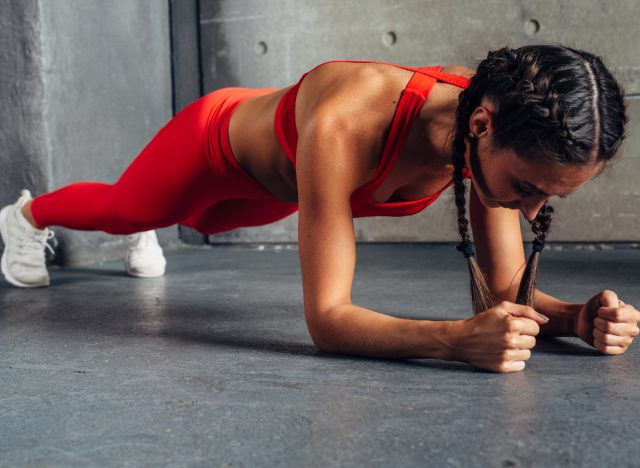
The plank tests how well your body can hold tension without movement. Your abs brace the front of your trunk, your obliques help keep your torso steady, and your glutes help your pelvis stay in line. Your shoulders and upper back also have to work so your body stays supported over your forearms.
This makes the plank a strong measure of full-body control. Your core sits between your upper and lower body, so it has to manage force in both directions. When your midsection stays strong, your movement usually feels more connected. Walking, lifting, carrying, reaching, and floor transitions all rely on that same ability to stay organized while the rest of your body works.
The endurance side separates an average plank from a standout one. A short hold shows you can create tension. A longer clean hold shows you can keep it. After 55, that staying power says a lot about your ability to maintain posture, control your hips, and support your spine under fatigue.
Plank Setup: How to Test Your Hold
A strong plank starts before the timer begins. Get into position first, create tension, then start the clock. The goal is to keep the same line from your head to your heels for the full hold. Every second should look steady, controlled, and repeatable.
How to Do It:
- Place your forearms on the floor with your elbows directly under your shoulders.
- Extend your legs behind you with your feet about hip-width apart.
- Brace your core by tightening your midsection and pulling your ribs down.
- Squeeze your glutes so your hips stay level with your shoulders.
- Keep your head neutral and your eyes looking slightly ahead of your hands.
- Hold the position while breathing steadily.
Movement Standard: Your plank counts when your body stays in a straight line, your hips remain level, and your lower back stays neutral. Stop the timer when your hips drop, your back arches, or your shoulders lose position.
Best Variations: High Plank, Incline Plank, Side Plank, RKC Plank, Stability Ball Plank.
Plank Test After 55: What Your Hold Time Means
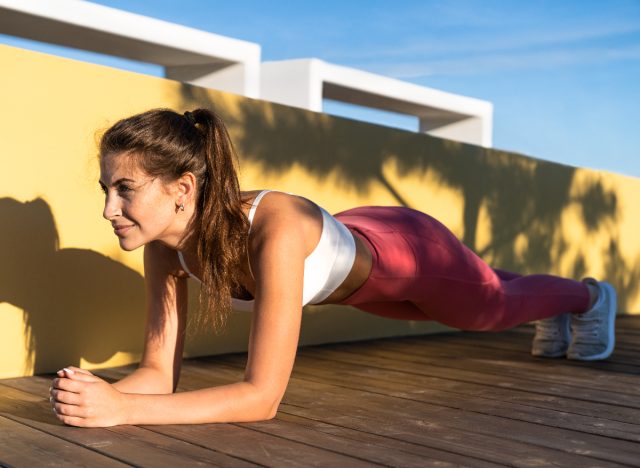
Your score should come from a clean hold. A shorter plank with strong position gives you better information than a longer hold where your hips start drifting. Use the same setup every time you test so your progress stays clear.
- Under 30 seconds: Building Your Base
This is a useful starting point if planks still feel challenging. Focus on learning how to brace, keeping your hips level, and building confidence with shorter holds. Clean 15 to 25 second sets can still move you forward.
- 30 to 60 seconds: A Solid Core Foundation
This range shows you can create tension and hold it with control. Your core can support regular daily movement, and your shoulders and hips can stay organized long enough to handle most basic strength work.
- 60 seconds to 2 minutes: Stronger Than Most
You’re showing strong core endurance here. Your body can stay lined up as fatigue builds, and your breathing stays steady enough to keep the hold under control. This range usually reflects a reliable base for lifting, carrying, walking, and getting up from the floor.
- Over 2 minutes: Stronger Than 90% of Peers
Holding a clean plank beyond two minutes after 55 is impressive. Your core can maintain tension, your hips stay steady, and your shoulders continue supporting the position without the hold falling apart. This score points to excellent core strength, endurance, and full-body control.
How to Build a Longer Plank After 55
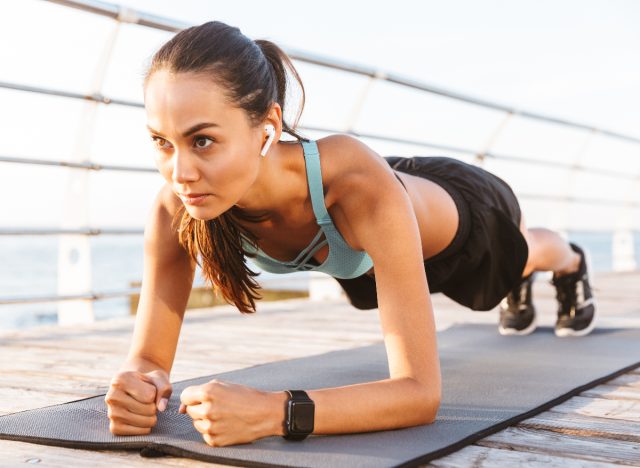
Improving your plank starts with better position, then more time. Max holds can help occasionally, but most progress comes from clean practice and smart supporting work. Your core, glutes, shoulders, and upper back all contribute to the hold, so training those areas will make the plank feel stronger. Keep your sets repeatable and controlled. When your form improves, the timer usually follows.
- Practice planks two to three times per week: Use a few focused sets and rest long enough to keep each hold sharp.
- Start with manageable holds: Sets of 20 to 40 seconds build endurance while keeping your position clean.
- Set your brace first: Pull your ribs down, tighten your midsection, squeeze your glutes, and then start the timer.
- Use incline planks when needed: Elevating your forearms on a bench or counter helps you build strength while keeping good alignment.
- Train your breathing: Slow, steady breaths help you hold tension without stiffening up too early.
- Strengthen your glutes: Bridges, hip thrusts, and carries help keep your pelvis steady during longer holds.
- Build shoulder support: Rows, farmer carries, and controlled push-up variations help your upper body stay strong in the plank position.
- Add side planks: Side planks build lateral core strength and help your body stay steady from different angles.
- Retest every few weeks: Use the same setup and movement standard so your time reflects real progress.
A strong plank after 55 says your core can hold position under fatigue. If you can stay clean past the two-minute mark, your core strength puts you ahead of most peers. That strength carries into the way you walk, lift, carry, balance, and move through the day.
References
- Park, Sang-Kyun et al. “Effects of High Intensity Plank Exercise on Physical Fitness and Immunocyte Function in a Middle-Aged Man: A Case Report.” Medicina (Kaunas, Lithuania) vol. 57,8 845. 20 Aug. 2021, doi:10.3390/medicina57080845
- Park, Sihwa et al. “Plank exercise improves respiratory capacity through positive changes in body composition, abdominis function, and autonomic nerves’ activities.” European Journal of Sport Science vol. 24,3 330–340. 15 Feb. 2024, doi:10.1002/ejsc.12086