4 Bed Exercises That Restore Leg Muscle Faster Than Gym Machines After 60
Restoring leg muscle after 60 doesn’t always require a line of gym machines or a long workout. Sometimes the better starting point is a setup that lets you slow down, control the movement, and actually feel the right muscles working. Bed exercises help with that because they give you support, comfort, and a lower barrier to entry, especially first thing in the morning or before winding down at night.
Gym machines can build strength, but they often lock you into one path and remove some of the balance and control your body needs during real movement. The goal after 60 is to rebuild muscle in a way that carries over. You want stronger glutes for walking, stronger legs for standing, steadier hips for balance, and better control when moving from sitting to standing.
I’ve used supported movements like these with clients who needed to rebuild confidence before jumping into heavier lower-body training. Your bed provides a stable starting point, but your muscles still have to generate tension and complete the work. These four exercises train your glutes, hips, quads, hamstrings, and core while keeping the routine simple enough to repeat often.
Single-Leg Glute Bridge Hold
Single-leg glute bridge holds train your glutes and hamstrings while your core keeps your hips level. Holding the top position makes your working leg stay under tension instead of moving quickly through easy reps. That matters for restoring leg muscle because your glutes need direct work, especially if sitting has made them less active. Stronger glutes help with walking, stairs, standing up, and keeping your lower back from taking over during everyday movement.
Muscles Trained: Glutes, hamstrings, core
How to Do It:
- Lie on your back with your knees bent and your feet flat on the bed.
- Extend one leg or keep it bent over your hip.
- Brace your core and press through your planted heel.
- Lift your hips until your body forms a straight line from your shoulders to your knees.
- Hold the top position while squeezing your glute.
- Lower your hips with control and switch sides.
Recommended Sets and Reps: Perform 3 sets of 15 to 25 second holds per side. Rest for 30 to 45 seconds between each set.
Best Variations: Two-leg glute bridge hold, single-leg glute bridge reps, paused glute bridges
Form Tip: Keep your hips level and finish the hold with your glute, not your lower back.
Side-Lying Clam Shells
Side-lying clam shells train the outer glutes and hip stabilizers, which play a huge role in keeping your legs strong and steady. The movement looks small, but the muscles around your hips have to control the knee as it opens and closes. Stronger outer glutes help your knees track better, support balance, and make walking or climbing stairs feel more stable. Compared with gym machines, clam shells offer a simple way to target hip strength with minimal setup.
Muscles Trained: Outer glutes, hip stabilizers, core
How to Do It:
- Lie on your side with your knees bent and your legs stacked.
- Keep your feet together and your hips facing forward.
- Brace your core lightly to keep your pelvis steady.
- Lift your top knee without rolling your hips back.
- Pause briefly at the top of the movement.
- Lower your knee with control and complete all reps before switching sides.
Recommended Sets and Reps: Perform 3 sets of 12 to 15 reps per side. Rest for 30 seconds between each set.
Best Variations: Mini-band clam shells, paused clam shells, slower tempo clam shells
Form Tip: Move from your hip and avoid rocking your body backward.
Supported Lunge
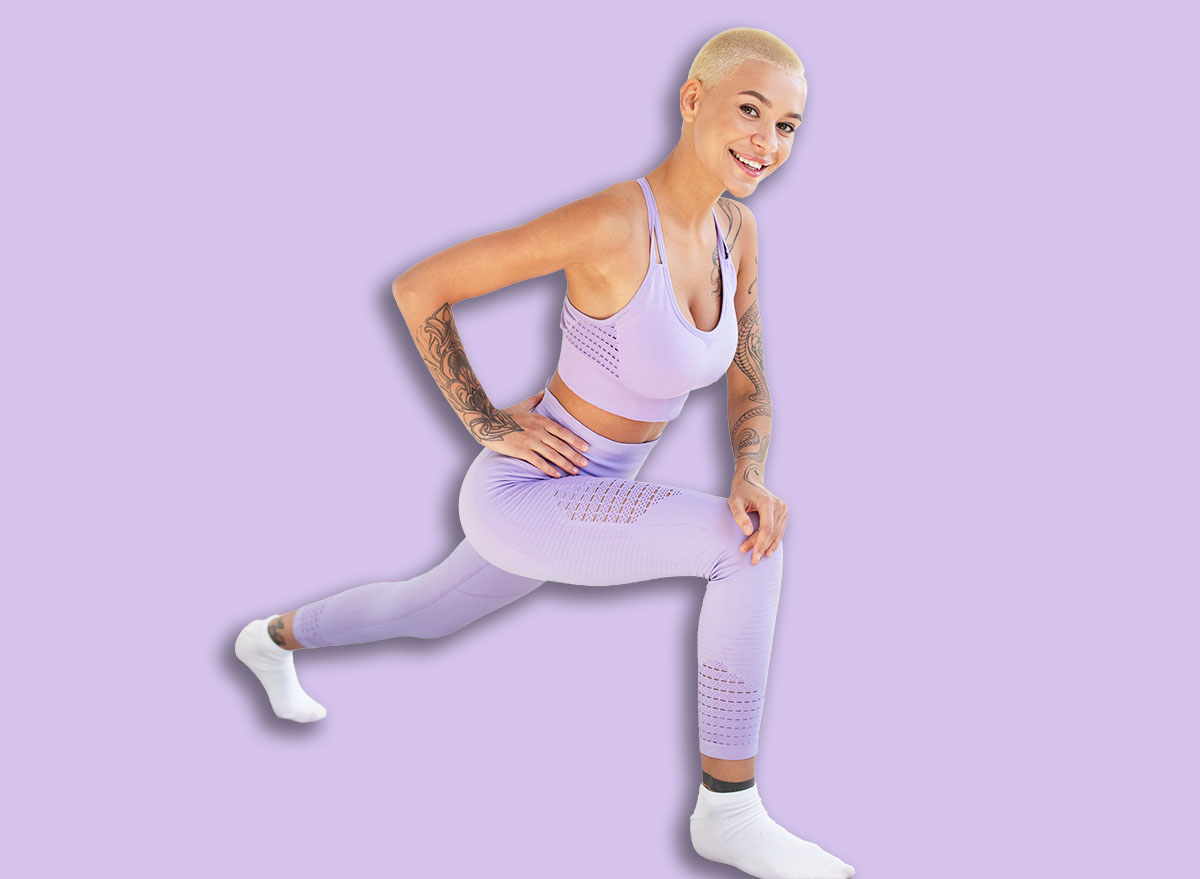
Supported lunges train your quads, glutes, hamstrings, and core while giving you a stable surface to hold onto. Using the bed frame, the mattress edge, or a sturdy chair nearby helps you focus on leg strength rather than worrying about balance. Your front leg has to lower, control, and press you back up, which makes the movement valuable for rebuilding lower-body muscle. This also carries over to stairs, getting up from low positions, and moving with more confidence.
Muscles Trained: Quadriceps, glutes, hamstrings, core
How to Do It:
- Stand beside your bed or a sturdy chair.
- Place one hand lightly on the support.
- Step one foot back into a lunge position.
- Lower your back knee toward the floor with control.
- Press through your front foot to return to standing.
- Complete all reps, then switch sides.
Recommended Sets and Reps: Perform 3 sets of 8 to 10 reps per leg. Rest for 45 seconds between each set.
Best Variations: Short-range lunges, assisted split squats, reverse lunges
Form Tip: Use the support for balance, not to pull yourself up.
Sit-to-Stand
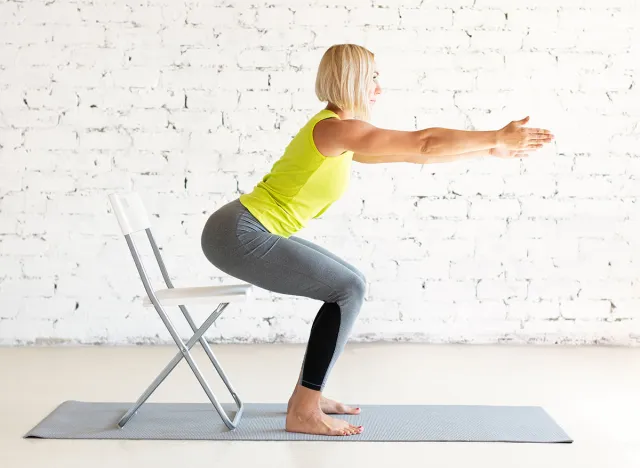
Sit-to-stands train your glutes, quads, hamstrings, and core while practicing a movement you use every day. Every rep builds strength from a seated position, which matters for getting out of bed, standing from a chair, rising from the couch, and moving with more independence. A bed or sturdy chair gives you a clear target and helps you control the lowering phase. Press through your feet, squeeze your glutes at the top, and avoid using momentum to rock yourself up.
Muscles Trained: Glutes, quadriceps, hamstrings, core
How to Do It:
- Sit near the edge of your bed or a sturdy chair.
- Place your feet flat on the floor about hip-width apart.
- Brace your core and lean your torso slightly forward.
- Press through your feet to stand tall.
- Squeeze your glutes at the top.
- Lower back down with control.
Recommended Sets and Reps: Perform 3 sets of 8 to 12 reps. Rest for 45 seconds between each set.
Best Variations: No-hands sit-to-stands, slower tempo sit-to-stands, paused sit-to-stands
Form Tip: Control the descent and avoid dropping onto the bed.
RELATED: 5 Standing Exercises That Shrink Belly Pooch Faster Than Gym Classes After 60
How to Make Bed-Based Leg Training Work
Bed-based leg work works best when you treat each move like strength training, not just an easy warm-up. The support helps you stay comfortable, but the effort still has to come from your legs and hips. Move slowly, create tension, and pay attention to the muscles doing the work. A few focused sessions each week can help rebuild strength in the areas that matter most for walking, standing, balance, and daily movement.
- Hold positions with purpose: Bridge holds and pauses during clam shells build tension without needing heavy equipment. Those holds help wake up muscles that may not be getting enough direct work.
- Use support wisely: The bed, chair, or wall should help with balance while your legs still handle the effort. Pulling hard through your hands takes work away from the muscles you’re trying to train.
- Slow the lowering phase: Lower slowly during lunges and sit-to-stands. More control gives your quads, glutes, and hamstrings a stronger muscle-building signal.
- Train both hips and legs: Clam shells and glute bridges strengthen the hips, while lunges and sit-to-stands build leg strength. The combination supports better movement than focusing on a single area.
- Progress in small steps: Add a few reps, hold longer, slow the tempo, or use a mini band when the exercises start to feel easy. Small progressions keep strength moving forward without making the routine feel overwhelming.
References
- García-Hermoso, Antonio et al. “Muscular Strength as a Predictor of All-Cause Mortality in an Apparently Healthy Population: A Systematic Review and Meta-Analysis of Data From Approximately 2 Million Men and Women.” Archives of physical medicine and rehabilitation vol. 99,10 (2018): 2100-2113.e5. doi:10.1016/j.apmr.2018.01.008
- Garatachea, Nuria et al. “Exercise attenuates the major hallmarks of aging.” Rejuvenation research vol. 18,1 (2015): 57-89. doi:10.1089/rej.2014.1623