6 Home Exercises That Restore Muscle Tone Faster Than Gym Classes After 60
Gym classes can be great, but they also come with a lot of moving parts: scheduling, driving, keeping pace with the room, and hoping the workout actually matches what your body needs that day. Home workouts strip away a lot of that friction. You can move at your own speed, choose the right resistance, and build consistency without turning every session into a big event.
Muscle tone after 60 comes from two main pieces working together: building or maintaining lean muscle and keeping overall body fat in check. Spot training one area won’t reshape your whole body on its own, but targeted strength work helps muscles feel firmer and more active. Add regular movement, enough protein, and a steady routine, and your body starts to respond.
The goal here is to make home training feel practical, not watered down. You’ll use bands, dumbbells, a wall, and your own bodyweight to train the muscles that help your body look firmer and move better. Some moves focus on posture and upper-body strength; others engage your legs, glutes, and core. It’s a simple setup, but the work still has teeth when you slow down and make each rep count.
Standing Band Rows
Standing band rows train your upper back, lats, rear shoulders, and biceps while your core keeps your posture steady. The band provides constant tension to your back, which helps build muscle tone in the areas that support posture and shoulder position. Gym classes often move quickly from one exercise to the next, but rows reward control and a strong squeeze at the end of each rep. Stronger pulling muscles help you carry groceries, lift objects, open doors, and keep your upper body from rounding forward.
Muscles Trained: Upper back, lats, rear delts, biceps, core
How to Do It:
- Anchor a resistance band at chest height.
- Stand tall and hold one end of the band in each hand.
- Step back until the band has light tension.
- Brace your core and keep your chest lifted.
- Pull your elbows back toward your ribs.
- Squeeze your shoulder blades, then return with control.
Recommended Sets and Reps: Perform 3 sets of 10 to 15 reps. Rest for 45 seconds between each set.
Best Variations: Single arm band rows, paused band rows, seated band rows
Form Tip: Pull through your elbows and keep your shoulders away from your ears.
Band Pull Aparts
Band pull-aparts train your rear shoulders and upper back, two areas that make a big difference in how toned and upright your upper body looks. Pulling the band apart forces the muscles behind your shoulders to work, which helps balance out all the reaching, sitting, and forward posture that builds up during the day. The movement looks simple, but clean reps make it light up fast. Better upper back strength also helps your shoulders feel more stable during presses, rows, and daily lifting.
Muscles Trained: Rear delts, upper back, rhomboids, core
How to Do It:
- Stand tall and hold a resistance band at chest height.
- Place your hands slightly wider than shoulder width.
- Brace your core and keep a soft bend in your elbows.
- Pull the band apart until your hands move toward your sides.
- Squeeze your shoulder blades together.
- Return to the starting position with control.
Recommended Sets and Reps: Perform 3 sets of 12 to 15 reps. Rest for 30 to 45 seconds between each set.
Best Variations: Underhand pull-aparts, diagonal pull-aparts, and paused pull-aparts
Form Tip: Keep your ribs down and avoid shrugging as the band stretches.
Goblet Hold Lunges
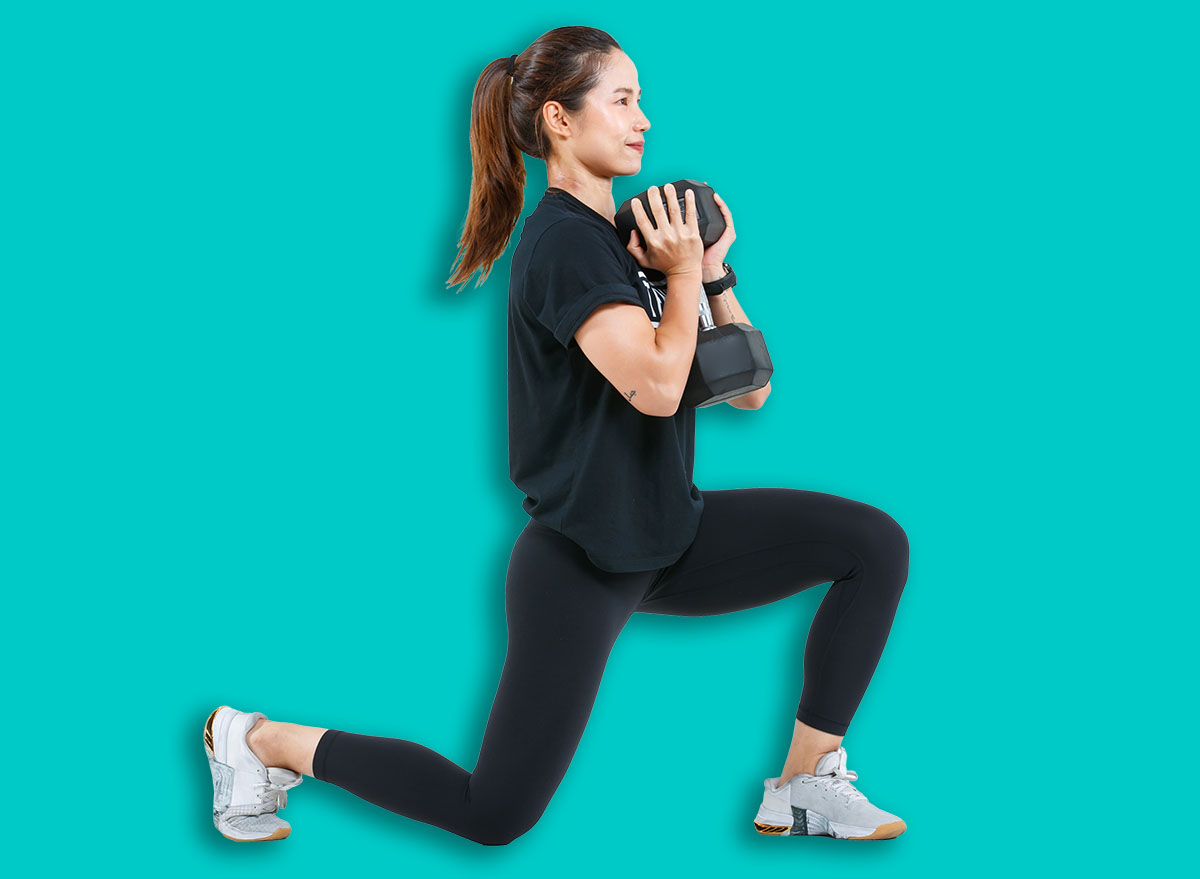
Goblet-hold lunges train your quads, glutes, hamstrings, and core, while the weight at your chest keeps your torso honest. Your legs handle the main strength work, and your midsection has to brace to keep you from tipping forward or wobbling through the rep. This gives you more muscle-building value than a fast-paced group-class lunge because you can slow down and own the position. Stronger lunges carry over to stairs, walking, standing from low seats, and maintaining lower-body confidence after 60.
Muscles Trained: Quadriceps, glutes, hamstrings, core
How to Do It:
- Stand tall with your feet hip-width apart.
- Hold a dumbbell or kettlebell at your chest.
- Brace your core and step one foot forward.
- Lower your back knee toward the floor with control.
- Press through your front foot to return to standing.
- Complete all reps, then switch sides.
Recommended Sets and Reps: Perform 3 sets of 8 to 10 reps per leg. Rest for 60 seconds between each set.
Best Variations: Reverse goblet lunges, assisted lunges, split squats
Form Tip: Keep the weight close to your chest and drive through your front foot.
Flutter Kicks
Flutter kicks train your lower abs and hip flexors while your core works to keep your lower back supported. The legs keep moving, so your midsection has to stay engaged for the full set. That steady tension helps restore tone through the lower belly area when paired with overall fat loss and full-body strength work. Keep the kicks small and controlled because bigger, faster reps usually shift the work away from your abs.
Muscles Trained: Lower abs, hip flexors, deep core
How to Do It:
- Lie on your back with your legs extended.
- Place your hands under your hips if you need support.
- Press your lower back gently into the floor.
- Lift your legs a few inches off the ground.
- Alternate small kicks up and down.
- Keep your core engaged until the set ends.
Recommended Sets and Reps: Perform 3 sets of 20 to 30 seconds. Rest for 30 seconds between each set.
Best Variations: Higher leg flutter kicks, bent knee flutter kicks, slower flutter kicks
Form Tip: Keep your lower back down and stop before your form slips.
Wall Push Ups
Wall push-ups train your chest, shoulders, triceps, and core with a setup that feels approachable at home. The wall angle provides support, but your arms still have to press, and your midsection still has to keep your body aligned. This helps restore tone through the upper arms and chest without needing a bench, machine, or floor setup. As you get stronger, stepping your feet farther back makes the movement more demanding.
Muscles Trained: Chest, shoulders, triceps, core
How to Do It:
- Stand facing a wall with your feet a step or two back.
- Place your hands on the wall at shoulder height.
- Brace your core and keep your body in a straight line.
- Bend your elbows and lower your chest toward the wall.
- Press through your hands to return to the starting position.
- Repeat with steady control.
Recommended Sets and Reps: Perform 3 sets of 10 to 15 reps. Rest for 45 seconds between each set.
Best Variations: Counter push-ups, incline push-ups, and slower wall push-ups
Form Tip: Keep your elbows angled slightly back and avoid letting your hips sag.
Banded Glute Bridge
Banded glute bridges train your glutes, hamstrings, and hip stabilizers while your core keeps your pelvis steady. The band adds extra work for the outer glutes, which helps your hips feel stronger and more supported. Better glute strength can change how your whole lower body feels because the hips help power walking, stairs, and standing up. Pause at the top and keep tension in the band so the glutes stay engaged, rather than letting the lower back take over.
Muscles Trained: Glutes, hamstrings, hip stabilizers, core
How to Do It:
- Place a mini band around your thighs just above your knees.
- Lie on your back with your knees bent and feet flat on the floor.
- Press your knees slightly outward to create tension in the band.
- Drive through your heels and lift your hips.
- Squeeze your glutes at the top.
- Lower your hips with control.
Recommended Sets and Reps: Perform 3 sets of 12 to 15 reps. Rest for 45 seconds between each set.
Best Variations: Paused glute bridges, single-leg glute bridges, elevated glute bridges
Form Tip: Keep pressure on the band and finish each rep with your glutes.
How to Make Home Training Build More Tone
Home workouts work best when they feel simple enough to repeat and focused enough to challenge your muscles. You don’t need a crowded class or a perfect setup to train well. You need steady resistance, controlled reps, and enough effort to make your muscles respond. These six moves cover pulling, pressing, lunging, core work, and glute work, giving your body a strong foundation for better tone after 60.
- Use enough resistance to feel challenged: Bands and dumbbells should make the last few reps feel like work. If every set feels easy, increase tension, slow the tempo, or add reps.
- Slow down the rep instead of rushing: Controlled reps keep tension on the muscles longer. That extra time under tension helps restore firmness without needing complicated workouts.
- Train your posture muscles often: Rows and pull-aparts strengthen the upper back, helping your shoulders sit better and giving your upper body a stronger look.
- Keep lower-body work in the plan: Lunges and glute bridges train large muscle groups that support daily movement and body composition. Bigger muscles deserve regular attention.
- Use short sessions when needed: Ten minutes at home still counts when the effort is focused. Small workouts repeated across the week often beat sporadic classes you can’t stick with.
The best home routine is the one you’ll actually repeat. Keep your bands nearby, move with purpose, and let consistent strength work bring muscle tone back without making fitness feel like another appointment on the calendar.
References
- Strasser, Barbara et al. “Role of Dietary Protein and Muscular Fitness on Longevity and Aging.” Aging and disease vol. 9,1 119-132. 1 Feb. 2018, doi:10.14336/AD.2017.0202
- Roberts, Christian K et al. “Effects of Home-Based Exercise Training Systems, Combined with Diet, on Cardiometabolic Health.” International journal of exercise science vol. 12,2 871-885. 1 May. 2019, doi:10.70252/WEFP3647