If You Can Do This Many Pull-Ups After 50, You Have Excellent Upper-Body Strength
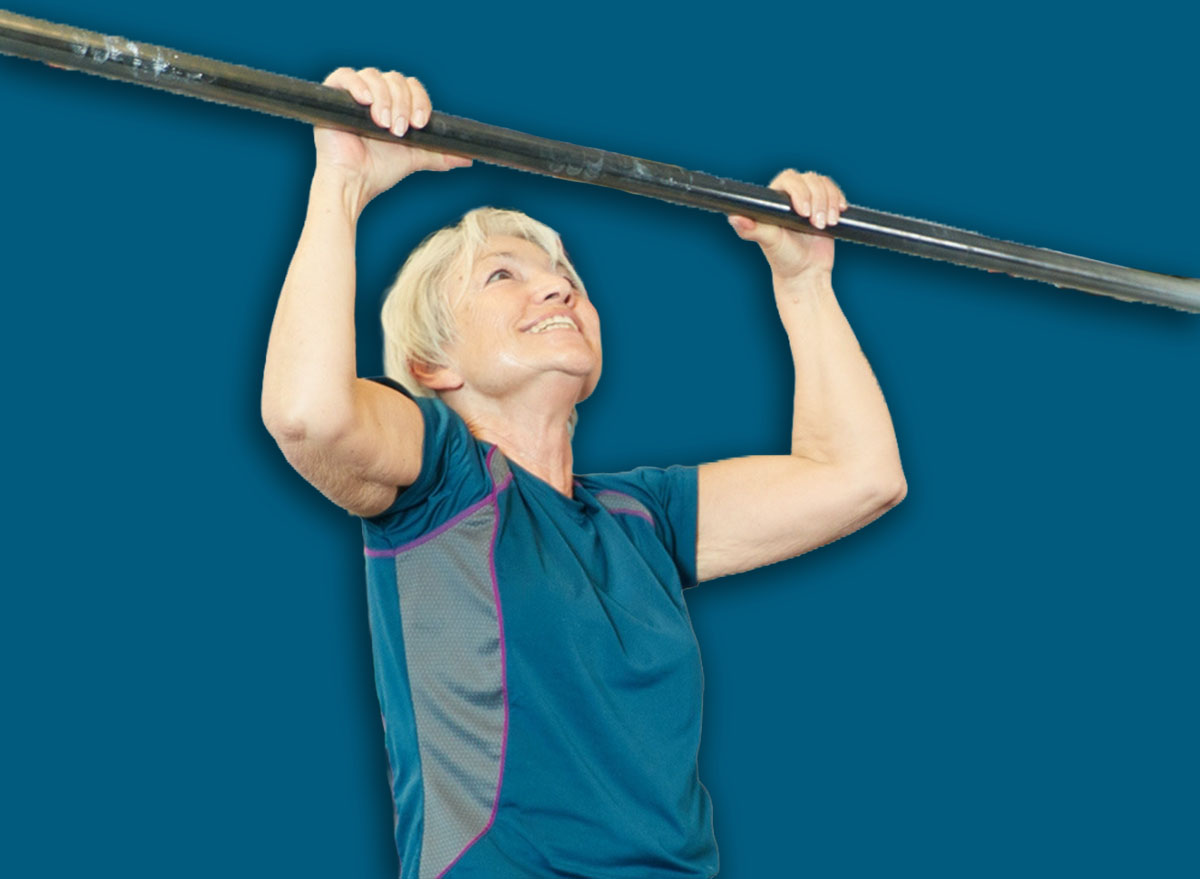

Pull-ups have a way of getting your attention right away. You grab the bar, hang, and pull. Simple on paper. In practice, it asks a lot. You’re lifting your entire bodyweight using your upper back, arms, and core, all while staying controlled through the movement. That’s a big ask at any age, and after 50, it becomes an even more meaningful test of strength.
From a coaching standpoint, I treat pull-ups a little differently than most exercises. Not everyone is going to jump up and knock out a high number of reps, and that’s fine. What matters is how close you are to controlling your body through that full range. I’ve worked with plenty of clients who start with assisted variations or even just hanging from the bar, and over time, they build up to their first full rep. That progression alone says a lot about their strength.
Testing pull-ups gives you a clear indication of where your upper body stands. It challenges your lats, shoulders, arms, and grip simultaneously. It also asks your core to stay tight so your body moves as one piece. Whether you’re hitting multiple reps or working toward your first, the number you can perform with clean form is one of the most honest measures of upper-body strength after 50.
Why Pull-Ups Are One of the Best Upper-Body Strength Tests

Pull-ups train your upper back at a level very few movements can match. Your lats do most of the work, but your biceps, shoulders, and forearms all contribute to getting you to the bar. You’re pulling your full bodyweight through space, which makes it a true test of strength, not just another exercise.
What sets pull-ups apart is how much they demand from your entire system. Your grip has to hold, your shoulders have to stay stable, and your core has to stay engaged so your body moves as one piece. When that all lines up, the movement feels smooth and controlled. That level of coordination and strength working together is what makes pull-ups so valuable, especially after 50.
They also highlight relative strength, which becomes more important over time. Relative strength measures how well you can control your own body. Being able to pull yourself from a dead hang to the bar shows that your upper body, core, and grip are all working together at a high level.
As the reps add up, the goal stays the same. Start from a full hang, pull with control, and finish strong at the top. When you can repeat that without losing position or range, it shows a level of strength that carries over into everything from lifting to climbing to general movement.
How to Perform a Proper Pull-Up
A clean setup makes a big difference. Each rep should follow the same path.
How to Do It:
- Grab the bar with your hands slightly wider than shoulder-width apart.
- Hang with your arms fully extended and your body still.
- Brace your core and keep your body in a straight line.
- Pull your chest toward the bar by driving your elbows down.
- Bring your chin over the bar with control.
- Lower back down to a full hang before starting the next rep.
A quick note on the movement standard. A rep counts when you start from a full hang and bring your chin clearly over the bar. If you’re building toward that, assisted pull-ups, banded variations, or negatives are all great ways to develop the strength needed.
Best Variations: Assisted Pull-Ups, Banded Pull-Ups, Negative Pull-Ups, Chin-Ups, Lat Pulldowns.
Pull-Up Strength Standards After 50
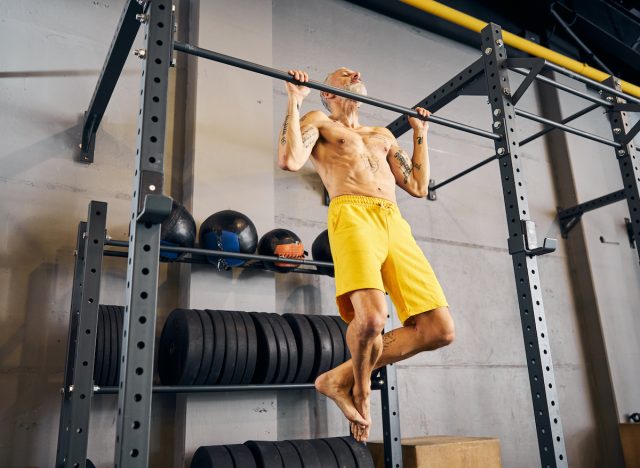
This test works best when each rep stays consistent. Full hang at the bottom, chin over the bar at the top.
- 0 reps: You’re building the foundation. Hanging strength, assisted reps, and controlled negatives all move you toward your first full pull-up.
- 1 to 3 reps: This is a strong start. You’ve built enough strength to move your full bodyweight and control the movement.
- 4 to 7 reps: You’re in excellent territory. Your upper body can repeat the effort with solid control and consistency.
- 8+ reps: This is outstanding. Your upper-body strength, control, and endurance are all at a high level.
How to Build Pull-Up Strength After 50
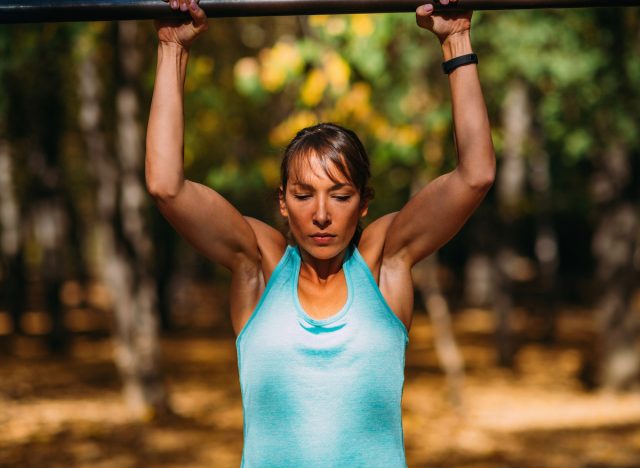
Building pull-up strength takes time, and it responds best to steady, consistent work. This isn’t something that shows up overnight, but it’s one of the most rewarding movements to improve. Progress often comes in small steps, and each step builds toward better control, stronger pulls, and more confidence on the bar.
A big part of the process is meeting yourself where you are and building from there. For some, that means starting with hangs or assisted reps. For others, it means adding volume or refining technique. Over time, your grip strengthens, your back muscles become more active, and your body learns to move more efficiently through the pull.
- Practice hanging regularly: Time on the bar builds grip strength and helps your shoulders get comfortable supporting your bodyweight.
- Use assisted variations: Bands or machines allow you to move through a full range while building strength in the right positions.
- Train negatives: Slow, controlled lowering strengthens the muscles through the entire movement and builds confidence at the top.
- Strengthen your upper back: Rows, pulldowns, and similar movements build the foundation needed for stronger pull-ups.
- Keep your core engaged: A tight, controlled body position makes each rep more efficient and easier to repeat.
- Focus on quality reps: Clean, controlled movement builds better strength than rushing through reps.
- Stay consistent over time: Regular exposure to the movement is what drives progress.
Pull-ups are challenging, and that’s part of what makes them so valuable. If you can perform multiple clean reps after 50, you’ve built a level of upper-body strength that stands out and supports how you move day to day.
References
- Dickie, James A et al. “Electromyographic analysis of muscle activation during pull-up variations.” Journal of electromyography and kinesiology : official journal of the International Society of Electrophysiological Kinesiology vol. 32 (2017): 30-36. doi:10.1016/j.jelekin.2016.11.004
- Tøien, Tiril et al. “Heavy Strength Training in Older Adults: Implications for Health, Disease and Physical Performance.” Journal of cachexia, sarcopenia and muscle vol. 16,2 (2025): e13804. doi:10.1002/jcsm.13804