4 Stair Exercises That Rebuild Leg Power Faster Than Gym Machines After 60
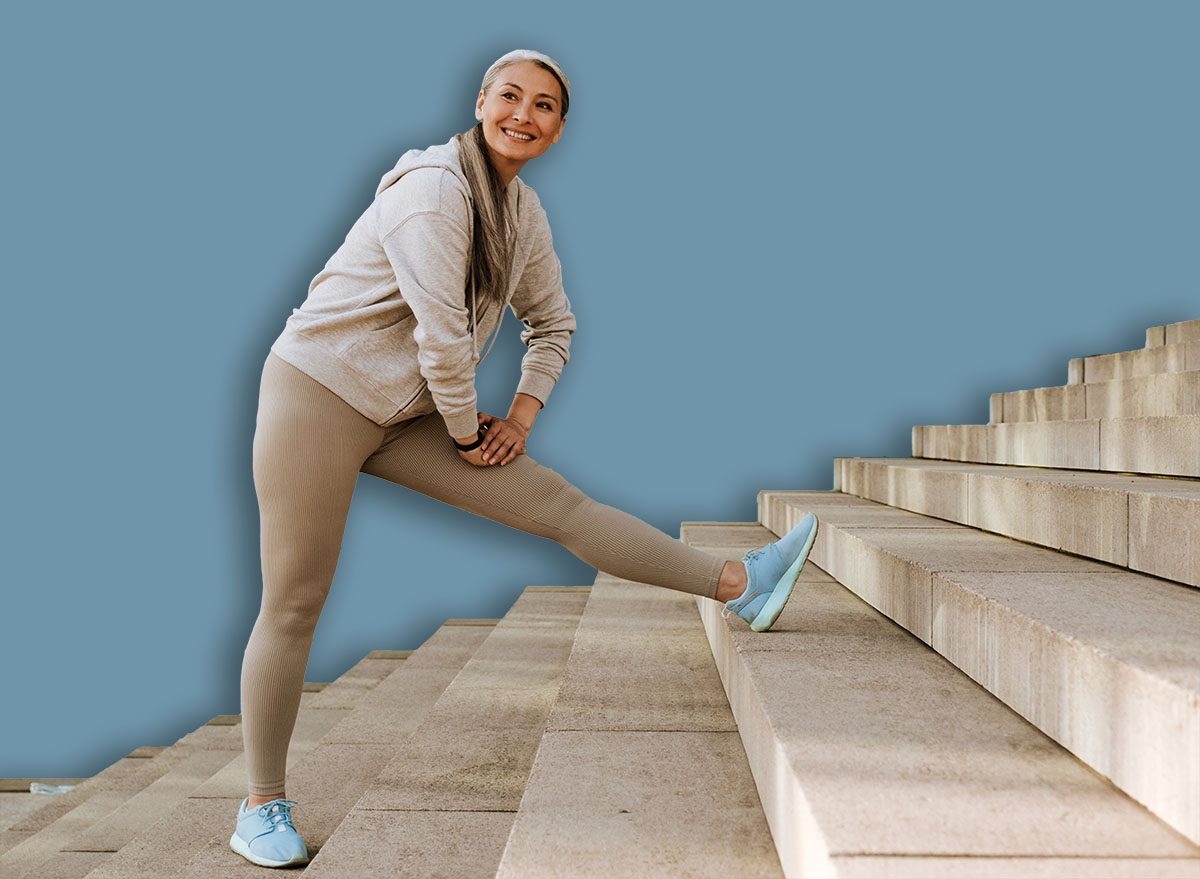

After 60 years of age, lower body strength should be a priority. Leg power starts to naturally decline in men and women starting after age 30, especially if you don’t regularly strength train. As we get older, it’s even more important to stay mobile and strong. Your body needs the force capacity and coordination to help propel you up and down stairs, as well as into and out of a chair. In my own practice I’ve spent years helping men and women regain and maintain leg strength after age 60. Step training offers you one of the easiest and most efficient ways to stay strong at home.
One of my favorite aspects of step training is that you don’t need any supplemental equipment. Your gym is already all around you. All you need is a set of sturdy stairs and you can make your lower body more resilient and get a good workout at the same time. With these exercises, you’ll strengthen your quads, glutes, and calves and challenge your balance. Just make sure to find a stable handrail or wall nearby for balance in case you need it.
With most of these exercises you can increase the intensity of the movement by stepping up multiple stairs at once (or up a taller stair), but I recommend you start with a height that is easy and manageable and prioritize your form first. Each movement should be smooth and controlled and you want to keep the eccentric motion (the lowering part of the rep) slow to really maximize the benefits of each exercise.
Step-Ups
Step-Ups remain one of my favorite single-leg exercises because they provide a significant challenge for your leg muscles and they’re incredibly safe. Because you start each rep by standing up, it’s easier to dial in your form on the way back down, when the rep is more challenging. Plus, because your back leg stays straight the whole time, you don’t add any additional torque onto your back knee (like you would in the traditional lunge).
Another benefit of steps is that it’s easy to add assistance by holding onto the handrail or a nearby wall for extra balance.
How to Do It
- Stand facing the bottom step.
- Hold the handrail lightly (if you need to).
- Place one foot on the step.
- Press through that foot to step up.
- Bring the other foot alongside it.
- Step down slowly.
- Alternate your lead leg.
- Perform 8 to 12 repetitions per side.
Slow Step-Downs
Going down the stairs requires much more control than going up. You don’t want to fall forward. One of the benefits of going slow is you increase the tension on the muscles and the ability to keep correct form during the exercise. Remember, the goal is to get stronger, not just to finish. Again, like with the step-ups, you can use the handrail for extra support. I recommend lowering for three to five seconds on each rep, with two seconds on the way back up.
How to Do It
- Stand on the bottom step or a low step.
- Hold the handrail if needed.
- Shift your weight onto one leg.
- Slowly lower the opposite heel toward the floor.
- Lightly tap the heel down.
- Press through the supporting foot to return.
- Complete 8 to 10 repetitions per side.
Stair Calf Raises
Calf raises strengthen your lower legs, but also support your ankle stability and balance. I like using calf raises on stairs because you can use a greater range of motion than performing the same movement on flat ground. This is because you can hang your heels off the edge of the stair, during each rep. Another benefit is again the ability to hold the stair handrail for extra balance. You can also add a slight pause at the top of each rep for maximum burn.
How to Do It
- Stand on the bottom stair with your heels slightly over the edge.
- Hold the handrail.
- Keep your feet hip-width apart.
- Rise onto the balls of your feet.
- Pause briefly at the top.
- Lower your heels below the step level as far as comfortable.
- Perform 12 to 15 repetitions.
Stair Marches
I like finishing with stair marches because this exercise combines everything: hip mobility, coordination, balance, and leg strength. As you drive your left knee up, your right side needs to maintain stability. Then, as you drive your right knee up, the left side must stabilize the body. This pattern is similar to the opposition needed for walking and stair climbing. Keep one hand close to the stair rail in case you need it. As you improve, increase your tempo.
How to Do It
- Stand on the bottom step or close by the staircase.
- Grasp the handrail with one hand.
- Stand tall and brace your core.
- Lift one knee toward your waist.
- Lower it slowly.
- Alternate legs.
- Continue for 30 to 60 seconds.
- Control the pace.