5 Standing Exercises To Strengthen Your Abs Faster Than Gym Machines After 50
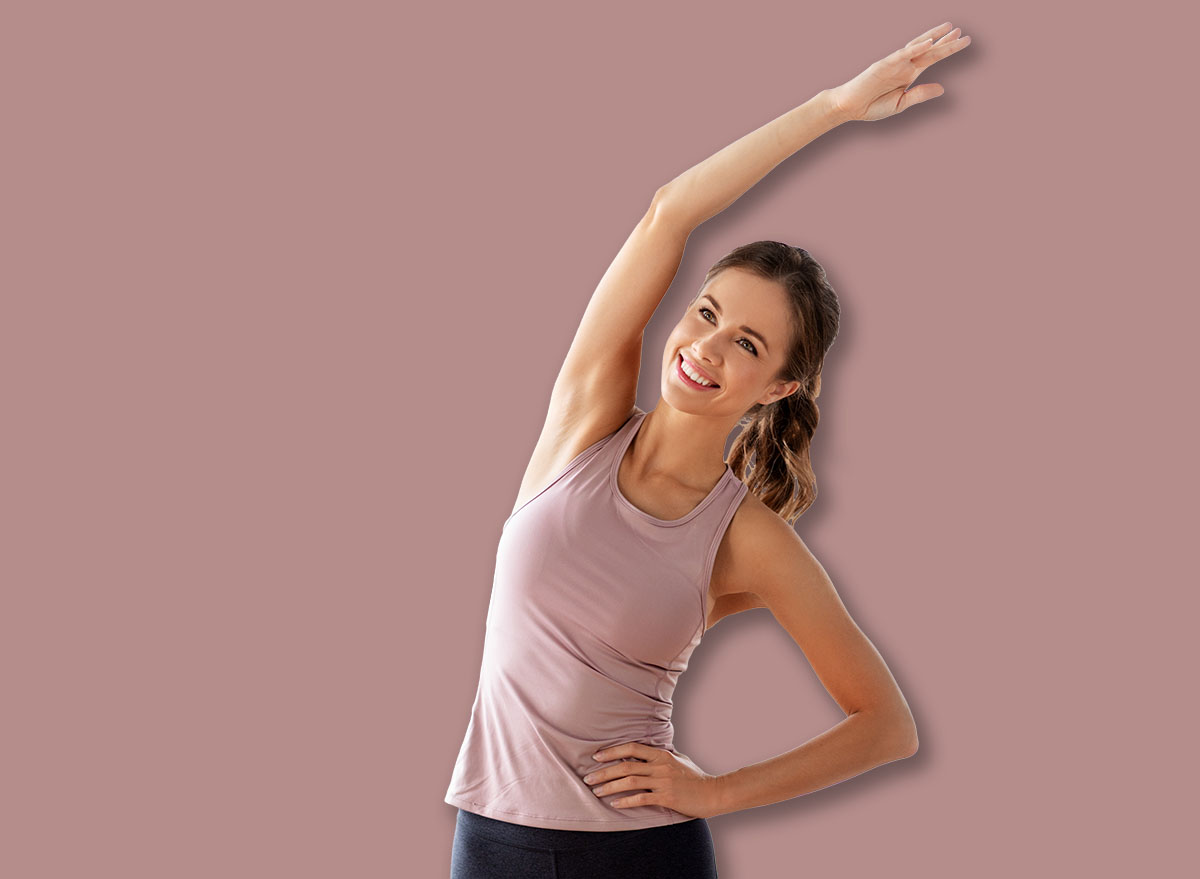
Strong abs after 50 need to do more than help you look tighter through the middle. Your core has to brace when you carry weight, stay steady when you walk, control rotation when you turn, and support your spine when your arms and legs move. That’s why standing ab exercises can be such a strong upgrade from sitting or lying on a gym machine.
Gym machines often lock you into one path and take away the balance, posture, and full-body control your abs need in real life. Standing core work puts your midsection back in charge. You’re holding weight, resisting leaning, controlling rotation, and staying tall under tension. That forces your abs, obliques, hips, shoulders, and upper back to work together.
When I coach core work, I’m looking for control before fatigue sets in. Can you keep your ribs stacked? Can you walk with weight without tilting? Can you rotate through your torso without yanking from your arms? Those details turn basic movements into serious ab work.
The five exercises below train your abs while you stand, walk, carry, rotate, and brace. Goblet hold marching challenges your core and balance. Woodchops train rotational control. Farmer carries and suitcase carries build loaded core strength. Dumbbell side bends target the obliques when you move with control and avoid rushing the reps.
Goblet Hold Marching
Goblet hold marching trains your abs, hip flexors, glutes, and shoulders while your core keeps your torso tall. Holding a weight at your chest forces your midsection to brace, and lifting one knee at a time challenges your balance with every rep. The movement builds ab strength because your core has to control your ribs, pelvis, and posture while your legs move. That carryover helps with walking, stairs, stepping over objects, and staying steady when one foot leaves the ground.
Muscles Trained: Abs, hip flexors, glutes, shoulders, core
How to Do It:
- Stand tall with your feet hip-width apart.
- Hold a dumbbell or kettlebell at your chest.
- Brace your core and keep your shoulders relaxed.
- Lift one knee toward your waist.
- Lower your foot with control.
- Alternate sides in a steady rhythm.
Recommended Sets and Reps: Perform 3 sets of 10 to 12 reps per leg. Rest for 45 seconds between each set.
Best Variations: Bodyweight marching, suitcase marching, overhead marching
Form Tip: Stay tall and avoid leaning back as your knee lifts.
Standing Woodchops
Standing woodchops train your abs and obliques through rotation while your hips and shoulders help guide the movement. Your core controls the dumbbell’s path rather than letting momentum swing the weight around. That makes woodchops more useful than many gym ab machines because your body has to rotate, brace, and stay balanced at the same time. Stronger rotational control helps with turning, reaching across your body, yard work, and athletic movements like golf or tennis.
Muscles Trained: Abs, obliques, shoulders, glutes
How to Do It:
- Stand with your feet shoulder-width apart and hold one dumbbell with both hands.
- Bring the dumbbell outside one hip.
- Brace your core and rotate the weight across your body.
- Finish with the dumbbell above your opposite shoulder.
- Return to the starting position with control.
- Complete all reps, then switch sides.
Recommended Sets and Reps: Perform 3 sets of 8 to 10 reps per side. Rest for 45 seconds between each set.
Best Variations: High-to-low woodchops, band woodchops, cable woodchops
Form Tip: Turn through your hips and torso together, rather than twisting your lower back.
Farmer Carry
Farmer carries train your abs, grip, shoulders, traps, and upper back while your whole body works to stay tall under load. Holding weight in both hands forces your core to brace so your posture doesn’t collapse as you walk. This builds practical ab strength because your midsection has to stabilize your body step after step. Farmer carries also carry over well to real life since carrying groceries, luggage, tools, or yard supplies all ask your core to stay strong while your body moves.
Muscles Trained: Abs, grip, shoulders, upper back, glutes
How to Do It:
- Hold a dumbbell or kettlebell in each hand.
- Stand tall with your shoulders down and back.
- Brace your core before you walk.
- Take controlled steps forward.
- Keep your chest lifted and your posture steady.
- Turn around carefully or set the weights down with control.
Recommended Sets and Reps: Perform 3 carries of 30 to 45 seconds. Rest for 60 seconds between each carry.
Best Variations: Heavier carries, slower carries, trap bar carries
Form Tip: Walk tall and avoid letting the weights pull your shoulders forward.
Suitcase Carry
Suitcase carries train your abs and obliques by loading one side of your body at a time. The weight tries to pull you sideways, and your core has to resist that lean with every step. That makes the suitcase carry one of the best standing ab exercises after 50 because it trains the exact bracing you need when carrying something unevenly. Stronger anti-lean strength helps with bags, groceries, stairs, posture, and keeping your torso steady during daily movement.
Muscles Trained: Abs, obliques, grip, shoulders, glutes
How to Do It:
- Hold a dumbbell or kettlebell in one hand.
- Stand tall with your shoulders level.
- Brace your core and keep your ribs down.
- Walk forward with controlled steps.
- Avoid leaning toward the weight.
- Switch hands and repeat on the other side.
Recommended Sets and Reps: Perform 3 carries of 30 to 45 seconds per side. Rest for 45 to 60 seconds between carries.
Best Variations: Lighter suitcase carry, heavier suitcase carry, suitcase march
Form Tip: Keep your shoulders level and walk like someone is watching your posture.
Dumbbell Side Bends
Dumbbell side bends train your obliques while your abs help control the movement. The key is to move slowly and keep the range clean. Your side body lowers and lifts the weight without twisting, jerking, or letting your hips shift around. When performed with control, side bends strengthen the muscles that help you resist leaning, carry weight, and support your waist during everyday movement.
Muscles Trained: Obliques, abs, grip
How to Do It:
- Stand tall with your feet hip-width apart.
- Hold one dumbbell at your side.
- Brace your core and keep your shoulders level.
- Lower the dumbbell down your thigh with control.
- Use your obliques to return to standing tall.
- Complete all reps, then switch sides.
Recommended Sets and Reps: Perform 3 sets of 10 to 12 reps per side. Rest for 45 seconds between each set.
Best Variations: Lighter side bends, slower tempo side bends, suitcase hold
Form Tip: Move straight side to side and avoid rotating your torso.
How to Get More Out of Standing Ab Work
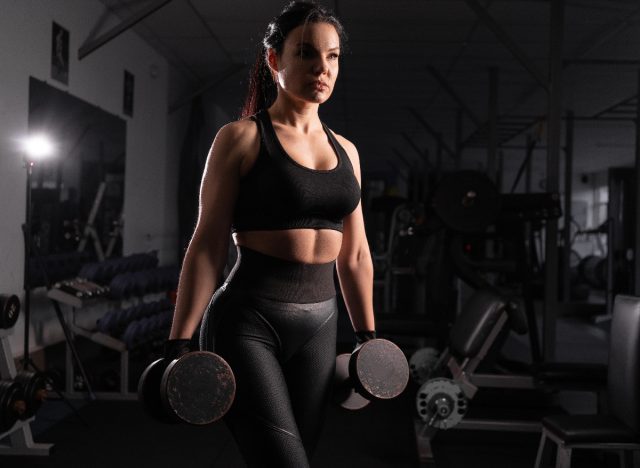
Standing ab exercises work best when your posture stays sharp and the weight stays under control. The goal is to brace, move, carry, and rotate without letting your ribs flare, shoulders slump, or hips drift around. Keep the loads challenging, but choose weights you can control from start to finish.
- Brace before you move: Set your midsection before each march, chop, carry, or bend. A strong brace keeps the work in your abs rather than shifting it into your lower back.
- Use carries often: Farmer carries and suitcase carries build the kind of core strength you use every day. They also train grip, posture, and full-body tension simultaneously.
- Control rotation: Woodchops work best when your torso guides the weight. Slow reps help your abs and obliques control the movement, rather than momentum taking over.
- Pick the right load: The weight should feel challenging without pulling you out of position. If your posture changes, go lighter and clean up the rep.
- Train both sides evenly: Suitcase carries, woodchops, and side bends can expose strength gaps. Give each side the same attention and keep the weaker side honest.
Standing ab work should make your core feel useful, not just tired. Build strength through carries, marches, rotations, and controlled bends, and your abs will support you better in the gym and everywhere else.
References
- Oliva-Lozano, José M, and José M Muyor. “Core Muscle Activity During Physical Fitness Exercises: A Systematic Review.” International journal of environmental research and public health vol. 17,12 4306. 16 Jun. 2020, doi:10.3390/ijerph17124306
- Zhong, Yuanji et al. “Effects of core training on balance performance in older adults: a systematic review and meta-analysis.” Frontiers in public health vol. 13 1661460. 9 Oct. 2025, doi:10.3389/fpubh.2025.1661460