6 Standing Exercises That Tighten Upper Arms in 28 Days After 45
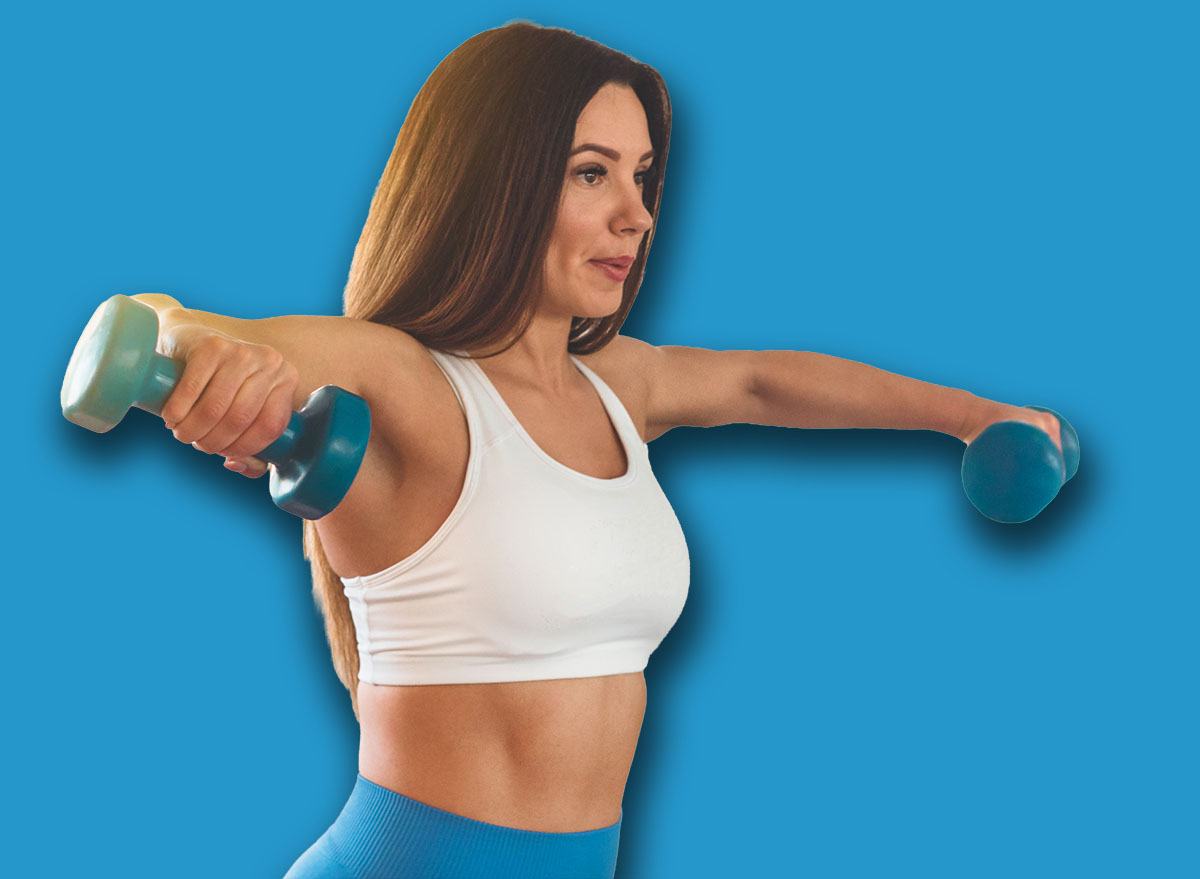

Upper arm softness is among the first features people notice when assessing age-related changes. Hormonal shifts, muscle loss, and reduced training intensity combine to soften the triceps and flatten shoulder definition faster than most expect. Add years of sedentary posture, limited overhead work, and inconsistent strength training, and the muscles responsible for arm shape stop receiving the tension they need to stay firm and full.
Standing arm exercises directly address this problem. They train the arms while forcing full-body stabilization, which increases muscle activation and metabolic demand. Your core, glutes, and upper back work to support every rep, driving better total-body tension while your shoulders, triceps, and biceps receive constant loading through longer ranges of motion. This combination accelerates visual tightening and improves functional strength for everyday tasks like lifting, carrying, pushing, and reaching overhead.
In the next section, you’ll find six standing exercises that tighten upper arms by rebuilding muscle tone, improving posture, and increasing calorie burn with every session. Perform these movements three to four times per week, maintain consistent effort for 28 days, and you’ll notice firmer arms, better shoulder shape, and improved confidence in sleeveless tops and fitted shirts.
Overhead Tricep Extension
Overhead tricep extensions target the long head of the triceps, the portion most responsible for upper arm fullness and firmness. Training overhead places the triceps in a deep stretch, increasing muscle fiber recruitment and strengthening the muscle’s entire length. This position also challenges shoulder stability and core bracing, thereby improving posture and upper-body control. Standing variations increase total-body engagement while reinforcing proper alignment that transfers directly to daily lifting tasks.
Muscles Trained: Triceps long head, triceps lateral head, triceps medial head, shoulders
How to Do It:
- Stand tall with your feet hip-width apart and grip a single dumbbell with both hands.
- Raise the weight overhead and straighten your arms.
- Brace your core and keep your ribs pulled down.
- Lower the dumbbell behind your head by bending your elbows.
- Drive the weight back overhead by fully extending your arms.
Recommended Sets and Reps: Knock out 3 sets of 12 reps. Rest for 45 seconds between each set.
Best Variations: Single-arm dumbbell extension, resistance band overhead extension, cable rope overhead extension
Form Tip: Keep your elbows tight and aimed forward to maintain constant triceps tension.
Standing Lateral Raise
Standing lateral raises sculpt the side deltoids, the muscle group responsible for shoulder width and upper arm shape. Strong side delts lift and tighten the visual line running from the shoulder to the elbow, instantly improving arm definition. This exercise teaches controlled movement under tension, protecting shoulder joints while maximizing muscular recruitment. Standing adds a stability requirement that engages your core and prevents momentum-based cheating.
Muscles Trained: Lateral deltoids, anterior deltoids, upper trapezius, core stabilizers
How to Do It:
- Stand tall, holding dumbbells at your sides with palms facing inward.
- Brace your core and slightly soften your knees.
- Raise the weights outward until your arms reach shoulder height.
- Pause briefly with your elbows slightly bent.
- Lower the dumbbells slowly to your sides.
Recommended Sets and Reps: Perform 3 sets of 12 to 15 reps. Rest for 45 seconds between each set.
Best Variations: Cable lateral raise, single-arm lateral raise, leaning lateral raise
Form Tip: Lead the movement with your elbows rather than your hands to activate the deltoids more effectively.
Standing Front Raise
Front raises develop the anterior deltoids, enhancing shoulder thickness and upper arm shape from the side and front views. This movement improves shoulder strength, supporting daily pushing motions and overhead tasks. Controlled front raises also improve shoulder joint health by reinforcing smooth movement patterns, standing demands balance and core tension, increasing muscular recruitment throughout the body.
Muscles Trained: Anterior deltoids, upper chest, triceps, core stabilizers
How to Do It:
- Stand upright, holding dumbbells in front of your thighs.
- Brace your core and maintain a tall posture.
- Raise the weights forward to shoulder height with straight or softly bent arms.
- Pause briefly at the top.
- Lower the dumbbells under control to the starting position.
Recommended Sets and Reps: Knock out 3 sets of 12 reps. Rest for 45 seconds between each set.
Best Variations: Alternating front raise, plate front raise, cable front raise
Form Tip: Keep your torso motionless to eliminate swinging momentum.
Standing Dumbbell Curl
Standing curls strengthen the biceps, balancing arm development and creating the firm, lifted look people associate with toned arms. This exercise reinforces elbow strength, improves grip endurance, and boosts overall upper-body function. Standing curls also demand core stiffness to prevent excessive leaning or arching. Proper execution promotes clean arm separation and maintains consistent muscle tension throughout every rep.
Muscles Trained: Biceps brachii, brachialis, forearms, core stabilizers
How to Do It:
- Stand with dumbbells at your sides and palms facing forward.
- Brace your core and keep your shoulders relaxed.
- Curl the weights upward while keeping your elbows close to your torso.
- Squeeze your biceps briefly at the top.
- Lower the dumbbells slowly to your sides.
Recommended Sets and Reps: Perform 3 sets of 10 to 12 reps. Rest for 45 seconds between each set.
Best Variations: Alternating curl, hammer curl, cable curl
Form Tip: Keep your elbows pinned to avoid shoulder involvement.
Standing Upright Row
Upright rows build upper arm and shoulder thickness while reinforcing strong pulling mechanics. The combination of shoulder elevation and elbow drive highlights the deltoids and upper trapezius, creating a visible arm contour. This movement also teaches postural control, improving shoulder symmetry and upper back stability. Standing upright rows challenge core engagement and enhance muscular tension throughout the lift.
Muscles Trained: Deltoids, upper trapezius, biceps, forearms
How to Do It:
- Stand holding dumbbells or a barbell at your thighs with palms facing your body.
- Brace your core and keep your shoulders back.
- Pull the weight upward by raising your elbows toward the ceiling.
- Stop when the weights reach chest height.
- Lower the weight under control to the starting position.
Recommended Sets and Reps: Knock out 3 sets of 12 reps. Rest for 45 seconds between each set.
Best Variations: Cable upright row, wide-grip upright row, resistance band upright row
Form Tip: Pull with your elbows higher than your hands to protect your shoulder joints.
Standing Cable Tricep Pressdown
Cable pressdowns apply constant tension to the triceps, making them one of the most effective exercises for triceps tightness. Continuous resistance produces greater muscle fatigue, accelerating toning results, standing setups force core bracing and stable posture, prevent torso sway, and increase lower-body engagement. Pressdowns strengthen elbow extension mechanics for daily pushing and lifting tasks.
Muscles Trained: Triceps long head, triceps lateral head, triceps medial head, forearms
How to Do It:
- Stand facing a cable station holding a rope or straight bar attachment.
- Brace your core and keep your elbows bent at your sides.
- Press the handle downward until your arms fully straighten.
- Squeeze your triceps briefly at the bottom.
- Return the handle slowly to the starting position.
Recommended Sets and Reps: Perform 3 sets of 12 to 15 reps. Rest for 45 seconds between each set.
Best Variations: Rope pressdown, single-arm pressdown, resistance band pressdown
Form Tip: Lock your elbows in place to prevent shoulder movement.
Best Tips for Tightening Upper Arms After 45

Tightening upper arms requires more than simply selecting exercises. Training frequency, recovery habits, nutrition choices, and daily movement patterns all shape how your muscles respond. Consistency drives results, but execution amplifies how fast those results appear. Use the strategies below to maximize the impact of your workouts over the next 28 days.
- Train arms three to four days per week using moderate loads with strict form to maximize muscle tension.
- Focus on slow lowering phases to increase time under tension during each rep.
- Maintain a daily protein intake to support muscle repair and tissue firmness.
- Prioritize posture throughout the day by keeping your shoulders stacked over your hips and your ribs down.
- Stay hydrated and sleep seven to eight hours nightly to support hormonal balance and recovery.
- Finish each workout with light arm pump sets to drive blood flow and accelerate toning.