6 Daily Walking Exercises That Build Leg Strength Better Than Gym Machines After 50


Walking is often dismissed as “just cardio,” especially in gym culture that prioritizes heavy weights, machines, and intense workouts over all else. But for adults over 50, that mindset misses the point. As you age, what matters more is whether daily walking (when done consistently) can build more usable leg strength than many machine-based workouts. In many cases, the answer is yes.
While gym machines help guide your movements for you by stabilizing your body, dictating the path of motion, and often reducing how much your hips, glutes, and stabilizing muscles need to work, walking is a closed-chain, full-body exercise that forces your legs to support and move your entire bodyweight with every step. Walking with correct posture, pace, and varied terrain will boost your lower body strength, coordination, balance, and endurance.
Studies on walking mechanics and aging show that intentional walking (especially uphill, downhill, and at varied speeds) improves lower-body muscle engagement, joint health, and neuromuscular coordination. Eccentric loading during downhill walking and increased hip extension during faster or uphill walking are particularly important for maintaining muscle mass and resilience as we age.
But with so many different ways to approach walking, it can feel overwhelming to start a daily walking practice. That’s why we chatted with James Brady, CPT, certified personal trainer at OriGym, who shares six effective daily walking practices that build leg strength better than gym machines after 50.
“For those over 50, how you walk matters more than how far you walk,” says Brady. “Small changes to daily walking can build real leg strength without stepping into a gym. You should walk with a purposeful pace, pushing the ground away with each step. This strategy engages the glutes and thighs far more than a slow shuffle. Strong walking is active, not passive.”
In this article, we break down Brady’s six recommended daily walking practices that turn an ordinary walk into a powerful leg-strength routine. Read on to learn more.
(Next up: If You Can Do This Many Squats After 50, Your Leg Strength Is Elite.)
Purposeful Pace Walking
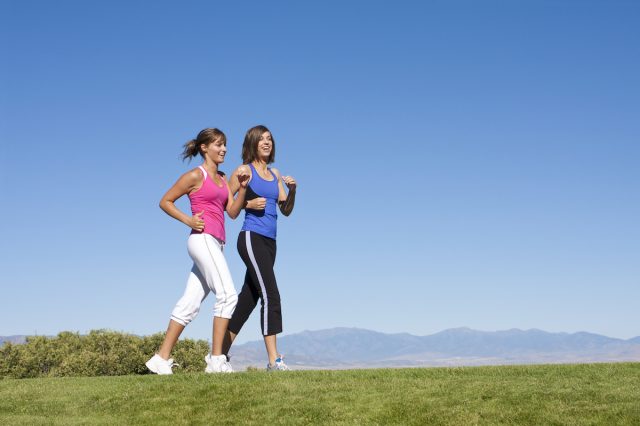
Most people walk aimlessly, shufflling along, letting momentum do the work. Instead, do purposeful pace walking by turning each step into an active push against the ground to help build lower body strength and endurance.
How to do it:
- Stand tall with your chest up and your shoulders relaxed.
- Start walking at a moderate pace that feels deliberate but sustainable.
- Push the ground away with your back leg on every step.
- Engage your glutes with each step as your foot leaves the ground.
- Remember to breathe and maintain a steady walking rhythm without going too fast.
- Continue for 10 to 20 minutes depending on your fitness level.
Uphill Walking
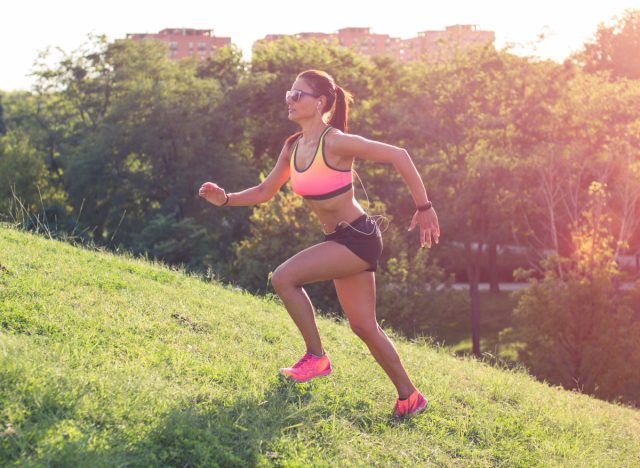
Uphill walking is one of the most effective ways to build leg strength and boost your cardio without equipment because it forces your legs to work harder with every step.
How to do it:
- Find a hill, incline, or sloped path (even a short one).
- Walk uphill at a steady but challenging pace.
- Lean slightly forward from your ankles (not your waist).
- Drive through your heels as you step upward.
- Keep strides shorter to maintain control.
- Focus on squeezing your glutes as you push off with each step.
- Walk uphill for 30 to 90 seconds at a time. Rest for 90 to 120 seconds between walking intervals.
Long Stride Push-Back Walking
This practice shifts emphasis from reaching forward to driving backward, which strengthens your hips and posterior chain (backside), both of which are common areas that weaken with age.
How to do it:
- Begin walking on flat ground with short steps.
- Focus on extending your legs behind you and pushing the ground backward forcefully with each step.
- Squeeze the glute of your trailing leg.
- Keep your torso upright and stable with good posture.
- Walk this way for several minutes at a time.
Fast Walking Intervals
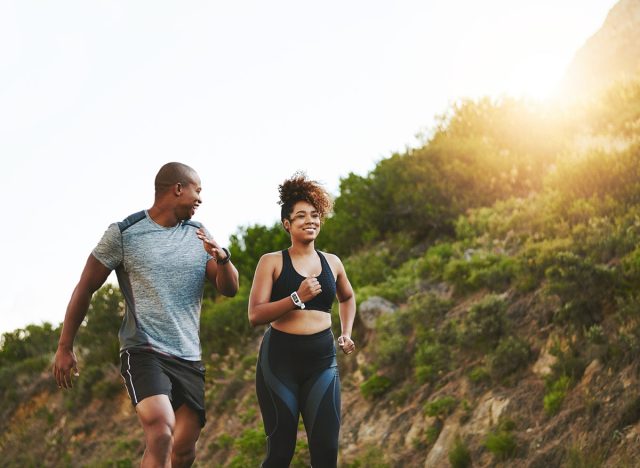
Short bursts of faster walking challenge your legs and cardiovascular system together, creating strength that carries over into daily movement.
How to do it:
- Walk at a comfortable pace for several minutes.
- Increase your speed for 30 to 60 seconds.
- Maintain good posture and arm swing.
- Push the ground away more forcefully.
- Breathe steadily and maintain a steady walking rhythm.
- Slow back down to recover.
- Repeat for 3 to 6 rounds during a walk.
Controlled Downhill Walking
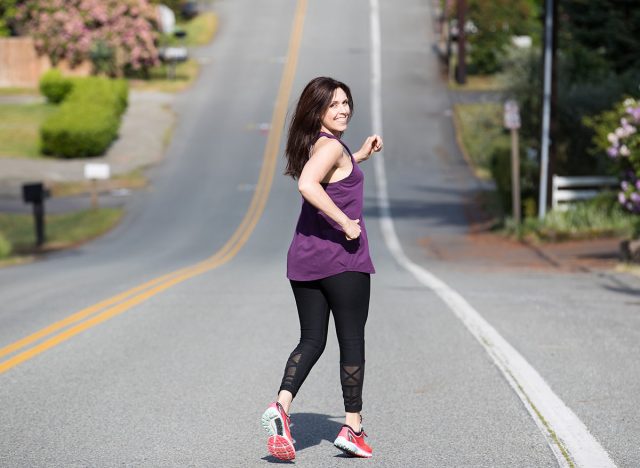
Downhill walking trains your legs eccentrically, meaning your muscles work while lengthening. This is essential for building resilience and joint control.
How to do it:
- Approach a downhill section of your walking route and slow your pace gradually.
- Keep your chest upright and your core engaged.
- Resist gravity instead of letting yourself fall forward.
- Control each step as your foot contacts the ground.
- Feel your thighs and glutes working to brake the movement.
- Continue for short downhill sections, then recover for one to two minutes.
Posture-Focused Finish Walking
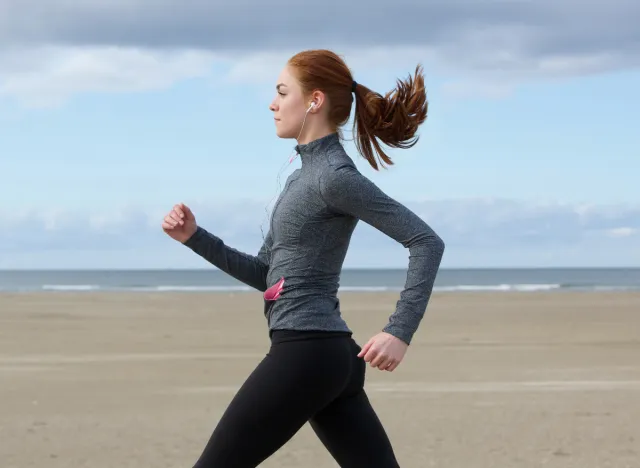
Ending your walks with posture awareness helps your body develop proper loading patterns and makes sure fatigue doesn’t impact your movement quality.
How to do it:
- For the final few minutes of your walk, stand taller with a straight back.
- Brace your core as if zipping up snug jeans.
- Let your arms swing naturally.
- Keep your gaze forward, not down.
- Walk with intention rather than coasting.
- Maintain smooth, confident steps.
- Finish the walk feeling strong, not slouched.
- Source: https://pubmed.ncbi.nlm.nih.gov/36374524/
- Source: https://pmc.ncbi.nlm.nih.gov/articles/PMC11624387/
- Source: https://www.nature.com/articles/s41598-024-64293-0
- Source: https://www.nature.com/articles/s41598-024-64293-0
- Source: https://pmc.ncbi.nlm.nih.gov/articles/PMC9779799/
- Source: https://pmc.ncbi.nlm.nih.gov/articles/PMC6430599/
- Source: https://www.frontiersin.org/journals/human-neuroscience/articles/10.3389/fnhum.2021.749366/full
- Source: https://www.sciencedirect.com/science/article/abs/pii/S0966636223000917