If You Can Hold a Wall Sit This Long After 50, Your Lower-Body Power Is Stronger Than 90% of Peers


Daily walks are an amazing way to cross off some cardio and keep your blood pressure in check. If getting in daily steps works for your routine, that’s great. But according to studies, isometric exercises—like wall sits—are nearly two times more effective in lowering your blood pressure. Improving your blood pressure is just one of many benefits wall sits bring to the table. This bodyweight workout can help strengthen your core, improve posture, and burn fat. Talk about a solid dose of overall goodness!
If you’re ready to get started, find a wall and hold the position. If you can hold a wall sit for this long after 50, your lower-body power is stronger than 90% of your peers.
Why Is the Wall Sit Considered a Useful Benchmark for Evaluating Lower-Body Fitness?
According to Casey Lee, Owner of Purposeful Strength, LLC, a Private Personal Training Studio in Vermont, this exercise sits under the umbrella of “relative strength,” making it a productive benchmark for lower-body strength.
“Relative strength is when a strength movement is impacted by the size of your body. Shorter vs longer legs…overall height…limb ratio…total body weight…all of these unique body factors play a role in relative strength. Being strong for your body is incredibly important, especially after the age of 50,” Lee tells us.
What Does a Wall Sit Primarily Measure?
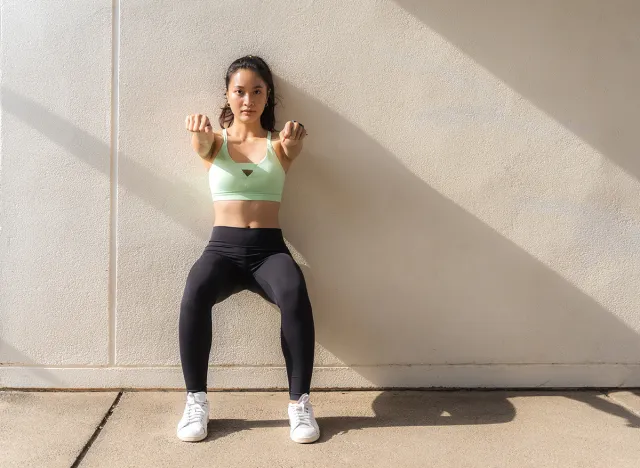
The wall sit is a solid measure of muscular endurance. Because it’s a bodyweight exercise, it gets woven into workouts for time and duration.
“You can absolutely load a wall sit by adding a weight to your lap, but no one is trying to set a one-rep max wall sit; it’s just not a movement that is counted by reps or is safe to load maximally,” points out.
How Strong Wall Sit Performance Translates to Real-World Activities
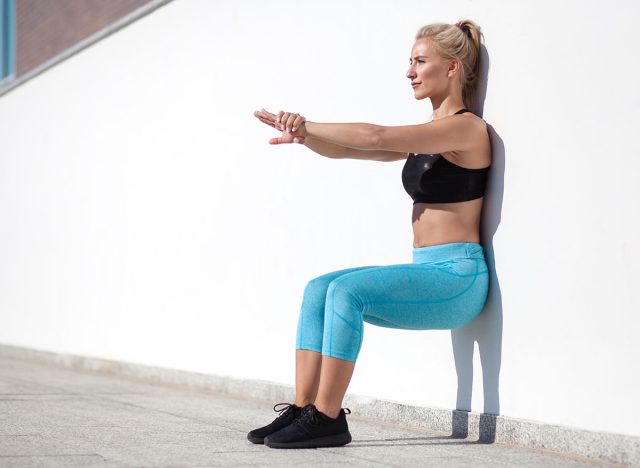
This exercise translates to many facets of everyday life. Holding a wall sit with proper form means you have strong knees, quads, hips, and glutes.
“These are primary muscles that contribute to balance as well as repetitive movements like going up and down stairs. Having a strong lower body, hands down, is the key success factor in maintaining balance skills as we age,” Lee says.
What Wall Sit Hold Time Signals “Elite” Lower-Body Power?
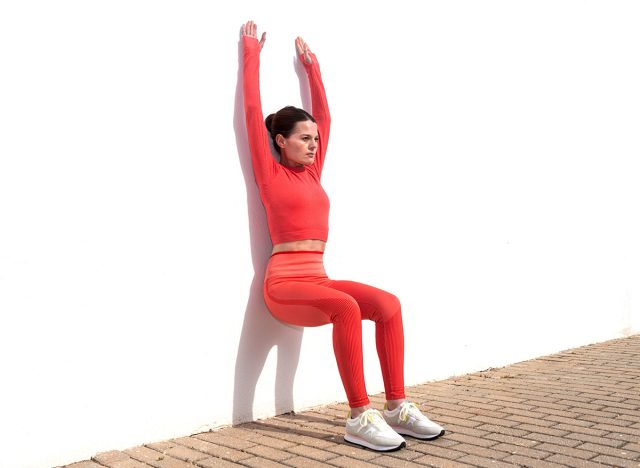
Lee breaks down wall sit hold times into the following categories:
- Less than 30 seconds means you should work on improving total-body strength.
- 30 to 45 seconds is “a respectable start, but it’s just a start.”
- 45 to 60 seconds means you have a “solid base of relative strength.”
- 60 seconds or longer signals you are stronger than 90% of your peers.
“I look at these times from two angles. The first being that the wall sit is a bilateral exercise—both legs are working at the same time—because of this you should be in a position to produce force. The second angle is that when you perform the wall sit you are literally between a rock and a hard spot. The wall being the rock and the floor your feet are pushing into being the hard spot. These two points of contact allow you to wedge tight and push hard,” Lee explains.