If You Can Hold a Wall Sit This Long After 60, Your Lower-Body Power Is Elite
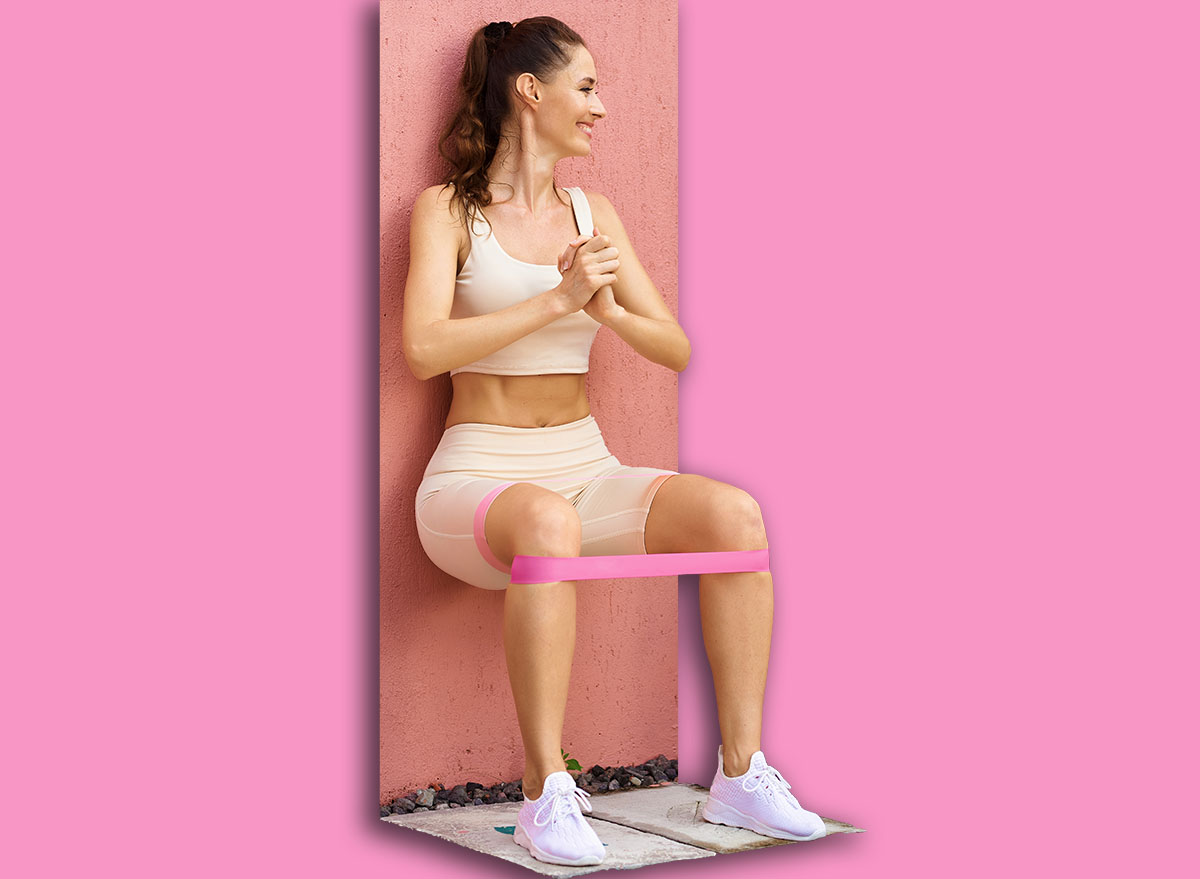

A wall sit has a funny way of humbling people. You slide down the wall, set your knees, and for a few seconds, it feels almost too simple. Then the burn starts creeping into your quads, your glutes tighten up, and your legs have to prove they can hold the position. After 60, that ability says a lot about your lower-body power, strength, endurance, and control. Your legs need to produce force, keep your joints steady, and maintain tension without a break.
From a coaching standpoint, I like wall sits because they strip the movement down to what matters. There’s no bouncing, rushing, or using momentum to sneak through reps. Your quads, glutes, hips, and core have to stay locked in while your body holds a strong seated position. That’s where isometric strength comes into play. You’re training the muscles to stay active under tension, which supports better knee stability, stronger legs, and more confidence during everyday movement.
Wall sits also build lower-body endurance that works outside the gym. Stairs, hills, long walks, travel days, yard work, and getting up and down from chairs all ask your legs to keep working as fatigue builds. A strong wall sit shows your lower body can handle sustained effort while staying controlled. Ahead, we’ll break down why wall sits work so well, how to perform them correctly, what your hold time says about your strength, and how to build stronger legs after 60.
Why Wall Sits Build Lower-Body Strength and Power After 60
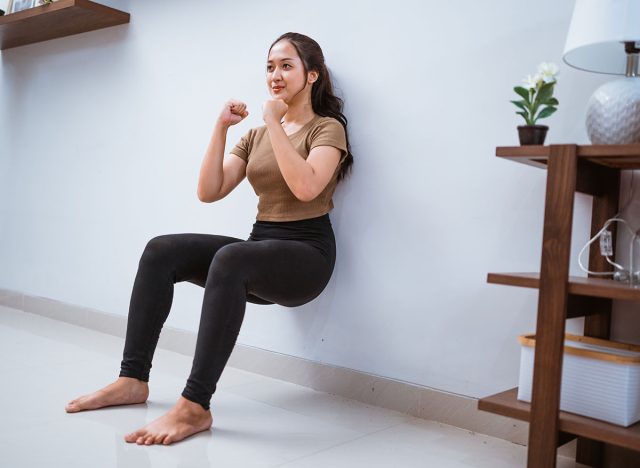
Wall sits directly challenge your legs. Your quads carry a major share of the load, your glutes help stabilize your hips, and your core keeps your torso steady against the wall. Since the position stays fixed, your muscles have to keep producing tension the entire time.
That constant tension gives wall sits their value. Isometric holds train your muscles to stay strong in a specific joint position, which can help support better control around the knees and hips. This matters after 60 because lower-body strength often determines how easily you move through daily tasks. Stronger legs make stairs feel smoother, walking feel steadier, and getting up from a seated position feel more controlled.
Wall sits also give your legs more time under tension than a quick set of reps. That longer exposure helps build muscular endurance, which plays a big role in how well your legs hold up during longer bouts of movement. The longer you can maintain the position with clean form, the more your lower body shows lasting strength.
How to Perform a Proper Wall Sit
A strong wall sit starts with clean positioning. You want your back supported, your feet placed well, and your knees stacked in a way that feels stable. Once you’re set, the goal is to hold the same position while breathing steadily and keeping tension through your legs.
How to Do It:
- Stand with your back against a wall and your feet about two feet in front of you.
- Slide down the wall until your knees bend and your thighs approach parallel to the floor.
- Place your feet flat with your knees stacked over your ankles.
- Brace your core and keep your chest tall against the wall.
- Press through your feet while keeping your hips, knees, and ankles aligned.
- Hold the position while breathing steadily and maintaining the same depth.
A quick call-out on the movement standard. Aim for your thighs to reach roughly parallel to the floor. If you’re working toward that position, start a little higher on the wall and lower your depth as your strength and mobility improve.
Best Variations: High Wall Sit, Standard Wall Sit, Weighted Wall Sit, Single-Leg Wall Sit, Banded Wall Sit.
Wall Sit Test After 60: What Your Time Means
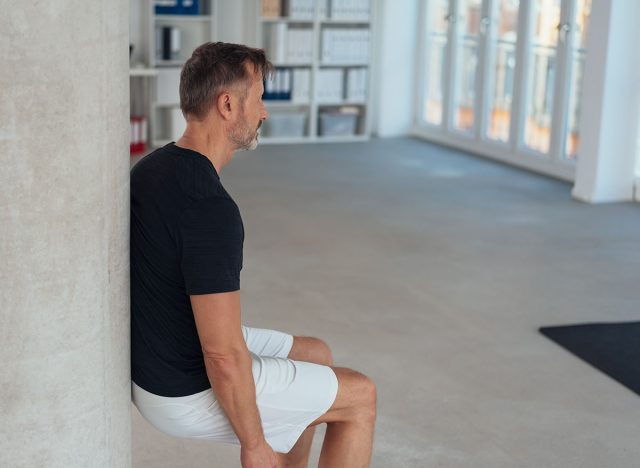
Your time should reflect a clean hold. Keep your back against the wall, your feet planted, and your knees tracking over your ankles. Once your hips slide up, your knees shift, or your position changes noticeably, record the time you held with good form.
- Under 20 seconds: You’re building the foundation. Focus on finding a strong position and getting comfortable holding tension through your legs.
- 20 to 45 seconds: This is a solid base. Your quads and glutes can support the position with control, and you’re developing the endurance needed for daily movement.
- 45 to 75 seconds: You’re in strong territory. Your legs can maintain tension for longer stretches, and your posture stays steady as the hold becomes more demanding.
- 75+ seconds: This is elite after 60. Holding this position with clean form shows excellent lower-body strength, endurance, and control.
How to Build a Stronger Wall Sit After 60
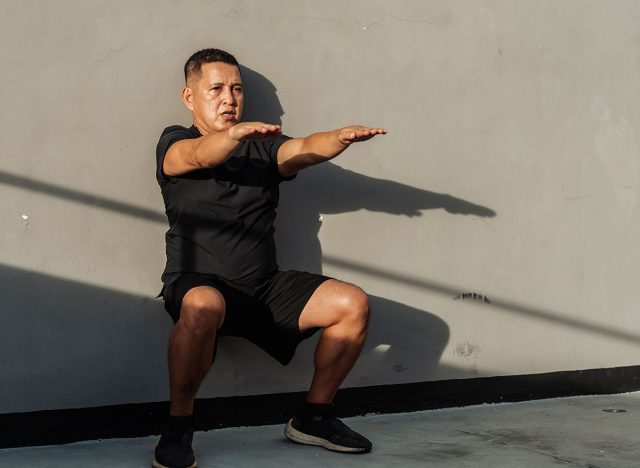
Improving your wall sit comes from building the strength to hold it. The goal is to create steady tension through your legs, maintain a consistent position, and gradually increase the time your muscles can work. Wall sits respond well to consistent practice because your body adapts quickly to the position. Add in smart strength work, and your legs become better at handling both effort and fatigue. Over time, that leads to better control on stairs, while walking, and during other everyday movements.
- Practice wall sits regularly: Start with two to three sets a few times per week. Keep each hold clean and controlled.
- Use manageable hold times: Begin with 15 to 30 seconds, then increase the hold time as your position improves.
- Train your quads: Squats, step-ups, and split squats help build the strength needed for longer wall sits.
- Strengthen your glutes: Bridges, hip thrusts, and lateral band walks support better hip stability during the hold.
- Add time under tension: Slow squats and pause squats help your legs get comfortable working longer in challenging positions.
- Use a higher wall sit when needed: Starting slightly above parallel lets you build strength while maintaining clean alignment.
- Progress with load carefully: Once bodyweight holds feel solid, add a light dumbbell or plate to increase the challenge.
- Retest every few weeks: Use the same depth and setup each time so your progress stays easy to track.
A wall sit gives you a simple, honest look at how your legs handle sustained effort. If you can hold a clean wall sit past 75 seconds after 60, your lower body has the strength and staying power to stand out. That control carries into the movements that matter most, from climbing stairs to staying steady on your feet throughout the day.
References
- Cho, Misuk. “The effects of modified wall squat exercises on average adults’ deep abdominal muscle thickness and lumbar stability.” Journal of physical therapy science vol. 25,6 (2013): 689-92. doi:10.1589/jpts.25.689
- Ríos Riquelme, Mario et al. “Trends and Scientific Production on Isometric Training: A Bibliometric Analysis.” Sports (Basel, Switzerland) vol. 13,5 145. 12 May. 2025, doi:10.3390/sports13050145
- Oranchuk, Dustin J et al. “Isometric training and long-term adaptations: Effects of muscle length, intensity, and intent: A systematic review.” Scandinavian journal of medicine & science in sports vol. 29,4 (2019): 484-503. doi:10.1111/sms.13375