Over 50? If You Can Perform These 5 Core Moves, You’re in Good Shape
Core strength after 50 shows up in how well your body holds together during regular movement. It helps you stand tall, walk with control, carry things without shifting all over the place, and get up from the floor with more confidence. A strong core also supports your spine and gives your hips and shoulders a better base for movement.
The tricky part is that “good core strength” can feel vague. A six-pack doesn’t tell the whole story, and endless crunches don’t automatically mean your midsection can support you well. Better markers include how long you can hold a position, how well you resist movement, and whether your core can stay engaged while your arms or legs move.
The five moves below keep things simple and measurable. You’ll test a front plank, side plank, dead bug, glute bridge hold, and bird dog. Each one offers a different perspective on core control. If you can complete all five with clean form, you’re in a strong place after 50.
Forearm Plank
The forearm plank gives you a clean look at core endurance. Your abs have to brace, your glutes help control your hips, and your shoulders support your upper body. It’s simple, but the clock makes it honest. A strong plank shows you can create tension and hold alignment without needing movement to reset.
How to Do It:
- Place your forearms on the floor with your elbows under your shoulders.
- Extend your legs behind you with your feet about hip-width apart.
- Brace your core and squeeze your glutes.
- Hold a straight line from your head to your heels.
- Breathe steadily while keeping your hips level.
- Stop when your hips drop, your back arches, or your shoulders lose position.
Movement Standard: Your plank counts when your body stays in a straight line, your hips remain level, and your lower back stays neutral.
Goal After 50: Hold for 60 seconds with clean form.
Best Variations: Incline Plank, High Plank, RKC Plank, Stability Ball Plank.
Side Plank
The side plank tests lateral core strength, which helps you stay stable side-to-side. Your obliques, hips, and shoulders all work together to keep your body stacked. This move also challenges each side on its own, which makes it useful for spotting strength gaps between sides.
How to Do It:
- Lie on your side with your legs straight and your feet stacked.
- Place your elbow directly under your shoulder.
- Brace your core before lifting your hips.
- Lift your hips until your body forms a straight line.
- Keep your shoulders stacked and your hips level.
- Hold the position, then switch sides.
Movement Standard: Your side plank counts when your hips stay lifted, your body stays in a straight line, and your torso doesn’t rotate.
Goal After 50: Hold for 30 seconds per side with clean form.
Best Variations: Bent-Knee Side Plank, Side Plank from Feet, Side Plank with Reach, Elevated Side Plank.
Dead Bug
The dead bug looks easy until you slow it down and do it well. It trains your core to hold your ribs and pelvis in position while your arms and legs move. This carries over well to walking, lifting, and any movement where your limbs move while your trunk stays steady.
How to Do It:
- Lie on your back with your arms reaching toward the ceiling.
- Lift your knees over your hips with your legs bent at 90 degrees.
- Press your lower back gently toward the floor.
- Extend one arm and the opposite leg away from your body.
- Return to the starting position with control.
- Alternate sides until you complete all reps.
Movement Standard: Each rep counts when your lower back stays down, your ribs stay controlled, and your arm and leg move without rushing.
Goal After 50: Complete 10 controlled reps per side.
Best Variations: Heel Tap Dead Bug, Wall Press Dead Bug, Banded Dead Bug, Weighted Dead Bug.
Glute Bridge Hold
A strong core needs strong hips behind it. The glute bridge hold trains your glutes, hamstrings, and deep core to keep your pelvis steady. It also gives you a simple way to check whether your hips can hold position without shifting the work into your lower back.
How to Do It:
- Lie on your back with your knees bent and your feet flat.
- Place your feet about hip-width apart.
- Brace your core before lifting your hips.
- Press through your heels and lift your hips.
- Squeeze your glutes at the top.
- Hold the position while keeping your hips level.
Movement Standard: Your bridge counts when your shoulders, hips, and knees form a straight line and your glutes stay engaged.
Goal After 50: Hold for 60 seconds with steady hips.
Best Variations: Marching Bridge, Single-Leg Bridge, Banded Bridge Hold, Elevated Bridge.
Bird Dog
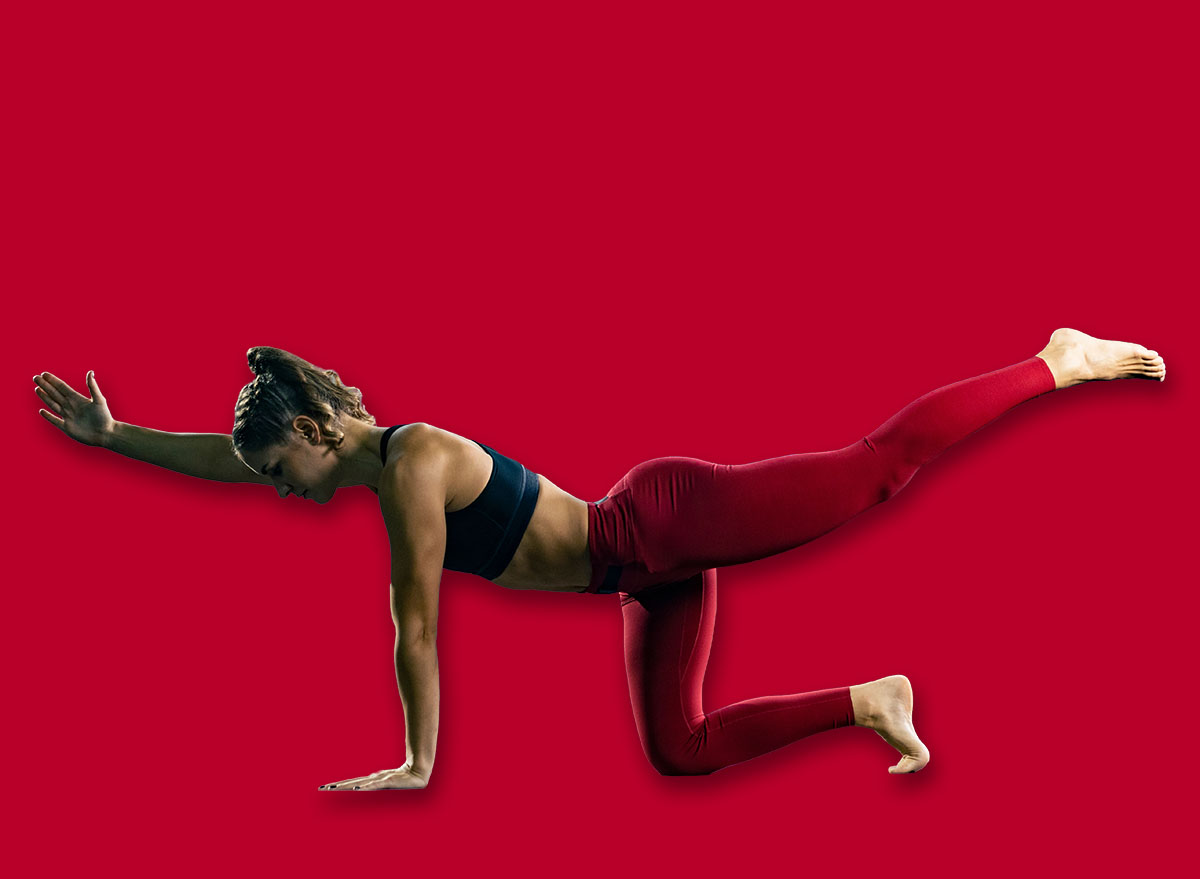
The bird dog tests coordination, balance, and trunk control. Your core has to stay steady while one arm and the opposite leg move. It’s basic, joint-friendly, and useful for training the body to stay organized without a lot of load.
How to Do It:
- Start on your hands and knees with your hands under your shoulders.
- Brace your core and keep your back flat.
- Reach one arm forward and the opposite leg back.
- Pause briefly with your hips square to the floor.
- Return to the starting position with control.
- Alternate sides until you complete all reps.
Movement Standard: Each rep counts when your hips stay square, your back stays flat, and your arm and leg move without twisting your torso.
Goal After 50: Complete 10 controlled reps per side.
Best Variations: Bird Dog Hold, Bird Dog Row, Mini-Band Bird Dog, Elbow-to-Knee Bird Dog.
How to Build Core Strength After 50

Core training works best when it stays consistent and clean. You don’t need to turn every session into a long ab circuit. A few focused exercises done well can improve how your midsection supports your spine, hips, and shoulders. The goal is to build control you can use during regular movement, not just during a workout. Start with the versions you can perform well, then add time, reps, or difficulty as your form improves.
- Train your core three to four times per week: Short sessions work well when the reps stay controlled.
- Prioritize position first: Good alignment makes each move more useful and keeps the test honest.
- Use measurable goals: Track hold times, reps per side, and how clean each rep feels.
- Build both front and side strength: Planks and side planks train different parts of your core.
- Include hip-focused work: Bridges help your glutes support your pelvis and lower back.
- Slow the reps down: Controlled movement builds better coordination and tension.
- Retest every few weeks: Use the same standards so you can see real progress.
If you can complete these five core moves with the listed standards, you’ve built a strong foundation after 50. Your core can brace, stabilize, resist movement, and support the rest of your body through everyday activity.
References
- Zhong Y, Guo W, Chen P, Wang Y. Effects of core training on balance performance in older adults: a systematic review and meta-analysis. Front Public Health. 2025 Oct 9;13:1661460. doi: 10.3389/fpubh.2025.1661460. PMID: 41142736; PMCID: PMC12548199.
- Rodríguez-Perea Á, Reyes-Ferrada W, Jerez-Mayorga D, Chirosa Ríos L, Van den Tillar R, Chirosa Ríos I, Martínez-García D. Core training and performance: a systematic review with meta-analysis. Biol Sport. 2023 Oct;40(4):975-992. doi: 10.5114/biolsport.2023.123319. Epub 2023 Feb 3. PMID: 37867742; PMCID: PMC10588579.