If You Can Hold a Wall Sit This Long After 60, Your Leg Strength Is Top-Tier


One of the most important things to work on at the gym as you age is building overall strength. The reason is quite simple: You naturally lose muscle and bone density each year shortly after hitting 30. Sarcopenia and osteoporosis can progress and accelerate differently for everyone based on diet, lifestyle, and genetics.
The good news is, there are measures you can take to offset these frustrating age-related challenges. If you’ve been working on building leg strength, there’s a great way to tell where you rate. We spoke with Reuben Chen, MD, Board-Certified Sports Medicine Physician, Longevity Expert, and the Chief Medical Advisor at Sunrider International, and learned that, if you can hold a wall sit for this long after 60, your leg strength is considered “top-tier.”
What Your Wall Sit Hold Time Reveals About Your Fitness
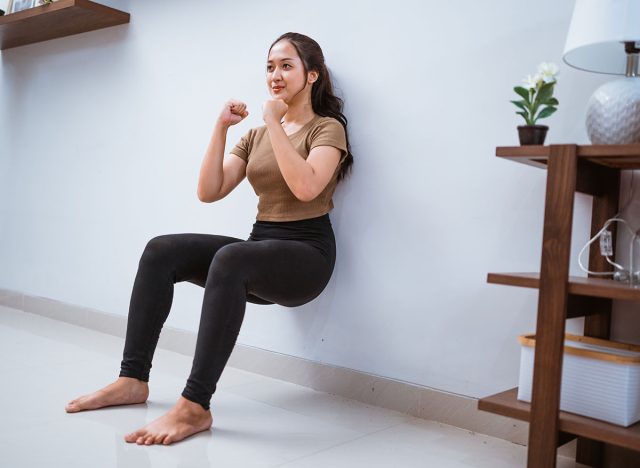
The ideal wall sit time majorly depends on fitness level, gender, and even the source you’re getting your fitness info from. That said, Chen notes that an average wall sit time can range from 20 to 40 seconds, while holding for more than 40 seconds means you’re strong when stacked against your gym peers.
Now, if you’re able to complete the exercise with proper form for 90 seconds or more, you’re within “top-tier” status. According to Chen, falling into this category means you have solid muscular endurance, functional mobility, and independence.
If you’re only able to hold a wall sit for 20 to 30 seconds, there’s room for improvement, as this generally means below-average leg strength.
How To Do Wall Sits
Here’s exactly how to do a wall sit:
- Stand tall with your back pressed against a wall and arms extended ahead of you.
- Slowly slide down the wall until your knees are bent at a 90-degree angle, as if you’re sitting in a chair.
- Hold the position for the prescribed amount of time.
Why Wall Sits Are Effective for Boosting Leg Strength
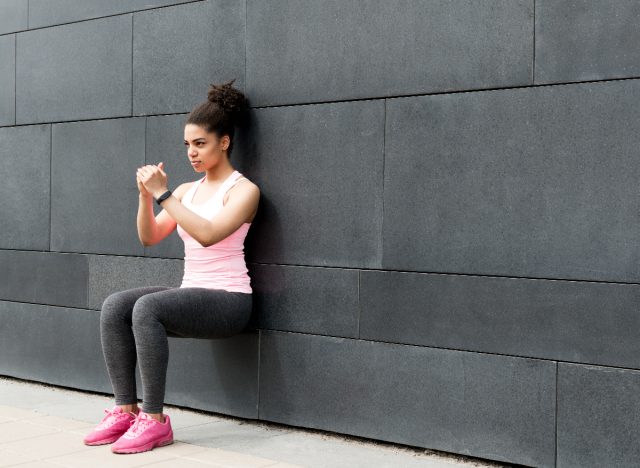
This bodyweight exercise may look simple, but it gives your glutes, hamstrings, quads, calves, and core stabilizers an incredible workout. (Seriously—you’ll truly feel the burn after holding it!) Your lower-body muscles work together as you remain in position and resist gravity.
Training these muscles is particularly essential as you age, as they help you perform daily tasks like tackling stairs, getting up and down from the floor, and even walking. Strengthening them can also support better balance and fall prevention, helping you lead a confident, independent life as you grow older.