If You Can Hold These 3 Bed Positions After 60, Your Core Is Top-Tier
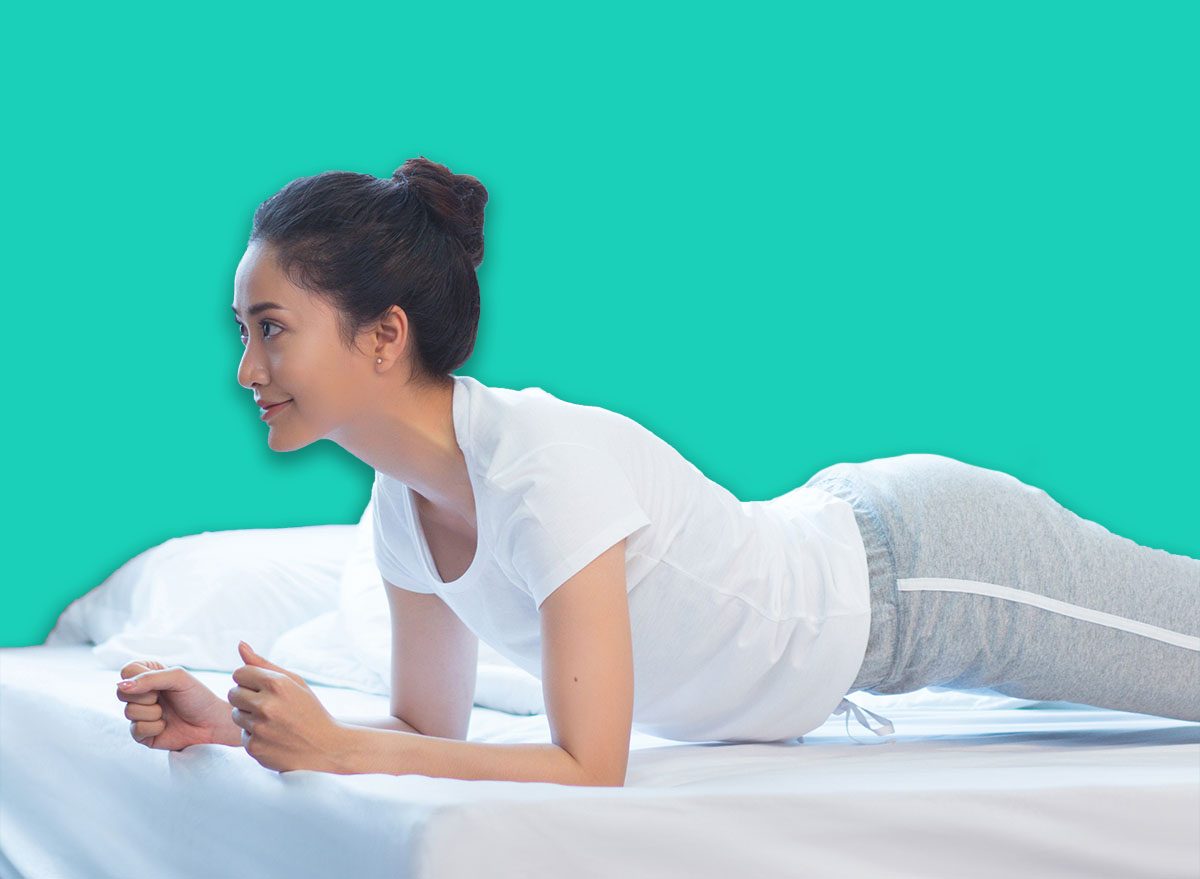

Core strength is one of the most overlooked markers of healthy aging, and it matters far more than most people realize after 60. Improving your core strength after 60 doesn’t necessarily mean having a toned midsection or trim waistline. It’s what helps keep you upright, balanced, and steady on your feet as you age. Also, core strength is involved from reaching and bending to catching yourself if you stumble.
The problem is that the standard ways of testing it, like a full sit-up or a floor plank, can feel daunting if you have stiff hips, sensitive knees, or a general reluctance to get down onto a hard floor. The good news is you don’t need a gym or a yoga mat to put your core strength to the test. In fact, all you need is your bed (way less impactful on your joints) and some friendly guidance from an expert.
That’s why we chatted with James Bickerstaff, CPT, a personal trainer at OriGym, who walked us through his top three bed-based holds that reveal exactly how solid your core is after 60. Each move targets the same muscles as its floor-based counterpart, including your abs, obliques (side abs), lower back, and hip stabilizers, using the cushioning of your mattress instead of a hard surface.
According to the Centers for Disease Control and Prevention, core and lower body strength are among the most essential factors in preventing falls in older adults, which means how long you can hold these positions says a lot about more than just your abs, it reflects the stability that keeps you safe on your feet.
The following three holds make up a simple, equipment-free test you can perform right where you start your day. Keep reading for the detailed step-by-step instructions.
(And when you’re done, don’t miss these 4 Strength Tests Every Man Over 50 Should Be Able to Pass.)
Forearm Plank
Bickerstaff says the forearm plank is the gold standard of core exercises. “The forearm plank is one of the best all-round tests of core strength because it challenges your abdominals, lower back, shoulders, and glutes simultaneously,” says Bickerstaff. “Being able to hold a solid plank after age 60 demonstrates excellent trunk stability and muscular endurance.”
How to do it:
- Lie face down on a bed and place your forearms on the mattress with your elbows directly beneath your shoulders.
- Step your feet back until your body forms a straight line from head to toe.
- Flex your core and squeeze your glutes.
- Avoid letting your hips sag or lift too high.
- Breathe steadily through your nose during the hold.
- Hold for 20 to 45 seconds.
Side Plank
This plank variation shifts the challenge to the muscles most core workouts skip entirely: the obliques, or side abs. “The side plank targets muscles that are often overlooked, particularly your obliques and hip stabilizers,” explains Bickerstaff. “These muscles play a key role in balance and reducing the likelihood of falls, making this one of the most valuable exercises for healthy aging.”
How to do it:
- Lie on one side with your forearm resting on the bed directly beneath your shoulder.
- Stack your legs and lift your hips until your body forms a straight line from shoulders to ankles.
- Hold the position while keeping your hips lifted.
- Keep your head aligned with your spine.
- Repeat on the opposite side.
- Hold for 15 to 30 seconds per side.
Dead Bug Hold
This third and final position adds a coordination element that mirrors how your core actually functions in daily life. “This hold teaches your core to stabilize while your arms and legs move,” says Bickerstaff. “This closely mimics common daily activities such as walking, climbing stairs, and carrying shopping, making it highly functional as well as effective.”
How to do it:
- Lie on your back with your knees bent 90 degrees above your hips and your arms extended toward the ceiling.
- Slowly extend one leg and the opposite arm.
- Keep your lower back gently pressed into the mattress.
- Alternate sides.
- Hold each side for 10 to 20 seconds. Aim for 5 to 8 reps per side.
The Bottom Line
If you can complete all three of these holds with proper form and without your hips sagging or shaking uncontrollably, that’s a strong sign your core is in excellent shape for your age. If you struggled, that’s also useful information. Now you can work these holds into your routine two to three times a week, starting with shorter holds and building up gradually by trying to add 5 seconds every week. While a softer surface like your bed makes these holds more forgiving on your joints, the strength and stability you build will carry over to real life.