If You Can Complete These 4 Standing Exercises Without Rest After 55, Your Endurance Is Elite

Endurance after 55 shows up in subtle but powerful ways. It determines how long you can stay on your feet, how steady your posture feels late in the day, and how well your body manages fatigue without forcing you to slow down. When endurance fades, even strong muscles struggle to support continuous movement.
Standing exercises expose that capacity quickly. They require lower-body strength, core engagement, and cardiovascular endurance while keeping you upright and moving. Unlike seated or floor-based work, standing work requires balance, breathing, and muscular stamina simultaneously. That makes them especially revealing for midlife and beyond.
This challenge combines four standing exercises performed back-to-back with no rest. If you can complete the whole sequence with clean form and controlled breathing, your endurance sits at an elite level for your age. Below, you’ll learn how to perform each move, what the test reveals, and how to build toward it safely.
How the Standing Endurance Test Works
This test uses continuous movement to assess muscular endurance, postural control, and aerobic capacity. Perform all four exercises in order without resting between movements. Focus on steady pacing rather than speed.
Bodyweight Squats
How to Do It:
- Stand with your feet about shoulder-width apart
- Brace your core and keep your chest tall
- Push your hips back and lower into a squat
- Drive through your feet to return to standing
- Perform 20 controlled rep
Alternating Reverse Lunges
How to Do It:
- Stand tall with your hands at your sides
- Step one leg back and lower into a lunge
- Keep your front knee stacked over your foot
- Push through the front heel to stand
- Alternate legs for 20 total reps
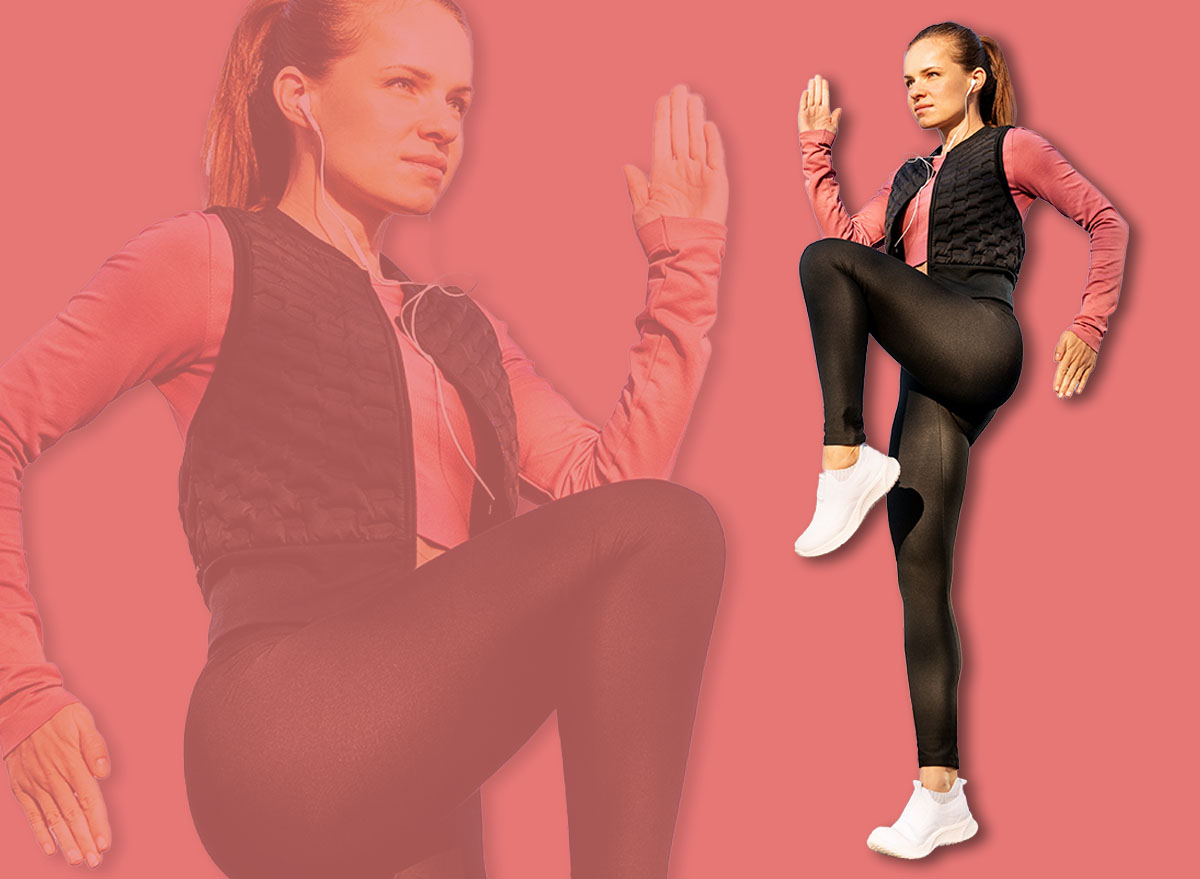
Standing Knee Drives
How to Do It:
- Stand upright with your arms bent at your sides.
- Drive one knee up toward your chest.
- Switch legs smoothly and stay tall.
- Maintain a steady rhythm.
- Perform 30 total knee drives.
Calf Raises
How to Do It:
- Stand with your feet hip-width apart.
- Press through the balls of your feet.
- Lift your heels as high as possible.
- Lower under control.
- Perform 25 reps.
Complete all four exercises consecutively without pausing or leaning for support.
What Completing This Test Says About Your Endurance

Finishing this sequence without rest reflects more than cardiovascular fitness. It shows your legs can sustain repeated contractions, your core can stabilize your posture under fatigue, and your breathing stays controlled while standing and moving. Many people can handle each exercise on its own, but linking them together quickly exposes endurance gaps.
If you complete the full circuit with steady form and no breaks, your endurance ranks among the top tier for adults over 55. That level of capacity often translates to better walking stamina, improved balance late in the day, and greater confidence during long periods on your feet.
The Best Tips for Improving Standing Endurance After 55

Elite endurance builds through sustained movement, not through all-out exhaustion. The goal is to teach your body to stay efficient while upright and fatigued.
- Train in circuits: Linking two to four standing exercises improves stamina and pacing
- Control your breathing: Slow, nasal breaths help manage heart rate during continuous work.
- Strengthen your legs: Squats, lunges, and step-ups reduce fatigue during endurance efforts.
- Improve ankle strength: Calf raises and balance drills support longer standing tolerance.
- Limit rest strategically: Short rest periods build endurance without overwhelming recovery.
- Retest every four to six weeks: Track progress by completing the whole sequence more smoothly.
When you can move continuously, stay upright, and maintain form without rest, your endurance supports every part of daily life. That ability defines elite capacity after 55 and keeps you moving with confidence wherever the day takes you.