6 Simple Moves That Rebuild Lost Muscle Faster Than Gym Workouts After 50
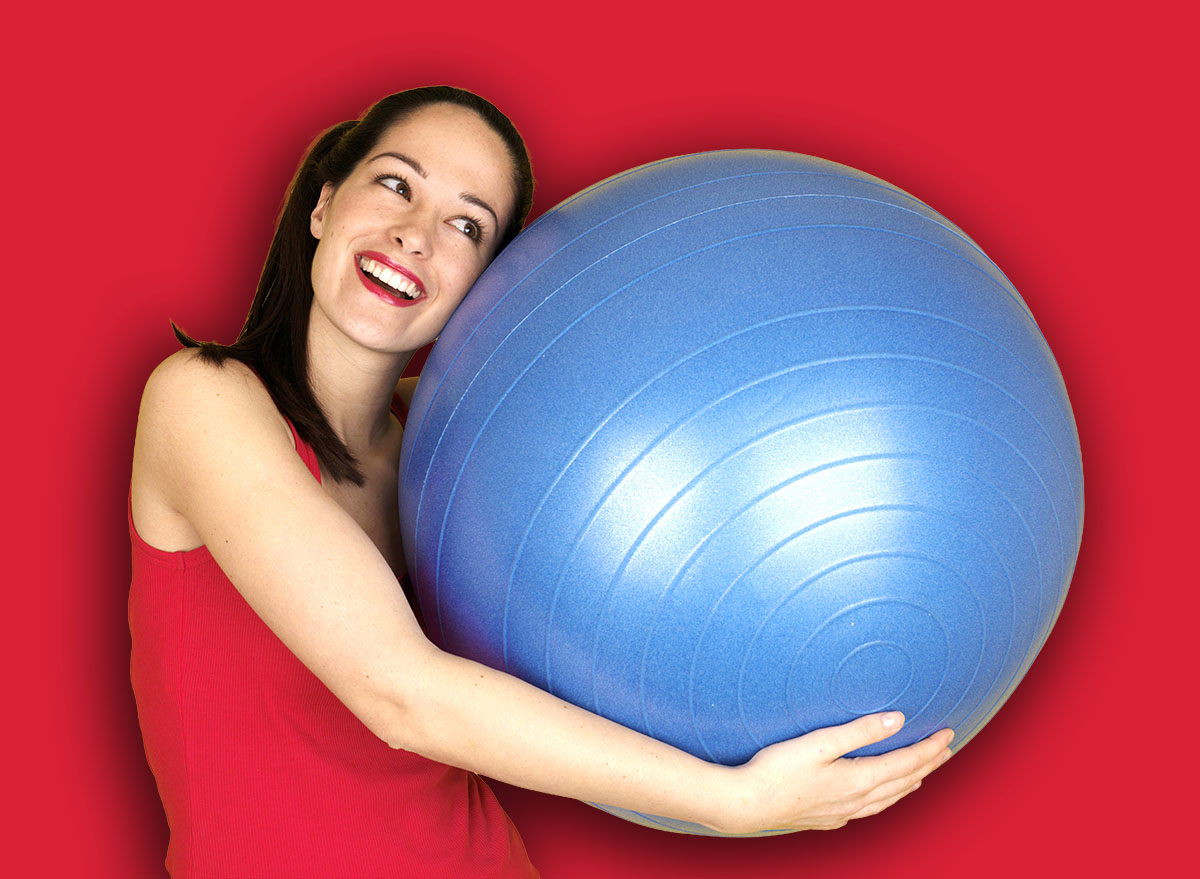

Rebuilding muscle after 50 doesn’t have to mean endless hours at the gym. In fact, some of the most effective exercises use nothing more than a Swiss ball to challenge your body in ways traditional gym equipment can’t match. In my 27 years of helping clients reclaim pain-free movement, I’ve found that these simple moves not only help build muscle but also improve your balance and general strength by challenging your nervous system in unique ways. Read on to discover six Swiss ball exercises that can help you rebuild lost muscle, improve your posture, and boost your overall strength—all from the comfort of your own home.
Common Struggles People Over 50 Face
Some common struggles that people over 50 face when trying to rebuild lost muscle largely occur from either a sedentary lifestyle, previous injuries that were not properly rehabilitated, having a lack of protein in the diet, and decline in testosterone. Most of these struggles are easily fixable with exercise, nutrition, and if need be hormone therapy.
Swiss Ball Push-Ups Build Your Pressing Muscles
Swiss ball push-ups help us build strength in all of our pressing muscles. This includes the pecs, the shoulders and the triceps. Because we’re using a Swiss ball you are also integrating the core and challenging the nervous system to stabilize the ball.
How to perform:
- Start with the hand near the top of the ball and offset to either side of the ball
- Walk your feet back about shoulder width apart until you are in what would be considered a plank position
- Gently tuck your pelvis as though you have a tail and you were tucking it under
- At the same time, gently tuck your chin so the back of your neck is long
- Bend at the wrist, elbow and shoulder joints until you lower yourself down as far as you can, ideally your chest will touch the ball
- Simply push yourself back up without changing the position of your spine
Remember, the movement comes from the wrist, elbows and shoulders. For optimal results you’ll perform 3 to 5 sets of 10 to 15 repetitions per set.
Common mistakes include arching the back, reaching the head forward, and not controlling the ball.
Supine Swiss Ball Hamstring Curls Work Your Entire Posterior Chain
The Swiss ball hamstring curls work the entire posterior chain. The posterior chain includes your calves, hamstrings, glutes, and back muscles. This exercise also helps improve proprioception, or your body’s ability to maintain joint integrity.
How to perform:
- Begin by lying on your back arms by your sides, palms toward the ceiling
- Place both of your legs on top of the Swiss ball so that your heels are about shoulder with apart and in the middle of the ball
- Tuck your pelvis under and lift your hips up in the air—at this point, you should be in a hip bridge position
- Without raising or lowering your hips, simply curl the ball back as far as you can
- Once you’ve curled the ball back as far as you can, simply straighten your legs and return to the starting position
For optimal results 3 to 5 sets of 10 to 15 repetitions.
Common mistakes include allowing the pelvis to rock up and down, allowing your hips to lift and lower while your legs are moving, and not fully bending and extending the knee joint.
Swiss Ball Hip Bridges Focus On Your Glutes
Much like the Swiss ball hamstring curl, the Swiss ball hip bridge works the entire posterior chain. The difference is the hip bridge focuses much more on the glutes and the top part of the hamstring helping to build more strength around the pelvis in the low back.
How to perform:
- Begin by lying on your back with your palms facing the ceiling
- With your knees bent, put both of your feet as close to on top of the ball as you can—at this stage, the ball should be as close to your butt as possible
- While keeping your chin gently tucked and your pelvis tucked, simply push your hips up towards the ceiling as far as you can
- Roll down one vertebrae at a time, starting at the top of your back all the way down just short of your pelvis touching the ground
- Repeat the movement for the desired amount of repetitions
For optimal results 3 to 5 sets of 10 to 15 repetitions.
Common mistakes include coming all the way down to the ground and resting, allowing the ball to wobble from side to side, and letting your back arch excessively at the top, remember to keep your pelvis tucked as much as possible.
Swiss Ball Back Extensions Burn More Calories At Rest
Swiss ball back extensions also work the entire posterior chain, but focuses much more on the back muscles than the legs. The muscles that run up and down your spine are one of the biggest calorie burners while at rest. This is due to the fact they are constantly engaged while fighting gravity. Basically they’re working all day to hold you upright. So, the more muscle we can build on our back, the more resilient our spinal health and the more calories we can burn at rest.
How to perform:
- First place the bottom of your feet against the wall about shoulder width apart
- Place the Swiss ball so that your belly button is about on top of the ball, and your legs are completely straight bracing against the wall
- As you exhale, let your body curl over the ball as much as you can
- Once you flex as far as you can, you are simply going to extend your back by lifting yourself up off the ball as far as you can without pain
- Simply repeat the movement of flexing over the ball and extending yourself up
Ideally, you are exhaling as you curl down over the ball and inhaling on your way up. For optimal results 3 to 5 sets of 10 to 15 repetitions.
Common mistakes include not bracing your feet, this can cause you to slide down the ball. Losing your chin tuck is another common mistake that can lead to neck pain. Another mistake is not having the ball low enough, again the ball should be at least as low as your belly button and even lower if you would like more challenge.
Swiss Ball Oblique Crunches Help You Resist External Forces
The Swiss ball crunch is so effective because it not only works to target muscles which, in this case are the obliques, but it utilizes all the stabilizer muscles of the core and of the spine. This exercise also provides a great stretch of all the muscles. This is also a great anti-rotation exercise meaning that it can help you manage external forces. For example, if someone runs into your shoulder, this exercise will help you not get knocked over.
How to perform:
- Begin by bracing your feet against the wall with your top leg back and straight, and your bottom leg forward and straight
- Place the Swiss ball underneath your bottom hip and place your fingertips on your ears
- Gently tuck your chin and your pelvis so that your body is in a straight line—I like to imagine I am between two panes of glass
- This means I can’t flex forward or extend backwards nor can I rotate in either direction—I have to stay completely in the frontal plane
- Once you have set the beginning position, simply lower yourself down so that your bottom side ribs are wrapping around the Swiss ball
- Once you hit the bottom, simply use the top side of the oblique muscles to crunch and lift your body back up off the ball crunching as far towards your hip as you can
Ideally, you’ll inhale as you lengthen and curl your ribs around the ball and exhale as you crunch your way back up. For optimal results 3 to 5 sets of 10 to 15 repetitions.
Common mistakes include allowing the body to rotate, moving from the neck instead of from the ribs, being up too far on the ball which limits the range of motion.
Swiss Ball Balance Improves Your Tilting Reflexes
Balancing on the Swiss ball is not only a great core exercise, but an amazing balance exercise. It’s unique for balance in that it helps work what is considered your tilting or vestibular reflex. This type of reflex occurs when you’re on unsteady ground or when you slip. An example would be slipping on ice or standing up on a moving bus. Pretty much anything when the ground is unstable is when you need your tilting reflexes.
How to perform:
- Begin by putting both hands and one shin on the Swiss ball
- With control gently bring the other shin up on the Swiss ball—at this point, you should have four points of contact, both hands and both shins
- You are simply maintaining the position for around 60 seconds
For optimal results 3 to 5 sets of 45 to 60 seconds.
Common mistakes include not having enough air in the ball, trying to get up on the ball too quickly, not having a spotter. This exercise is definitely much safer when you have another person there to help you balance the ball while you learn the exercise.
What Results Can You Expect?
If you’re doing all of the movements as a circuit, then you can perform them three times per week. If you’re looking for them as daily exercises, just pick one or two to perform each day.
In the first one to four weeks, you will notice an improvement in your balance and general strength, meaning the exercises should become easier. In weeks five through 11 you should start to notice and increase in lean muscle mass and a major improvement in your strength and in your posture. Long-term, you should notice dramatic increase in balance and reactive strength.