The 7-Minute Standing Routine That Rebuilds Lost Muscle Faster Than Gym Sessions After 50

Muscle loss is a tricky subject that, after 50, rarely happens overnight. It sneaks in through long workdays, fewer steps, and workouts that feel harder to recover from than they used to. The body still knows how to build muscle, but it responds best to frequent signals instead of occasional hard sessions. A short standing routine in the morning gives your muscles that signal before stiffness and fatigue set in.
Standing exercises play a powerful role at this stage of life. They recruit more muscle groups at once, challenge balance, and reinforce coordination from the ground up. That combination improves how your muscles communicate and contract, which matters just as much as load when rebuilding size and strength. When done daily, standing work helps restore muscle quality while keeping joints comfortable.
This seven-minute routine focuses on simple movements that wake up your legs and hips while encouraging full-body engagement. It’s fast, repeatable, and easy to fit into real life. Below, you’ll find the habits that make standing routines effective, followed by a quick flow you can use every morning to rebuild lost muscle and start your day strong.
The Habits That Make Standing Routines Work After 50

Muscle rebuilding depends more on consistency and intent than on intensity. Standing routines work because they reinforce natural movement patterns while keeping recovery demands low. When these habits stay in place, muscles return faster, and movement feels more confident.
- Train early and often: Morning sessions reduce missed workouts and reinforce daily muscle activation.
- Use slow, controlled reps: Time under tension helps stimulate muscle growth without heavy resistance.
- Stay tall and balanced: Upright posture improves muscle recruitment through the legs and hips.
- Move through comfortable depth: Strong muscles develop best when joints feel supported.
- Finish energized: Effective routines leave you ready for the day, not worn down.
The Stand Strong Flow

What you need
Just your body and a small open space. A chair or wall can help with balance if needed. The routine takes seven minutes total.
The Routine
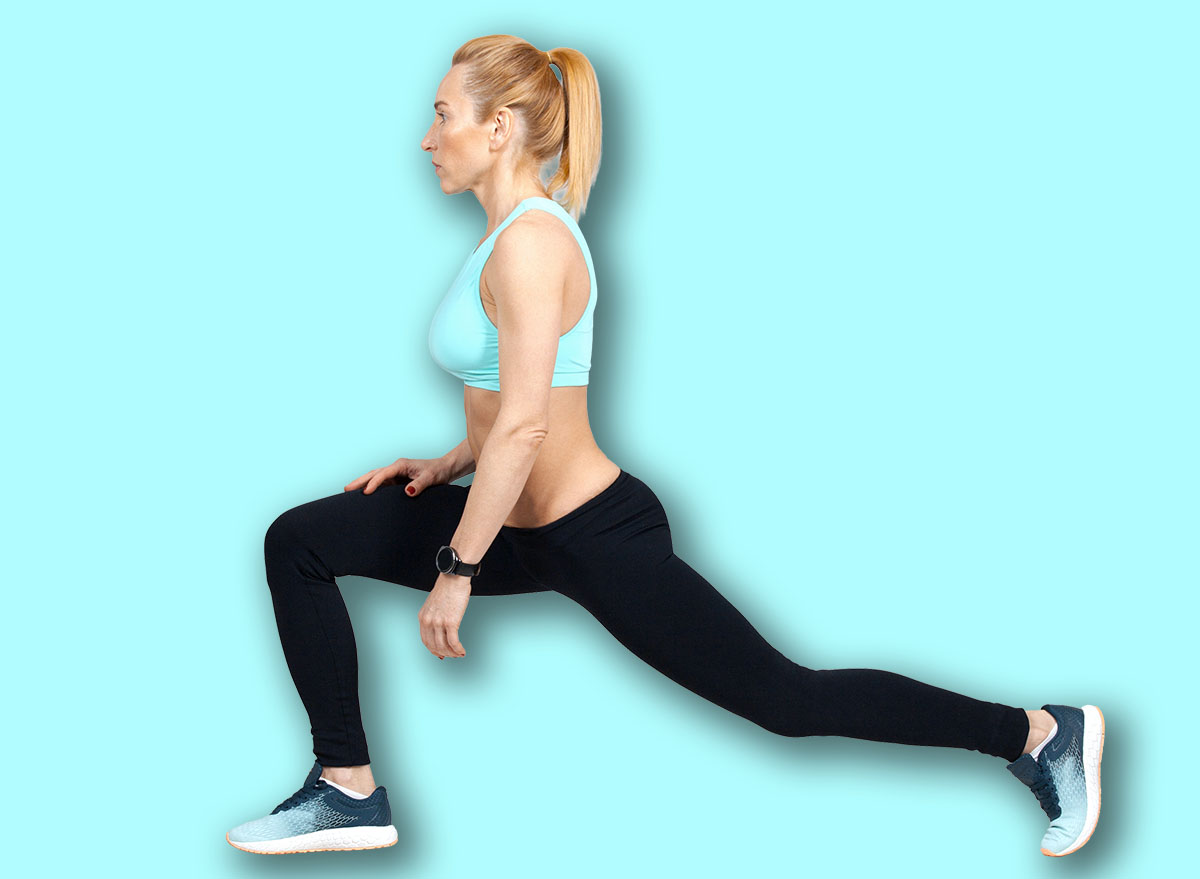
- Sit to Stand Squat: Perform 45 seconds of work, followed by 15 seconds of rest.
- Alternating Step Back Lunge: Perform 45 seconds of work, followed by 15 seconds of rest.
Complete three total rounds.
Directions
Move with intention and control. Focus on posture, balance, and steady breathing. Adjust range of motion or use light support if needed. Read on for the detailed instructions.
Sit-to-Stand Squat
The sit-to-stand squat rebuilds leg muscle while reinforcing everyday strength. Standing up from a seated position trains the quads, glutes, and hips in a way that directly carries over to daily life. It also improves coordination and balance, which helps muscles fire more effectively. Performed daily, it supports muscle growth without stressing the knees or lower back.
How to do it:
- Stand in front of a chair with your feet shoulder-width apart.
- Push your hips back and lower until you lightly touch the seat.
- Keep your chest tall and your weight through your heels.
- Press through your feet to stand fully.
- Pause briefly at the top before repeating.
Best variations:
- Slow tempo sit to stand
- Box squat with arm reach
- Narrow stance sit to stand
Alternating Forward Lunge
Forward lunges rebuild muscle while reinforcing control during deceleration. Stepping forward challenges the quads and glutes in a way that mimics real-world movement like walking and stair climbing. This pattern also improves coordination and balance as your body learns to absorb force smoothly. Over time, it supports fuller muscle activation and stronger legs.
How to do it:
- Stand tall with your feet hip-width apart.
- Step one foot forward into a controlled lunge.
- Lower until both knees bend comfortably.
- Push through your front foot to return to standing.
- Alternate sides with each repetition.
Best variations:
- Dumbbell walking lunge
- Supported forward lunge, holding a chair
- Tempo forward lunge.
The Best Tips for Rebuilding Muscle After 50

Muscle responds best when daily movement lines up with recovery and nutrition. These strategies help turn short-term routines into visible gains in strength. When practiced consistently, they support long-term muscle health.
- Prioritize daily movement: Frequent stimulation matters more than occasional long workouts.
- Eat protein at each meal: Muscle repair depends on steady intake throughout the day.
- Sleep with intention: Recovery hormones work best with consistent sleep habits.
- Walk with purpose: Short walks reinforce muscle activation built during your routine.
- Progress patiently: Strong muscle returns through steady effort, not rushing.
Stick with this seven-minute standing routine, and your muscles will feel fuller, stronger, and more reliable as the weeks add up.
References
- Sartori, R., Romanello, V. & Sandri, M. Mechanisms of muscle atrophy and hypertrophy: implications in health and disease. Nat Commun 12, 330 (2021). https://doi.org/10.1038/s41467-020-20123-1
- Grönstedt, Helena, et al. “Effect of Sit-to-Stand Exercises Combined With Protein-Rich Oral Supplementation in Older Persons: The Older Person’s Exercise and Nutrition Study.” Journal of the American Medical Directors Association, vol. 21, no. 9, 2020, pp. 1229–1237, https://doi.org/10.1016/j.jamda.2020.03.030