5 Quick Exercises That Firm Sagging Arms Better Than Weights After 55

The backs of the arms often become one of the first places people notice age-related muscle loss. After 55, declining muscle mass and reduced collagen make the upper arms appear softer, even if your weight hasn’t changed. As a trainer, I’ve worked with countless clients who assumed heavier dumbbells were the only solution. More often than not, consistent bodyweight and resistance-band exercises produced better results because they encouraged better technique and allowed people to train more frequently without overloading their joints.
Many people chase arm exercises that isolate only the biceps, but firmer arms depend on strengthening the triceps, shoulders, chest, and upper back together. Those muscles support everyday movements like pushing doors open, carrying groceries, lifting boxes, and reaching overhead. The goal isn’t simply building larger muscles. It’s restoring strength and definition while keeping the shoulders healthy and pain-free.
I’ve spent years helping adults over 55 regain confidence in their upper-body strength, and the clients who see the biggest improvements almost always stick to short, consistent routines. These exercises require very little equipment, take only a few minutes to complete, and challenge the muscles responsible for creating stronger, firmer-looking arms. Perform them several times each week, and you’ll build practical strength that looks just as good as it feels.
Wall Push-Ups
Whenever someone wants to tighten the backs of their arms without lifting heavy weights, wall push-ups become one of my first recommendations. Every repetition strengthens the triceps while also engaging the chest, shoulders, and core, making the movement far more productive than many isolated arm exercises. I like using wall push-ups because almost anyone can adjust the difficulty simply by changing foot position. Clients often notice improvements in arm endurance and shoulder stability within a few weeks. Better pushing strength also carries over into countless daily activities that require upper-body power.
How to Do It
- Stand facing a sturdy wall.
- Place your hands slightly wider than shoulder-width apart.
- Step your feet back.
- Lower your chest toward the wall.
- Push back to the starting position.
- Complete 12 to 15 repetitions.
Resistance Band Triceps Press-Down
The triceps make up roughly two-thirds of the upper arm, yet they’re often overlooked in favor of biceps curls. This resistance-band variation strengthens those muscles while placing very little stress on the elbows and shoulders. I regularly recommend it because the band provides smooth, consistent resistance throughout the movement. Clients appreciate that they can train the triceps effectively without needing heavy equipment or a gym membership. Over time, stronger triceps help create firmer, more defined upper arms.
How to Do It
- Secure a resistance band overhead.
- Hold one end in each hand.
- Keep your elbows close to your sides.
- Press your hands downward until your arms straighten.
- Return slowly.
- Perform 12 to 15 repetitions.
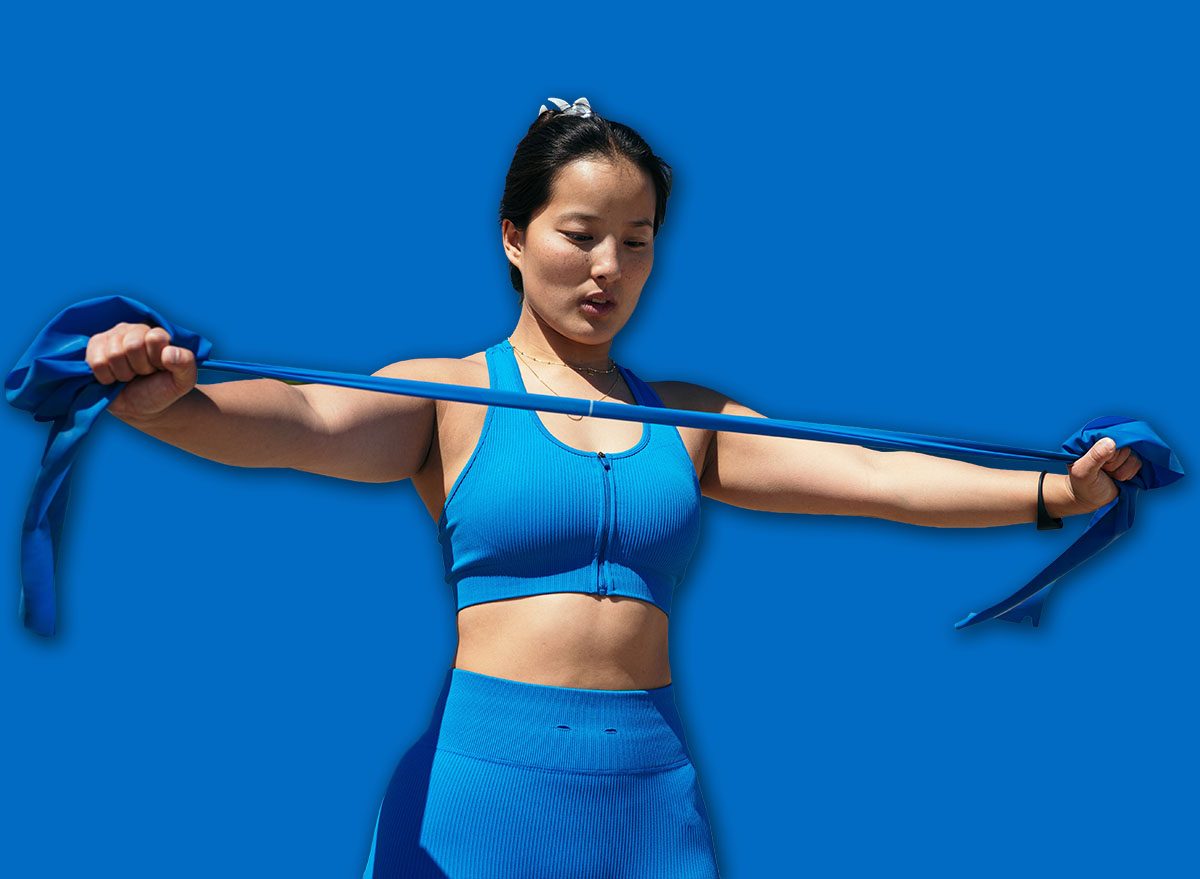
Resistance Band Pull-Aparts
Firm-looking arms don’t come from the triceps alone. Strong rear shoulders and upper-back muscles improve posture, making the entire upper body appear more toned. Resistance band pull-aparts strengthen those supporting muscles while improving shoulder stability and helping counteract rounded posture. I often include them because they complement pressing exercises perfectly and reduce the muscular imbalances that can develop over time. Clients frequently tell me they not only feel stronger but also notice their arms look more defined when standing naturally.
How to Do It
- Hold a resistance band at shoulder height.
- Keep your arms nearly straight.
- Pull the band apart.
- Squeeze your shoulder blades together.
- Return with control.
- Perform 15 repetitions.
Chair Triceps Dips (Modified)
Many people assume triceps dips are too difficult after 55, but a modified version using only partial range of motion offers an excellent challenge without excessive strain. I emphasize slow, controlled repetitions because they keep tension on the triceps while protecting the shoulders. Clients often discover these feel much more effective than swinging through fast repetitions. As strength improves, increasing the range of motion provides natural progression without requiring heavier resistance. Done correctly, they’re one of the best bodyweight exercises for the backs of the arms.
How to Do It
- Sit on the front edge of a sturdy chair.
- Place your hands beside your hips.
- Slide your hips just in front of the chair.
- Bend your elbows slightly.
- Press back to the starting position.
- Complete 8 to 12 controlled repetitions.
Overhead Resistance Band Press
I like ending arm routines with a movement that strengthens the shoulders and triceps together because those muscles constantly work as a team during daily life. The overhead press also challenges the upper back and core to stabilize the body while the arms move. Using a resistance band instead of heavy weights allows for smooth resistance that’s easier on aging joints. Many clients report greater confidence reaching overhead or placing items on high shelves after consistently performing this exercise. It’s a simple finish that builds practical strength while helping create firmer, more capable arms.
How to Do It
- Stand on the center of a resistance band.
- Hold one end in each hand at shoulder height.
- Press your hands overhead.
- Pause briefly.
- Lower slowly with control.
- Perform 10 to 12 repetitions.