3 Daily Exercises That Make Getting Off the Floor Easier After 60

Getting up off the floor is a skill most people lose in their 60s without realizing it, and it’s the one that matters most for staying independent as the years pass. It happens gradually: the legs get a little weaker, the hips get a little tighter, and one day the floor feels like a different country.
I’ve been a personal trainer for almost 40 years, and for the past 20, I’ve been director and co-founder of TRAINFITNESS, which provides in-person and online courses for personal trainers in the UK. In that time, I’ve seen this exact fear take hold in client after client, and I’ve also seen the same three exercises turn it around.
Three exercises, done daily, can rebuild that ability faster than most people expect.
Common Challenges Getting Up

There are four things that tend to get in the way:
- Fear. Once someone has been on the floor and struggled to get up, or has watched a friend or family member struggle, the whole idea becomes something to avoid. That avoidance then makes the problem worse, because the skill only stays sharp with practice.
- Weak hips and legs. The exact pattern of pushing up from a kneeling position needs a lot of one-legged strength, which is precisely what fades in this age group without deliberate training.
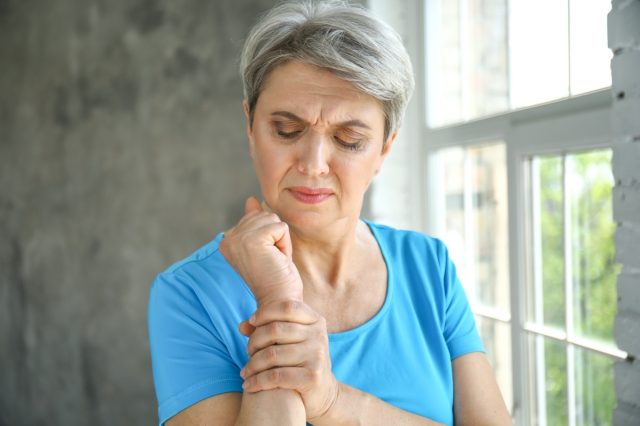
- Wrists and hands. Bearing weight on the hands is uncomfortable at best and painful at worst for many over 60s, and if the wrists can’t hold the body up, one of the most useful rise strategies is off the table.
- Mobility. Getting up efficiently needs the hips to open enough that you can get one foot flat on the floor with the knee bent. Many over 60s have lost that range and don’t realize it until they need it.
Why It Gets Harder After 60
Muscle loss picks up pace after 60, and the fibers that fade first are the fast-firing ones needed for quick position changes. The hip mobility that let you drop into a squat at 40 also disappears gradually, and the wrists soften from decades of typing rather than pushing.
Balance recovery slows down too. Getting up involves a controlled shift of weight through several positions, and each transition is a small balance challenge. If the balance system is a bit slower, each transition becomes a stumble risk.
The reason this matters goes beyond convenience. A well-known assessment called the sitting-rising test has shown that people who can get down to the floor and back up without using their hands score much better on longevity than people who need multiple hands and knees to do it. Every point off the maximum score of ten is associated with a higher risk of dying in the next few years.
The practical side is just as important. If you fall, you have to get back up. If you can’t, you’re on the floor waiting for help, which is a scenario nobody wants to face. Being able to get off the floor unaided is one of the biggest markers of remaining independent.
The Skills You Really Need
- Leg strength. You need enough single-leg strength to push the whole body up from a low position, using one leg at a time.
- Hip mobility. Getting a foot flat under you, with the knee bent, needs a reasonable amount of external rotation and hip flexion. Without that range, you can’t get into the position that lets the leg do its job.
- Trunk strength. It holds everything together while the legs do their work, keeping the body upright and stopping it from collapsing sideways during the transition.
- Wrist, hand and shoulder strength. If the legs can’t do it alone, being able to push through a hand on the floor is a way up. This is often the difference between getting back up and staying down.
- Balance and coordination. All of the above have to happen in the right order, with weight shifting smoothly from one point of support to another.
Half-Kneeling Rise
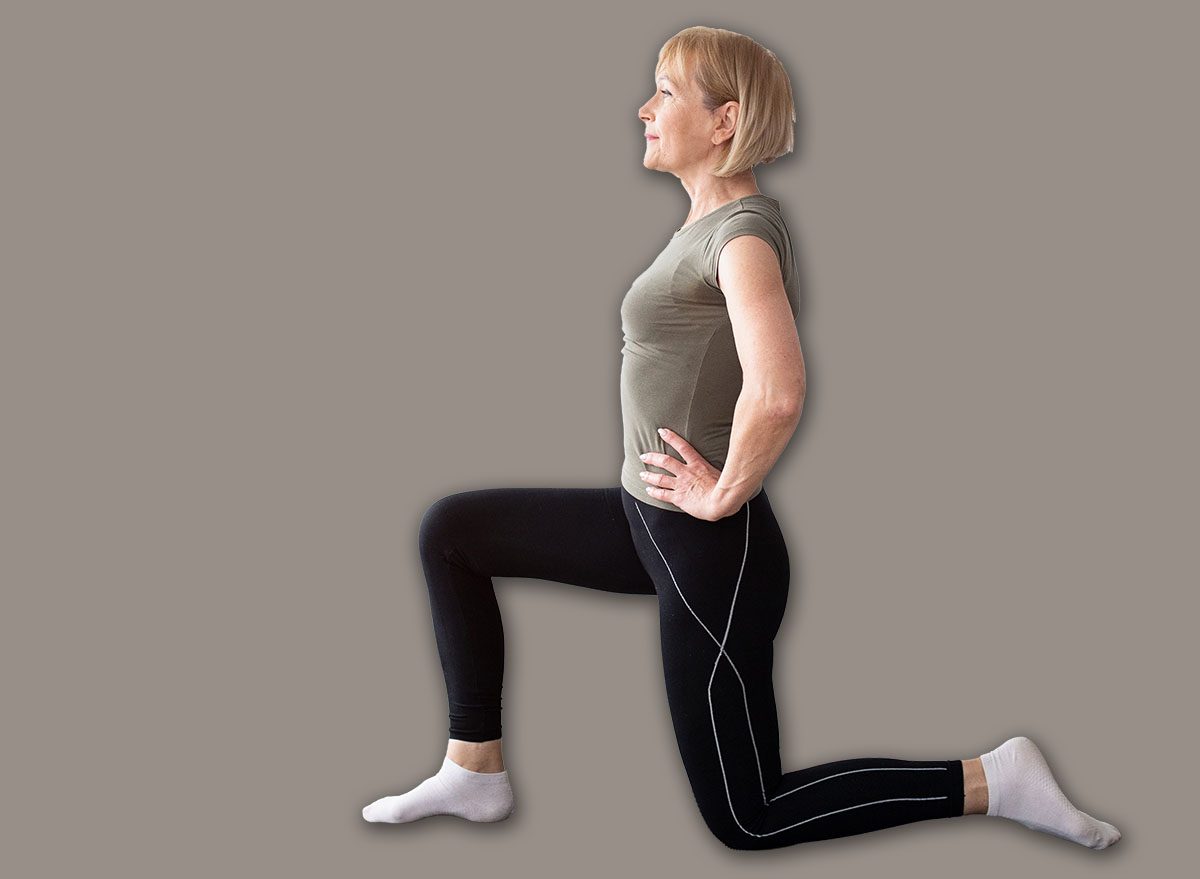
This is the exact pattern most people use to stand up from the floor, rehearsed without having to get all the way down. It trains the leg strength, the hip pattern, and the balance required, all at once. Do this well and getting up from the actual floor becomes far less of a battle.
Muscles Trained: Glutes, quadriceps, hip flexors, and hamstrings
How to Do It:
- Kneel on one knee, with the other foot flat on the floor in front of you, knee at roughly 90 degrees. Place a folded towel under the kneeling knee for comfort
- Have a chair or sturdy piece of furniture within arm’s reach at first, in case you need it
- Push through the front heel and squeeze the glute of the back leg to lift yourself all the way up to standing
- Step back down into the half-kneeling position under control, one leg at a time
Common Mistakes to Avoid:
- Rocking backward and using momentum to get up. That defeats the point. The whole value is in making the muscles do the work slowly, because that’s the strength you need when the floor is the only starting point
Recommended Sets and Reps: Two sets of 6 to 8 reps on each side
Form Tip: Move slowly on the way down. That’s where the strength-building actually happens.
Supported Deep Squat Hold
This rebuilds the hip, knee, and ankle mobility needed to get down to the floor in the first place. Most over 60s have lost this range without noticing, and until it comes back, getting down is a controlled fall rather than a controlled descent. The supported version is safe and progresses well over weeks.
Muscles Trained: Quadriceps, glutes, hip adductors, and calves
How to Do It:
- Stand facing a sturdy door frame or the back of a heavy chair or table
- Hold on with both hands at roughly waist height
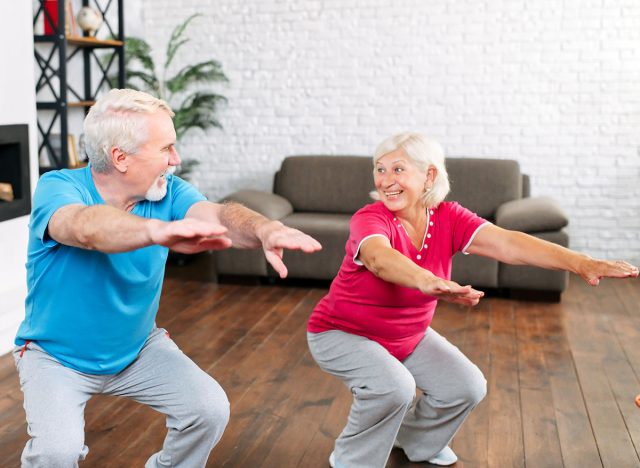
- Push the hips back and lower yourself into as deep a squat as you can, using the support to control the descent
- Aim to get the bottom close to the heels, or as low as your body will allow today
- Hold for 10 to 20 seconds, breathing normally
- Stand back up, still using the support
Common Mistakes to Avoid:
- Letting the heels lift off the floor. If they lift, you’re relying on the front of the feet for balance, and the ankles won’t develop the mobility they need. Start with the heels resting on a book or a rolled towel if you need to, and reduce that support over weeks
Recommended Sets and Reps: 2 to 3 rounds of a 15 to 20 second hold
Form Tip: Keep the heels grounded the whole time. Prop them on a book or towel at first if that’s what it takes.
Wall Press Up With Wrist Preparation
This builds the wrist, forearm, and shoulder strength that gives you the hand-and-knee option for getting up from the floor. Many over 60s have plenty of leg strength but panic at putting weight through their hands, because the wrists have gone soft and everything feels flimsy.
Muscles Trained: Wrists, forearms, shoulders, chest, and core
How to Do It:
- Before the press-up, kneel or sit at a table and gently press the palms and fingers into the surface for 30 seconds, warming the wrists and hands
- Stand facing a wall, two to three feet away, with palms on the wall at shoulder height and shoulder-width apart
- Keep the body straight from heels to head
- Bend the elbows and lower the chest towards the wall in 2 seconds
- Push back to the start position in 1 second
Common Mistakes to Avoid:
- Letting the hips sag towards the wall, which loads the lower back rather than the arms and hands. Keep the body one long line and let the arms do all the work
Recommended Sets and Reps: 2 sets of 10 to 15 slow reps
Form Tip: Keep the body one long line from heels to head. Don’t let the hips dip.
How To Stay Safe

Practice with a sturdy chair or piece of furniture within reach for the first few weeks. It doesn’t need to be used, but knowing it’s there removes the fear and lets you commit to the movement, which is where the strength gains come from.
For the first few sessions, try the moves near a sofa or soft rug so if something wobbles, the landing is soft. Better still, have someone in the house the first two or three times, especially if balance is a known problem.
Check with a GP or physio first if any of the following apply:
- Recent joint surgery, or a hip or knee replacement in the last 12 months
- Unmanaged blood pressure or a heart condition
- Taking blood thinners
- A fall in the past six months that hasn’t been investigated
For everyone, sharp pain in a joint is the stop signal, especially in the knees or wrists. A steady muscle burn is fine. Wrist pain that lingers into the next day means you’ve pushed the hand strength too far, too soon. Reduce the range and build up slowly.
Weekly Routine And Progression
Daily practice works best for this because the skill is as much about the nervous system as the muscles. The brain learns the movement pattern with repetition, and short daily doses beat one longer session a week for that kind of learning.
Altogether, the three exercises take around 8 to 10 minutes and fit in before or after any other exercise you’re already doing. Rest a day if you’re sore, but the loading here is low enough that most people can handle daily work by the end of the first fortnight. The wrists in particular are slow to respond, so consistency matters more than intensity.
After a month, start progressing:
- Reduce the height of the support in the deep squat
- Move the press up to a lower surface, from wall to counter, then a chair, then eventually the floor
- Add more reps to the half-kneeling rise, or hold a light weight in your hands as you stand up
Results You Can Expect
Two weeks in, most people notice that getting into the half-kneeling position feels less like a maneuver and more like a familiar posture. Standing back up from it takes less effort, and the leg strength has started to catch up with the pattern.
By 4 weeks, the deep squat is deeper. Not perfect for most, but noticeably closer to the floor with less support. The wrist confidence has usually started to build too, though this one takes the longest.
By 6 weeks, most clients who’ve stayed consistent can get down to the floor with control and back up with one hand for support, where six weeks earlier they’d have needed both hands and a nearby piece of furniture. Some are doing it with no hands at all.
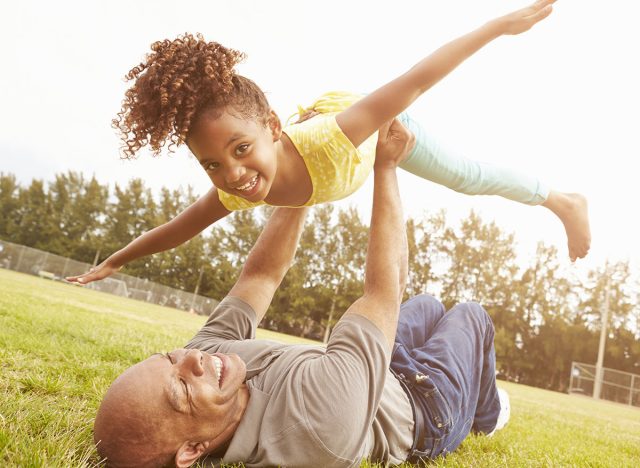
The bigger point is what this unlocks in daily life. Playing with grandchildren on the floor, gardening on hands and knees, reaching under a bed for something dropped. All of these become options again.
The mental shift of knowing you can get up if you fall is often bigger than the physical improvement. It removes a fear that shapes how many over-60s move through the world.