5 Chair Exercises That Restore Thigh Muscle Faster Than Lunges After 60
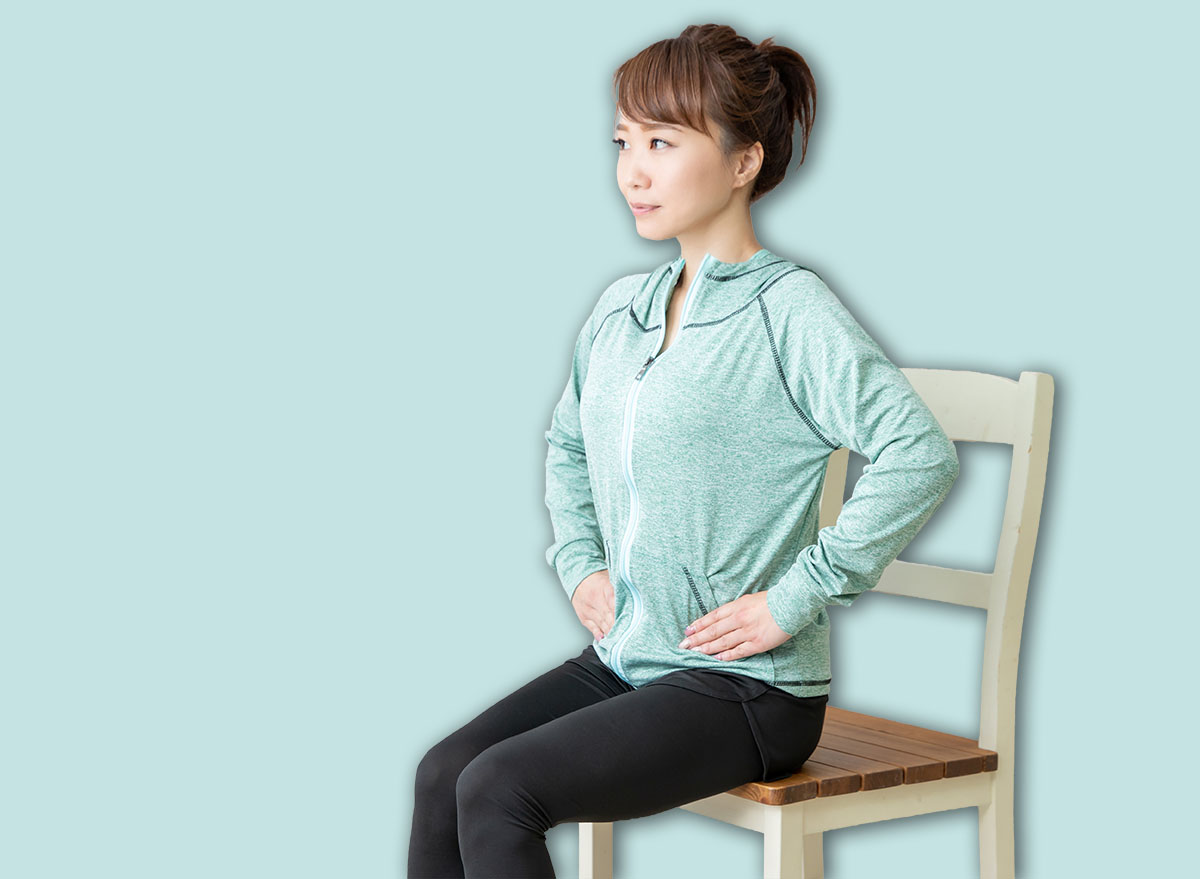

If you’re over 60, it’s time to re-asses your thigh strength. At this point in life, the natural loss of muscle speeds up, and your thighs are no exception. It’s necessary to strengthen your quadriceps and hamstrings, the large muscles in your thighs. Doing so can help improve balance and overall gait. It can also decrease your risk of falling and sustaining an injury.
“The quadriceps on the front of the thigh deserve the most attention because they are essential for nearly every functional activity—standing up from a chair, climbing stairs, walking, and recovering from a trip to prevent a fall. Age-related muscle loss (sarcopenia) also affects the quadriceps, making them a priority for maintaining independence,” explains Dr. Gabriela Van Sickle, PT, DPT, CFMT, WCS, Co-Founder of Functional Physical Therapy. “However, it’s important not to focus on the quadriceps alone. The hamstrings on the back of the thigh help control walking, support the knee, and generate power during movements like climbing stairs. The hip adductors (inner thigh muscles) and hip abductors (outer hip muscles) contribute to pelvic stability and balance, while the gluteal muscles work closely with the thigh muscles to absorb force and control movement.”
Your thighs have a lot of responsibility when it comes to keeping you mobile. They help you walk, run, stand, lift yourself out of a seated position, and get you where you want to go. So the best advice we have for you is to include thigh strength on your priority list when it comes to working out.
We spoke with Dr. Van Sickle to learn how you can get started. Below are five chair exercises that can help restore thigh muscle faster than lunges after 60.
“While lunges are an excellent exercise, they’re not the best starting point for many adults over 60. Lunges require good balance, coordination, hip mobility, ankle mobility, and joint control. If someone isn’t ready for that level of demand, they often compensate with poor movement patterns or avoid the exercise altogether,” explains Dr. Van Sickle. “Chair-based exercises allow people to safely build strength through a larger range of motion while minimizing fall risk. Once strength improves, they can progress to standing exercises like squats, step-ups, and eventually lunges.”
Now, let’s dive in.
Sit-to-Stand
“This is one of the most functional lower-body exercises because it directly trains a movement we perform dozens of times every day. It strengthens the quadriceps, glutes, and core while reinforcing proper movement mechanics. To make it more challenging, gradually reduce the use of your hands or slow the lowering phase,” Dr. Van Sickle explains.
- Begin seated at the front of a sturdy chair with your feet placed on the floor under your knees.
- Lean forward slightly.
- Try to stand up without using your knees, hands, or additional support.
- Use control to slowly sit back down.
Long Arc Quad (Seated Knee Extension)
“This exercise specifically targets the quadriceps, which are among the first muscles to weaken with age and are essential for walking, stair climbing, and standing from a chair,” Dr. Van Sickle points out.
- Begin seated with your knees bent to 90 degrees.
- Gradually straighten one knee until that leg is completely extended.
- Hold at the top for 2 to 3 seconds.
- Lower with control
- Repeat on the other side.
Seated Marches
“Although this primarily strengthens the hip flexors, it also challenges the quadriceps, core, and postural muscles while improving single-leg stability needed for walking and balance,” Dr. Van Sickle explains.
- Begin seated on a chair with your feet placed hip-width apart on the floor.
- Gently draw your lower belly inward.
- Slowly lift one knee up to hip height.
- Lower.
- Alternate sides in a “marching” fashion.
Seated Knee Squeeze
“This strengthens the hip adductors (inner thighs), which are often overlooked but play an important role in pelvic stability, balance, and controlling leg position during walking,” Dr. Van Sickle notes.
- Begin seated at the edge of a sturdy chair.
- Place a small pillow or ball between your knees.
- Gently squeeze for 5 to 10 seconds.
- Release.
Seated Heel Press
“This is an excellent isometric exercise that activates the hamstrings and glutes while co-contracting the quadriceps to improve overall lower-extremity stability. For added challenge, slide one heel slightly forward before pressing into the floor,” Dr. Van Sickle says.
- Begin seated.
- Place both feet flat on the floor.
- Firmly press your heels into the ground without lifting them.
- Hold for 5 to 10 seconds before releasing.