5 Bed Exercises That Firm Waist Thickening Faster Than Ab Workouts After 60

Waist thickening can sneak up on you over time, especially when daily movement slows, and the core doesn’t get as much consistent attention. It’s something I hear about often, and it usually comes down to how well the muscles around the midsection are working together. When those muscles are active and doing their job, the waist feels tighter and more supported during everyday movement.
In my coaching experience, the most effective approach isn’t piling on long ab workouts but focusing on movements that teach the core to stabilize, control, and support the body. Bed-based exercises are a great place to start because they remove a lot of the barriers. You can focus on how the movement feels, connect with the right muscles, and build strength without unnecessary strain.
The five exercises below target the core, hips, and stabilizing muscles that help firm and support the waistline. They encourage better muscle activation, improve control, and reinforce the kind of strength that carries over into your movement throughout the day.
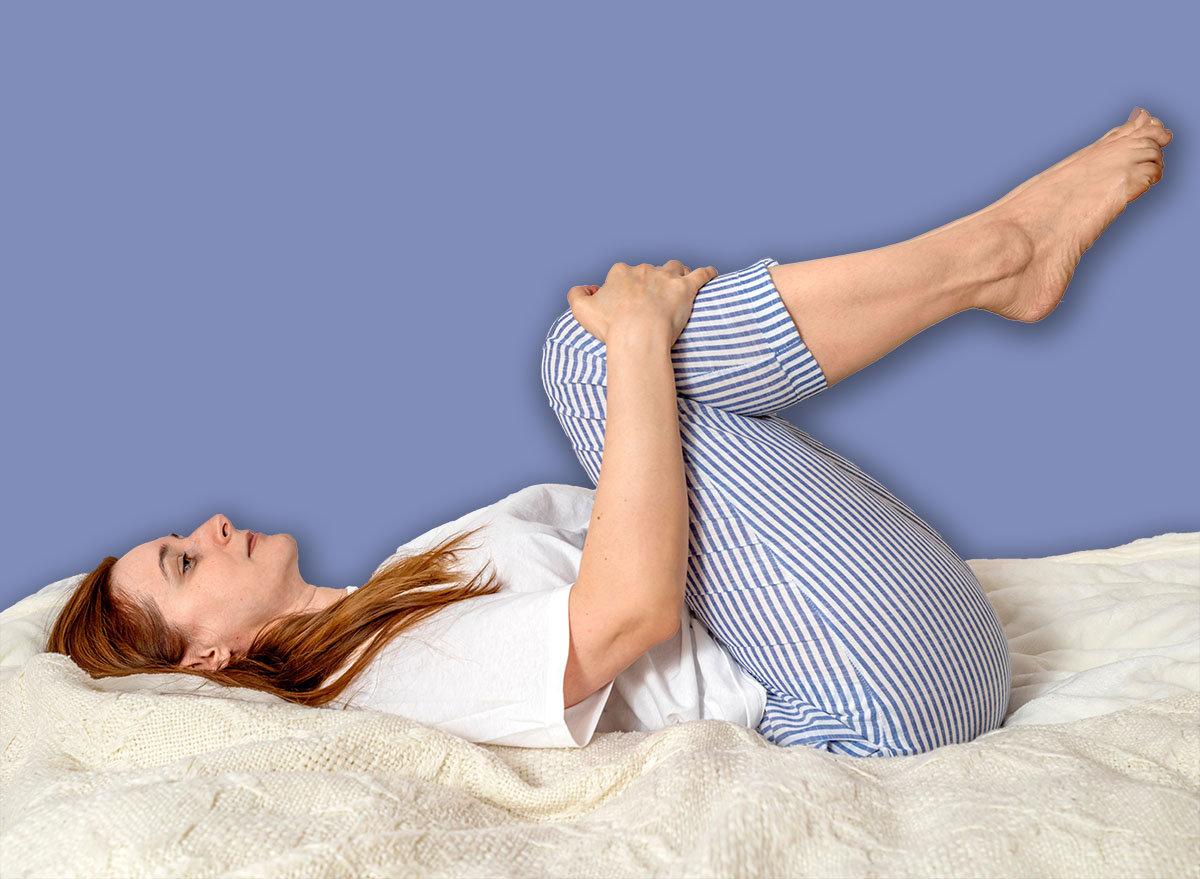
Supine Knee Tucks
Supine knee tucks are a simple way to activate the lower core while keeping the movement controlled and accessible. As your knees move toward your chest, the abdominal muscles engage to stabilize the pelvis and guide the motion. This creates a strong connection between the core and hips, which plays a key role in supporting the waistline. Many people notice this exercise helps them “find” their core quickly. Regular practice builds strength that carries over into better posture and movement.
Muscles Trained: Lower abdominals, hip flexors, and core stabilizers.
How to Do It:
- Lie on your back with your legs extended.
- Place your hands at your sides for support.
- Bend your knees and draw them toward your chest.
- Pause briefly at the top.
- Extend your legs back out with control.
Recommended Sets and Reps: Perform 3 sets of 12 to 15 reps. Rest for 30 seconds between each set.
Best Variations: Alternating knee tucks, slow tempo tucks, single-leg tucks.
Form Tip: Keep your lower back gently pressed into the bed.
Dead Bugs
Dead bugs train the deep core muscles to stay engaged while the arms and legs move independently. That ability to stabilize during movement is key to supporting the waistline and maintaining alignment. As you extend opposite limbs, your core works to prevent your lower back from arching. This creates a strong, controlled contraction through the midsection. Over time, it helps improve both core strength and coordination.
Muscles Trained: Transverse abdominis, rectus abdominis, and hip flexors.
How to Do It:
- Lie on your back with your arms extended toward the ceiling.
- Bring your knees into a tabletop position.
- Brace your core and press your lower back into the bed.
- Extend one arm and the opposite leg downward.
- Return to the starting position and alternate sides.
Recommended Sets and Reps: Perform 3 sets of 10 to 12 reps per side. Rest for 30 seconds between each set.
Best Variations: Heel taps, slow tempo dead bugs, pause dead bugs.
Form Tip: Move slowly and keep your core engaged throughout.
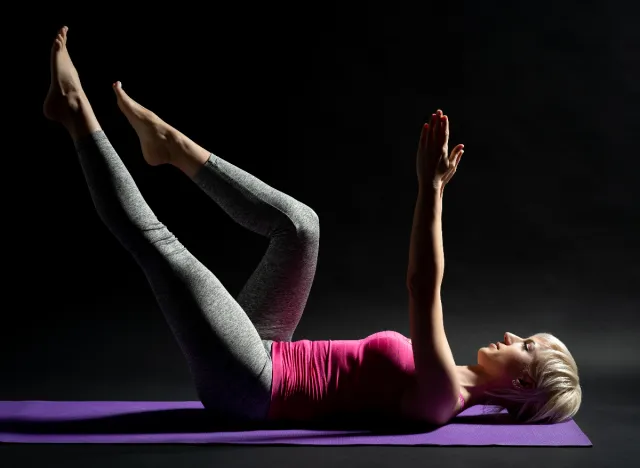
Supine Leg Raises
Supine leg raises challenge the lower core while reinforcing control through the hips. As the legs lift and lower, the abdominal muscles work to stabilize the pelvis and maintain alignment. This helps build strength in the area where many people notice a thickening of the waist. The slow, controlled motion also improves muscle engagement. With consistent practice, leg raises help build a firmer, better-supported midsection.
Muscles Trained: Lower abdominals, hip flexors, and core stabilizers.
How to Do It:
- Lie on your back with your legs extended.
- Place your hands at your sides or under your hips.
- Lift your legs toward the ceiling.
- Lower your legs slowly back down.
- Repeat while maintaining control.
Recommended Sets and Reps: Perform 3 sets of 10 to 12 reps. Rest for 30 seconds between each set.
Best Variations: Single-leg raises, slow tempo raises, pause raises.
Form Tip: Lower your legs only as far as you can while keeping your lower back stable.
Russian Twists
Russian twists engage the obliques, which play a major role in shaping and supporting the sides of the waist. The twisting motion trains the core to control rotation, which is important for both strength and stability. As you rotate, the muscles around your midsection stay active to guide the movement. This helps build a stronger connection between the upper and lower body. Over time, it contributes to a firmer and more controlled waistline.
Muscles Trained: Obliques, rectus abdominis, and core stabilizers.
How to Do It:
- Sit slightly reclined on the bed with your feet planted.
- Hold your hands together in front of your chest.
- Rotate your torso to one side.
- Return to the center and rotate to the other side.
- Continue alternating in a controlled rhythm.
Recommended Sets and Reps: Perform 3 sets of 16 to 20 alternating reps. Rest for 30 seconds between each set.
Best Variations: Weighted twists, slow tempo twists, pause twists.
Form Tip: Rotate through your torso rather than swinging your arms.
Supine Toe Taps
Supine toe taps train the lower core to stay engaged while the legs move in a controlled pattern. This movement reinforces stability through the pelvis and helps strengthen the muscles that support the waistline. Each repetition encourages the core to maintain alignment as the legs alternate. Many people feel this exercise is working quickly in the lower abdominals. Consistent practice helps build endurance and core control.
Muscles Trained: Lower abdominals, hip flexors, and core stabilizers.
How to Do It:
- Lie on your back with your knees in a tabletop position.
- Brace your core and press your lower back into the bed.
- Lower one foot toward the bed.
- Return to the starting position.
- Alternate legs with control.
Recommended Sets and Reps: Perform 3 sets of 12 to 15 reps per side. Rest for 30 seconds between each set.
Best Variations: Slow tempo taps, alternating holds, extended taps.
Form Tip: Keep your core engaged and avoid arching your lower back.
Daily Habits That Help Firm the Waist After 60
Firming the waist becomes much more effective when exercise works alongside consistent daily habits. The body responds best when movement, strength training, and lifestyle choices all support the same goal. Small adjustments made consistently often lead to noticeable changes over time.
- Stay consistent with your routine: Regular movement helps reinforce muscle activation and control.
- Train the core through movement: Exercises that involve the hips and torso often create better results than isolated work.
- Focus on controlled reps: Slower movements improve muscle engagement and stability.
- Stay active throughout the day: Walking and light movement support overall energy expenditure.
- Support training with proper nutrition: Balanced eating habits help reinforce your results.
Stick with these exercises and habits and you’ll build a stronger, more supported waist that continues to improve over time.
References
- Maccarone, Maria Chiara et al. “Effects of the Full-Body in-Bed Gym program on quality of life, pain and risk of sarcopenia in elderly sedentary individuals: preliminary positive results of a Padua prospective observational study.” European journal of translational myology vol. 33,3 11780. 26 Sep. 2023, doi:10.4081/ejtm.2023.11780
- Alley, Dawn E et al. “A research agenda: the changing relationship between body weight and health in aging.” The journals of gerontology. Series A, Biological sciences and medical sciences vol. 63,11 (2008): 1257-9. doi:10.1093/gerona/63.11.1257