7 Best Bodyweight Exercises That Build Strength Faster Than Dumbbells After 45

Strength training after 45 works best when it respects how your body actually moves day to day. You’re not lifting in isolation during real life. You’re bracing, rotating, pushing, pulling, and stabilizing all at once. That’s where bodyweight training shines. It teaches your muscles to work together while reinforcing joint integrity, balance, and coordination.
Bodyweight exercises also build strength through tension, leverage, and time under load, rather than relying solely on external resistance. When you control your body through space, every rep demands intent. Your core must fire, your joints must stabilize, and your muscles must generate force across multiple planes. That combination builds strength that carries over to everything from workouts to daily tasks.
Another overlooked benefit is consistency. Bodyweight training removes barriers. No equipment setup. No waiting for racks. No guessing weights. You can train more frequently, move with better quality, and stay dialed in on form. Over time, that consistency adds up to meaningful strength gains that feel sustainable.
The exercises below deliver that kind of strength. Each one challenges your body to produce force, maintain control, and resist unwanted movement. When done well, they can outperform dumbbells at building total-body strength after 45. Let’s get into it.
Side Planks
Side planks do far more than train your obliques. They reinforce lateral stability, which protects your spine and hips during everyday movement and loaded training. This exercise engages your core, glutes, and shoulder stabilizers as a single unit. That integrated demand builds strength that transfers directly to walking, lifting, and athletic movement. Over time, stronger side planks improve posture and reduce energy leaks during compound exercises.
Muscles Trained: Obliques, transverse abdominis, glute medius, quadratus lumborum, and shoulders
How to Do It:
- Lie on your side with your elbow under your shoulder.
- Stack your legs and keep your body in a straight line.
- Brace your core and squeeze your glutes.
- Lift your hips until your body is fully aligned.
- Hold steady while breathing under control.
Recommended Sets and Reps: Perform 3 sets of 20 to 40 seconds per side. Rest for 45 seconds between each set.
Best Variations: Side plank with hip abduction, side plank march, side plank reach through
Form Tip: Drive your bottom elbow into the floor and think long through your spine.
Push-Ups
Push-ups build pressing strength while demanding full-body tension. Your core, glutes, and upper back must stay engaged to keep your body rigid throughout each rep. That tension improves shoulder stability and reinforces proper pressing mechanics. Push-ups also allow you to scale the difficulty easily, keeping strength gains progressing without joint strain.
Muscles Trained: Chest, shoulders, triceps, core, and glutes
How to Do It:
- Set your hands under your shoulders.
- Brace your core and squeeze your glutes.
- Lower your chest toward the floor under control.
- Keep your elbows at a slight angle from your body.
- Press the floor away until your arms lock out.
Recommended Sets and Reps: Knock out 3 to 4 sets of 8 to 15 reps. Rest for 60 seconds between each set.
Best Variations: Incline push-ups, tempo push-ups, deficit push-ups
Form Tip: Think about pushing your body away from the floor as one solid unit.
Lunges
Lunges challenge unilateral strength, balance, and coordination in one movement. Each rep exposes side-to-side imbalances and dynamically engages your hips and core. That demand builds real-world strength that carries over to walking, stairs, and athletic movement. Lunges also improve hip mobility while strengthening the muscles that protect your knees.
Muscles Trained: Glutes, quads, hamstrings, calves, and core
How to Do It:
- Step forward with one foot.
- Lower your back knee toward the floor.
- Keep your torso tall and core braced.
- Push through your front heel to stand.
- Switch sides and repeat.
Recommended Sets and Reps: Perform 3 sets of 8 to 12 reps per leg. Rest for 60 seconds between each set.
Best Variations: Reverse lunges, walking lunges, lateral lunges
Form Tip: Keep your front knee tracking over your toes as you lower.
Squats
Squats train your lower body to produce force through a full range of motion. Bodyweight squats emphasize control, depth, and joint alignment. When done well, they strengthen your hips, knees, and ankles while reinforcing proper movement patterns. They also improve mobility while building strength, which keeps your lower body resilient as you age.
Muscles Trained: Glutes, quads, hamstrings, calves, and core
How to Do It:
- Stand with your feet shoulder-width apart.
- Brace your core and push your hips back.
- Lower into a comfortable depth.
- Keep your chest tall and heels grounded.
- Drive through your heels to stand.
Recommended Sets and Reps: Knock out 3 to 4 sets of 12 to 20 reps. Rest for 60 seconds between each set.
Best Variations: Tempo squats, squat to box, pause squats
Form Tip: Sit between your hips rather than letting your knees collapse inward.
Renegade Row
Renegade rows combine core stability with upper-body pulling strength. Your body has to resist rotation while one arm supports your weight. That anti-rotation demand builds deep core strength and shoulder stability. This exercise also reinforces proper plank mechanics while strengthening your back and arms.
Muscles Trained: Lats, upper back, shoulders, core, and arms
How to Do It:
- Start in a strong plank position.
- Set your feet slightly wider for balance.
- Shift your weight onto one arm.
- Row the opposite arm while staying square.
- Lower under control and switch sides.
Recommended Sets and Reps: Perform 3 sets of 6 to 10 reps per side. Rest for 60 seconds between each set.
Best Variations: Knee-supported renegade rows, slow tempo rows, pause rows
Form Tip: Keep your hips level and move slowly to stay in control.
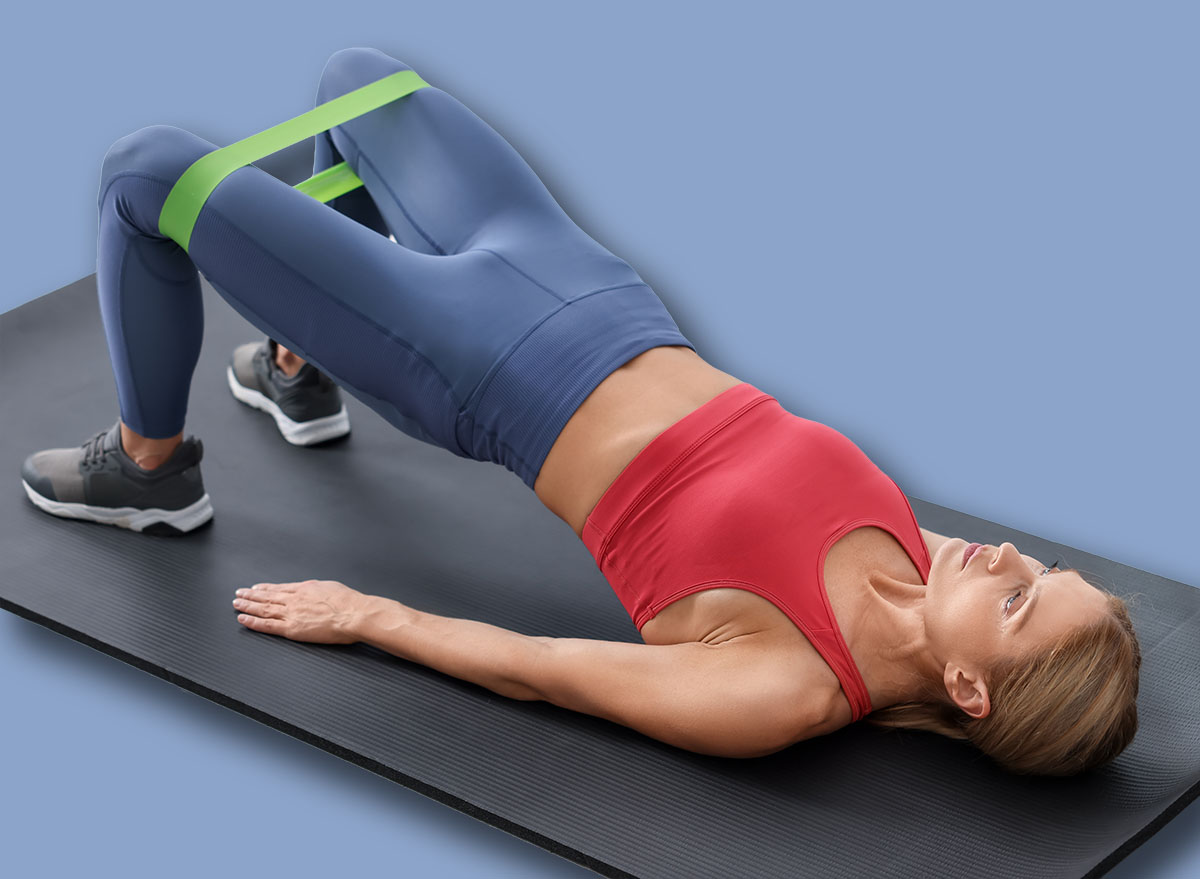
Glute Bridge
Glute bridges strengthen the muscles that protect your hips and lower back. Strong glutes improve posture, walking mechanics, and lifting performance. This exercise also helps counteract prolonged sitting by restoring hip extension strength. Over time, better glute function reduces stress on your spine and knees.
Muscles Trained: Glutes, hamstrings, core, and lower back
How to Do It:
- Lie on your back with knees bent.
- Place your feet flat on the floor.
- Brace your core and squeeze your glutes.
- Lift your hips until your body forms a straight line.
- Lower slowly and repeat.
Recommended Sets and Reps: Knock out 3 to 4 sets of 12 to 20 reps. Rest for 45 seconds between each set.
Best Variations: Single-leg glute bridge, pause bridge, bridge march
Form Tip: Finish each rep by fully squeezing your glutes at the top.
Reverse Crunch
Reverse crunches train your lower abs through controlled spinal flexion. They emphasize quality movement over momentum. This exercise trains your core to initiate movement from the pelvis, improving control and coordination. A stronger lower core supports your spine and improves overall trunk stability.
Muscles Trained: Lower abs, rectus abdominis, and hip flexors
How to Do It:
- Lie on your back with knees bent.
- Brace your core and flatten your lower back.
- Lift your hips slightly off the floor.
- Pull your knees toward your chest with control.
- Lower slowly without losing tension.
Recommended Sets and Reps: Perform 3 sets of 10 to 15 reps. Rest for 45 seconds between each set.
Best Variations: Bent knee reverse crunch, tempo reverse crunch, reverse crunch hold
Form Tip: Focus on lifting your hips rather than swinging your legs.
The Best Strength Building Tips After 45

Building strength after 45 comes down to intent, consistency, and movement quality. Your body still adapts extremely well when training aligns with how you move and recover. Bodyweight training supports that process by reinforcing strong positions and controlled motion.
- Train tension, not speed: Slower reps increase time under tension and improve muscle engagement.
- Prioritize full body engagement: Brace your core and squeeze your glutes on every rep.
- Recover with purpose: Sleep, hydration, and walking support strength gains.
- Progress through control: Increase reps, tempo, or range of motion before chasing intensity.
- Move often: Frequent low-intensity movement helps keep joints healthy and supports recovery.
Stick with these principles and exercises, and they’ll help you feel more capable, stable, and confident in your body for years to come.
References
- Archila, Linda R et al. “Simple Bodyweight Training Improves Cardiorespiratory Fitness with Minimal Time Commitment: A Contemporary Application of the 5BX Approach.” International journal of exercise science vol. 14,3 93-100. 1 Apr. 2021, doi:10.70252/WEQD2681