The 7-Minute Chair Routine That Restores Muscle Tone Faster Than Weight Training After 60

Muscle tone can absolutely improve after 60, especially when your training focuses on movements that your body can perform well and repeat consistently. Short, targeted sessions often build momentum better than long, complicated workouts that feel hard to maintain. With the right chair-based routine, you can wake up key muscle groups, improve circulation, and strengthen the support that underpins everyday movement. I’ve guided many clients through quick seated programs like this, and the ones who stay consistent usually notice changes sooner than they expect.
Chair training works so well because it removes many of the barriers that slow people down. The stable position allows you to focus on muscle engagement, posture, and controlled reps without worrying about balance demands. In my coaching work, I often use seated strength blocks to help clients rebuild confidence while still delivering a meaningful training stimulus. When the movements feel approachable and effective, people tend to show up for them.
This chair routine targets your legs, core, and upper body in one efficient circuit. Each movement uses your body weight and a sturdy chair to create time under tension where it counts. Stay consistent with this routine, and you’ll build muscular endurance and firmness that carries into daily life. Here’s exactly how to perform it.
The 7 Minute Chair Routine That Restores Muscle
What you need: A sturdy chair and seven focused minutes. This routine uses controlled seated and supported standing movements to challenge your full body.
The Routine:
- Chair Squats
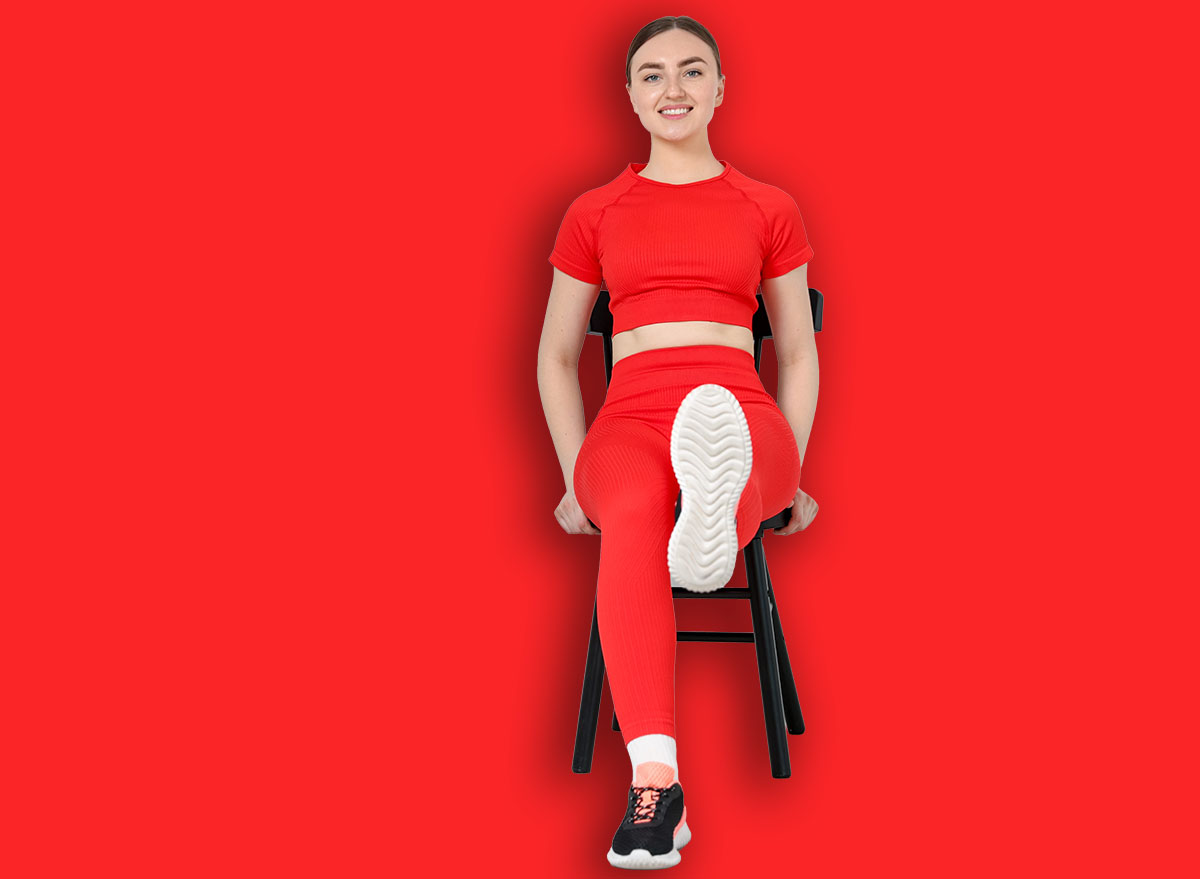
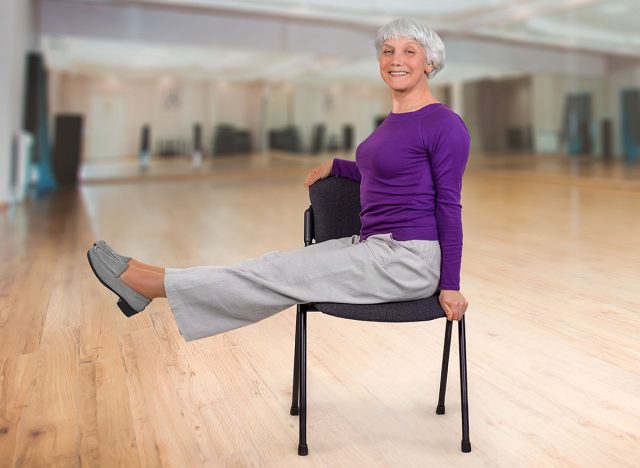
- Seated Knee Extensions
- Seated Marches
- Chair Push-Ups
Directions
Perform the exercises in the order listed. Move with control and focus on feeling the target muscles working during each rep. Rest only as prescribed. The full sequence takes about seven minutes to complete. Read on for the detailed instructions.
Chair Squats
Chair squats strengthen the quads and glutes, which play a major role in standing, walking, and climbing stairs. This movement reinforces a fundamental pattern your body uses every day. I like starting here because it quickly and safely wakes up the largest muscle groups. Over time, stronger legs help improve both muscle tone and lower-body confidence.
Muscles Trained: Quadriceps, glutes, hamstrings, and core.
How to Do It:
- Stand in front of your chair with your feet hip-width apart.
- Brace your core and keep your chest lifted.
- Push your hips back and bend your knees.
- Lower until you lightly touch the chair.
- Drive through your heels to stand tall.
- Repeat for the target reps.
Recommended Sets and Reps: Perform 2 sets of 10 to 12 reps. Rest for 30 seconds between each set.
Best Variations: Pause chair squats, slow tempo squats, hands-free squats.
Form Tip: Keep your weight through your heels as you stand.
Seated Knee Extensions
Seated knee extensions target the front of the thighs, an area that often loses strength with age. This movement builds muscular endurance while supporting knee stability. I program this frequently because it allows focused quad work in a very joint-friendly position. Consistent reps help restore firmness through the upper legs.
Muscles Trained: Quadriceps and hip flexors.
How to Do It:
- Sit tall near the front of your chair.
- Place your feet flat on the floor.
- Brace your core lightly.
- Extend one leg until it is straight.
- Pause briefly at the top.
- Lower with control and switch sides.
- Continue alternating for the set.
Recommended Sets and Reps: Perform 2 sets of 12 reps per side. Rest for 30 seconds between each set.
Best Variations: Slow-tempo extensions, hold at the top, alternating rhythm.
Form Tip: Fully straighten your knee at the top of each rep.
Seated Marches
Seated marches strengthen the hip flexors and core while improving coordination. This exercise helps reinforce smooth leg drive during walking and daily movement. I often include marches because they create steady muscular work without joint stress. Over time, they help the lower body feel more responsive and controlled.
Muscles Trained: Hip flexors, core, and lower abdominals.
How to Do It:
- Sit tall on your chair with your hands resting at your sides.
- Brace your core and keep your chest lifted.
- Lift one knee toward your chest.
- Lower with control.
- Lift the opposite knee.
- Continue alternating for the full set.
Recommended Sets and Reps: Perform 2 sets of 30 seconds. Rest for 30 seconds between each set.
Best Variations: Slower marches, higher knee lifts, hands free marches.
Form Tip: Stay tall through your spine as you lift each knee.
Chair Push-Ups
Chair push-ups strengthen the chest, shoulders, and triceps while staying approachable and joint-friendly. This movement builds upper-body tone and reinforces core stability. I program these often because they scale well for many fitness levels. Consistent pushing strength supports better posture and upper body firmness.
Muscles Trained: Chest, triceps, shoulders, and core.
How to Do It:
- Place your hands on the edge of the chair.
- Step your feet back until your body forms a straight line.
- Brace your core and keep your neck neutral.
- Bend your elbows to lower your chest toward the chair.
- Press through your hands to return to the start.
- Repeat for the target reps.
Recommended Sets and Reps: Perform 2 sets of 8 to 12 reps. Rest for 30 seconds between each set.
Best Variations: Narrow grip push-ups, slower tempo push-ups, elevated hands push-ups.
Form Tip: Keep your body in one straight line from head to heels.
Best Daily Habits to Restore Muscle Tone After 60

Muscle tone improves fastest when short strength sessions pair with supportive daily habits. Your body responds well to frequent activation, steady nutrition, and consistent movement throughout the week. In my coaching experience, adults over 60 see the biggest improvements when they focus on repeatable routines they can maintain long term. Small efforts performed regularly tend to create the strongest results. Stay patient and keep showing up. Use the tips below to reinforce your progress.
- Train most days of the week: Frequent stimulus helps maintain muscle tone.
- Prioritize protein intake: Aim for 25 to 30 grams per meal.
- Move throughout the day: Regular walking supports circulation and muscle activity.
- Focus on controlled reps: Quality movement builds better muscle engagement.
- Progress gradually over time: Small increases in reps keep muscles adapting.
- Stay consistent with short routines: Repeatable habits drive long-term success.
Stick with this seven-minute chair routine and these habits, and many adults over 60 begin to notice firmer muscles, better movement control, and stronger daily confidence.
References:
- Distefano, Giovanna, and Bret H Goodpaster. “Effects of Exercise and Aging on Skeletal Muscle.” Cold Spring Harbor perspectives in medicine vol. 8,3 a029785. 1 Mar. 2018, doi:10.1101/cshperspect.a029785
- Arnold, W David, and Carlos J Padilla Colón. “Maintaining Muscle Function Across the Lifespan: The State of Science.” American journal of physical medicine & rehabilitation vol. 99,12 (2020): 1171-1176. doi:10.1097/PHM.0000000000001429