These 4 Exercises Tone Your Chest Better Than Hour-Long Gym Sessions After 50
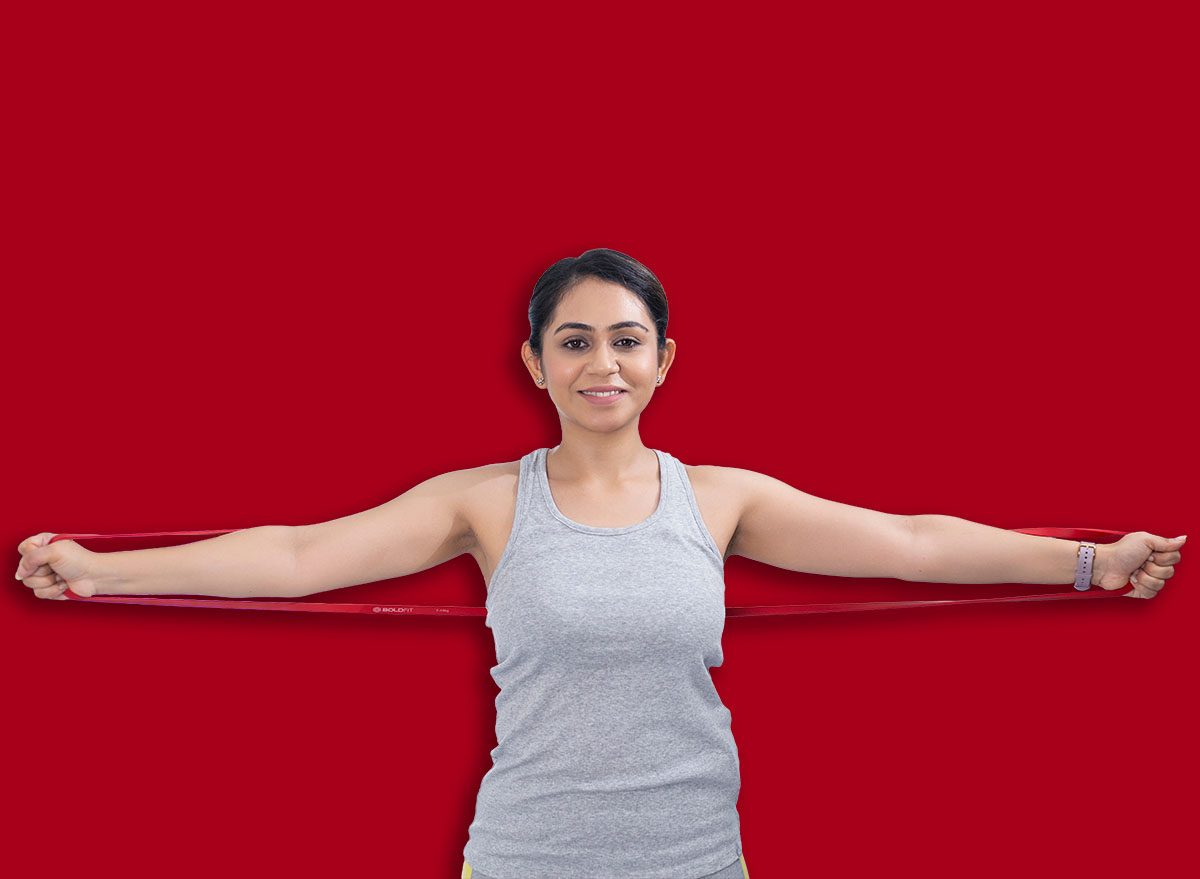

When it comes to building chest strength after 50, you might assume that spending more time in the gym is the best way to develop a stronger, more defined upper body. But in reality, the quality of your training matters far more than the quantity.
As you age, maintaining muscle mass becomes more essential than ever. Beginning around age 50, adults experience an accelerated decline in muscle mass and strength, a process known as sarcopenia. The good news? Research shows that strength training remains one of the most effective ways to preserve muscle tissue, maintain functional strength, and support healthy aging.
If you’re looking to tone your chest in particular, you don’t need marathon workouts or complicated gym equipment. Some of the most effective chest exercises can be done at home in the morning using basic equipment like dumbbells, resistance bands, or even a countertop.
To learn more, we chatted with James Bickerstaff, CPT, a personal trainer at OriGym, who shares four top-notch exercises for sculpting your chest better than hour-long gym sessions after 50. “These exercises are great for training your chest, shoulders, and triceps,” explains Bickerstaff. “They’re also significantly easier on the joints and are far more accessible as a result.”
Read on for the exercises and instructions on how to do the exercises, step by step. Then, when you’re done, be sure to check out The 6 Best Exercises for Men to Stay Lean and Strong After 60.
Incline Push-ups
Incline push-ups are one of the most effective upper-body exercises for adults over 50 because they train multiple muscle groups at once while reducing the load compared to floor push-ups.
How to do it:
- Place your hands on a sturdy bench, countertop, or elevated surface.
- Position your hands slightly wider than shoulder-width apart.
- Walk your feet backwards until your body forms a straight line.
- Engage your core and keep your shoulders down.
- Slowly bend your elbows to lower your chest toward the surface.
- Keep your body in a straight line from head to toe.
- Lower under control until your chest is close to the surface.
- Push through your palms to return to the starting position.
- Perform two to three sets of 8 to 15 reps, resting for 60 to 90 seconds between sets.
Dumbbell Chest Press
Unlike machines that help guide your movement path, this classic chest-building exercise challenges your chest’s stabilizing muscles. “Dumbbells help to improve muscle balance while effectively targeting your chest to build strength,” says Bickerstaff.
How to do it:
- Lie on a bench or the floor holding a dumbbell in each hand.
- Choose a weight that you can move with control.
- Position the dumbbells at chest level.
- Keep your feet firmly planted on the floor.
- Engage your core and keep your back straight.
- Press the weights up until your arms are almost straight.
- Pause for one to two seconds at the top of the movement.
- Lower the weights slowly back to chest level.
- Complete two to three sets of 8 to 12 reps. Rest for 60 to 90 seconds between sets.
Chest Squeeze Press
The chest squeeze press places continuous tension on your pectoral muscles without requiring heavy weight. “Keeping consistent tension on your chest throughout this movement encourages strong muscle activation without requiring you to lift heavy weights,” says Bickerstaff.
How to do it:
- Lie on a bench or the floor holding two dumbbells.
- Press the dumbbells together directly above your chest.
- Squeeze the dumbbells together during the movement.
- Slowly lower the weights toward your chest.
- Keep your elbows under control as you lower the dumbbells.
- Stop when the weights reach chest level.
- Press the weights back up.
- Continue squeezing the dumbbells together throughout the movement.
- Aim for two to three sets of 10 to 15 reps, resting for 45 to 60 seconds between sets.
Resistance Band Chest Fly
Resistance bands provide constant tension throughout the entire range of motion, making them an excellent tool for toning your chest. They also place less stress on your joints than most free-weight exercises while allowing for a greater range of motion.
How to do it:
- Anchor a resistance band behind you at chest height.
- Hold one handle in each hand.
- Step forward slightly to create tension in the band.
- Stand tall with your chest lifted.
- Maintain a slight bend in your elbows.
- Bring your hands together in front of your chest.
- Squeeze your chest muscles for one to two seconds at the midpoint.
- Slowly return to the starting position.
- Perform two to three sets of 10 to 15 reps. Rest for 45 to 60 seconds between sets.