The 6 Best Exercises for Men to Stay Lean and Strong After 60

A man can lose a surprising amount of strength before he notices it in the mirror. It usually shows up somewhere else first: the bag of mulch feels heavier, the stairs feel slower, the push off the floor takes more effort, or the lower back starts doing jobs the hips used to handle. Staying lean and strong after 60 is about keeping those small drop-offs from becoming the new normal.
The right exercises should make a man feel more capable when he leaves the workout, not just tired. They should build muscle where it matters, challenge balance without turning training into a circus act, and keep the core involved while the arms and legs produce force. That’s the difference between exercise that simply burns time and exercise that keeps the body useful.
I’ve coached enough older lifters to know the best results usually come from fewer, better choices. A man who can lunge under control, hinge with strength, row without losing posture, press his own bodyweight, rotate through his core, and carry load with confidence has a strong foundation. The exercises below are built around that standard.
Dumbbell Walking Lunges
Dumbbell walking lunges train your quads, glutes, hamstrings, calves, hips, grip, and core. Each step challenges one leg to lower, stabilize, and drive you forward, which makes the exercise excellent for building strength and balance after 60. The dumbbells also increase total-body demand because your grip, posture, and midsection have to stay locked in while your legs work. Use a controlled stride and keep each rep smooth.
Muscles Trained: Quadriceps, glutes, hamstrings, calves, hips, core, grip.
How to Do It:
- Stand tall with a dumbbell in each hand.
- Brace your core and keep your shoulders level.
- Step forward with one foot.
- Lower into a lunge until both knees bend comfortably.
- Press through your front foot to stand and step forward.
- Continue alternating legs with controlled steps.
Recommended Sets and Reps: Perform 3 sets of 8 to 10 reps per leg. Rest for 60 seconds between each set.
Best Variations: Bodyweight walking lunges, reverse lunges, goblet walking lunges, assisted lunges.
Form Tip: Keep your front foot planted and stand tall between steps.
Bent-Over Dumbbell Rows
Bent-over dumbbell rows train your upper back, lats, rear shoulders, biceps, grip, and core. A strong back helps your posture, supports your shoulders, and balances the pressing work from push-ups. The hinge position also makes your trunk work while your arms and back pull the weights. Use a weight you can control without standing up between reps or swinging the dumbbells.
Muscles Trained: Upper back, lats, rear delts, biceps, core, grip.
How to Do It:
- Stand with your feet hip-width apart and hold a dumbbell in each hand.
- Soften your knees and hinge your hips back.
- Brace your core and keep your spine long.
- Let the dumbbells hang below your shoulders.
- Pull your elbows back toward your ribs.
- Lower the dumbbells with control.
Recommended Sets and Reps: Perform 3 sets of 8 to 12 reps. Rest for 45 to 60 seconds between each set.
Best Variations: Single-arm dumbbell rows, supported dumbbell rows, paused rows, chest-supported rows.
Form Tip: Pull through your elbows and keep your torso steady.
Push-Ups
Push-ups train your chest, shoulders, triceps, core, and glutes. They’re one of the best upper-body strength builders because your whole body has to stay organized while your arms press. After 60, push-ups help maintain the pressing strength you use when getting off the floor, bracing with your hands, or pushing yourself up from a low surface. Start with an incline if needed and lower the angle as your strength improves.
Muscles Trained: Chest, shoulders, triceps, core, glutes.
How to Do It:
- Place your hands on the floor, a wall, a bench, or a sturdy, elevated surface.
- Step your feet back until your body forms a straight line.
- Brace your core and squeeze your glutes.
- Lower your chest toward your hands with control.
- Bend your elbows to at least 90 degrees if your strength and shoulders allow.
- Press through your hands to return to the starting position.
Recommended Sets and Reps: Perform 3 sets of 6 to 12 reps. Rest for 45 to 60 seconds between each set.
Best Variations: Wall push-ups, incline push-ups, knee push-ups, full push-ups.
Form Tip: Keep your elbows angled slightly back and press through your whole hand.
Kettlebell Deadlifts
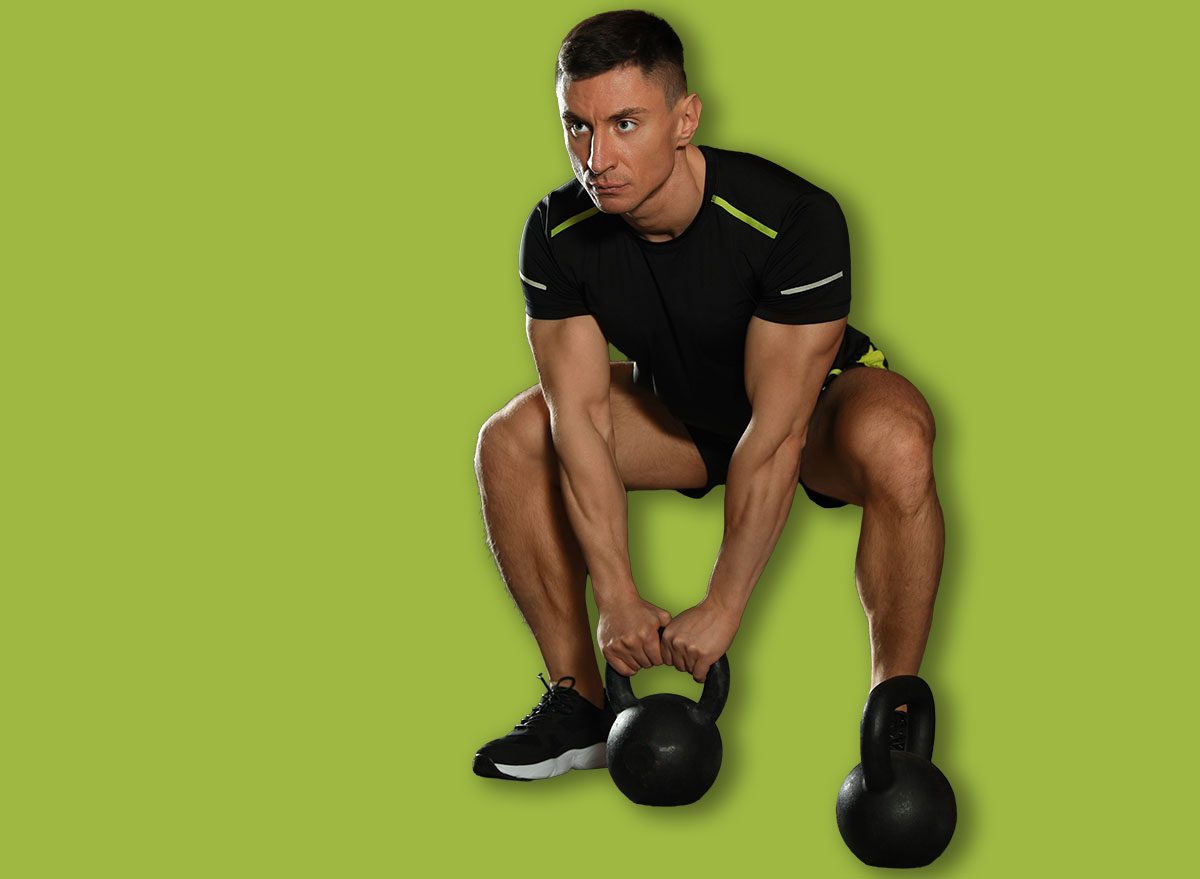
Kettlebell deadlifts train your glutes, hamstrings, lower back, core, grip, and upper back. The hinge pattern helps you build strength through the backside of your body, which supports lifting, walking, climbing stairs, and standing tall. This exercise is also efficient because it trains large muscles with a simple setup. Keep the kettlebell close and make your hips drive the movement.
Muscles Trained: Glutes, hamstrings, lower back, core, grip, upper back.
How to Do It:
- Stand with your feet hip-width apart and place a kettlebell between your feet.
- Brace your core and soften your knees.
- Push your hips back and reach both hands to the kettlebell handle.
- Keep your chest lifted and your spine long.
- Press through your feet to stand tall with the kettlebell.
- Hinge your hips back and lower the kettlebell with control.
Recommended Sets and Reps: Perform 3 sets of 8 to 12 reps. Rest for 60 seconds between each set.
Best Variations: Dumbbell deadlifts, elevated kettlebell deadlifts, suitcase deadlifts, kettlebell Romanian deadlifts.
Form Tip: Keep the weight close to your body and finish each rep tall without leaning back.
Rotational Pallof Press
Rotational Pallof presses train your abs, obliques, deep core, glutes, hips, and shoulders. The band or cable adds resistance while you rotate, which teaches your core to control movement rather than rush through it. This makes the exercise useful for men over 60 because the core must stay strong as your torso turns, much like when reaching, lifting, carrying, or rotating during daily tasks. Move slowly and keep the range clean.
Muscles Trained: Abs, obliques, deep core, glutes, hips, shoulders.
How to Do It:
- Anchor a resistance band at chest height.
- Stand sideways to the anchor and hold the band at your chest.
- Step away until the band has moderate tension.
- Brace your core and press your hands straight out.
- Rotate slightly away from the anchor with control.
- Return to center, bring your hands back to your chest, and switch sides after your reps.
Recommended Sets and Reps: Perform 3 sets of 8 to 10 reps per side. Rest for 30 to 45 seconds between each set.
Best Variations: Standard Pallof presses, Pallof press holds, band woodchops, cable Pallof presses.
Form Tip: Rotate through a controlled range and keep your feet rooted.
Farmer Carries
Farmer carries train your grip, shoulders, upper back, core, glutes, and legs. They’re simple, but they’re one of the best exercises for staying lean and strong because your whole body has to maintain posture while you carry load. Strong grip and trunk stability also carry over to daily tasks, from hauling groceries to moving yard equipment. Walk with control and choose a weight that challenges your posture without pulling you out of position.
Muscles Trained: Grip, core, shoulders, upper back, glutes, legs.
How to Do It:
- Stand tall with a dumbbell or kettlebell in each hand.
- Brace your core and keep your shoulders level.
- Walk forward with slow, controlled steps.
- Keep your chest tall and your ribs stacked over your hips.
- Continue walking for the full set.
- Set the weights down safely with a hip hinge.
Recommended Sets and Reps: Perform 3 carries of 30 to 60 seconds. Rest for 60 seconds between each carry.
Best Variations: Suitcase carries, lighter farmer carries, trap-bar carries, marching farmer holds.
Form Tip: Keep your steps quiet and your posture tall from start to finish.
How Men Can Stay Lean and Strong After 60

The best exercises after 60 cover the movement patterns that keep your body useful: lunge, hinge, push, pull, rotate, and carry. These patterns build muscle, challenge your core, support your posture, and help you maintain the strength you need for daily life.
- Train big movements first: Lunges, deadlifts, rows, push-ups, and carries use more muscle than small isolation moves. More working muscle creates a stronger training effect.
- Keep the final reps challenging: Choose weights or variations that make the last few reps feel meaningful while your form stays clean.
- Use a circuit when you want conditioning: Perform one set of each exercise, rest 60 to 90 seconds, and repeat for 2 to 4 rounds. This keeps your heart rate up while still building strength.
- Progress gradually: Add reps, increase load, extend carry time, slow the lowering phase, or reduce rest as your fitness improves.
- Support the work outside training: Daily walking, protein-focused meals, hydration, and quality sleep help your strength work show up through better body composition.
Staying lean and strong after 60 is a product of consistent, well-chosen work. Train the major patterns, keep your reps controlled, and build a routine you can repeat week after week.
References
- Halma M, Marik P, Varon J, Tuszynski J. Reversing Decline in Aging Muscles: Expected Trends, Impacts and Remedies. J Funct Morphol Kinesiol. 2025 Jan 11;10(1):29. doi: 10.3390/jfmk10010029. PMID: 39846670; PMCID: PMC11755481.
- Krzysztofik M, Wilk M, Wojdała G, Gołaś A. Maximizing Muscle Hypertrophy: A Systematic Review of Advanced Resistance Training Techniques and Methods. Int J Environ Res Public Health. 2019 Dec 4;16(24):4897. doi: 10.3390/ijerph16244897. PMID: 31817252; PMCID: PMC6950543.