Over 50? If You Can Perform These 5 Core Moves, You’re in Good Shape
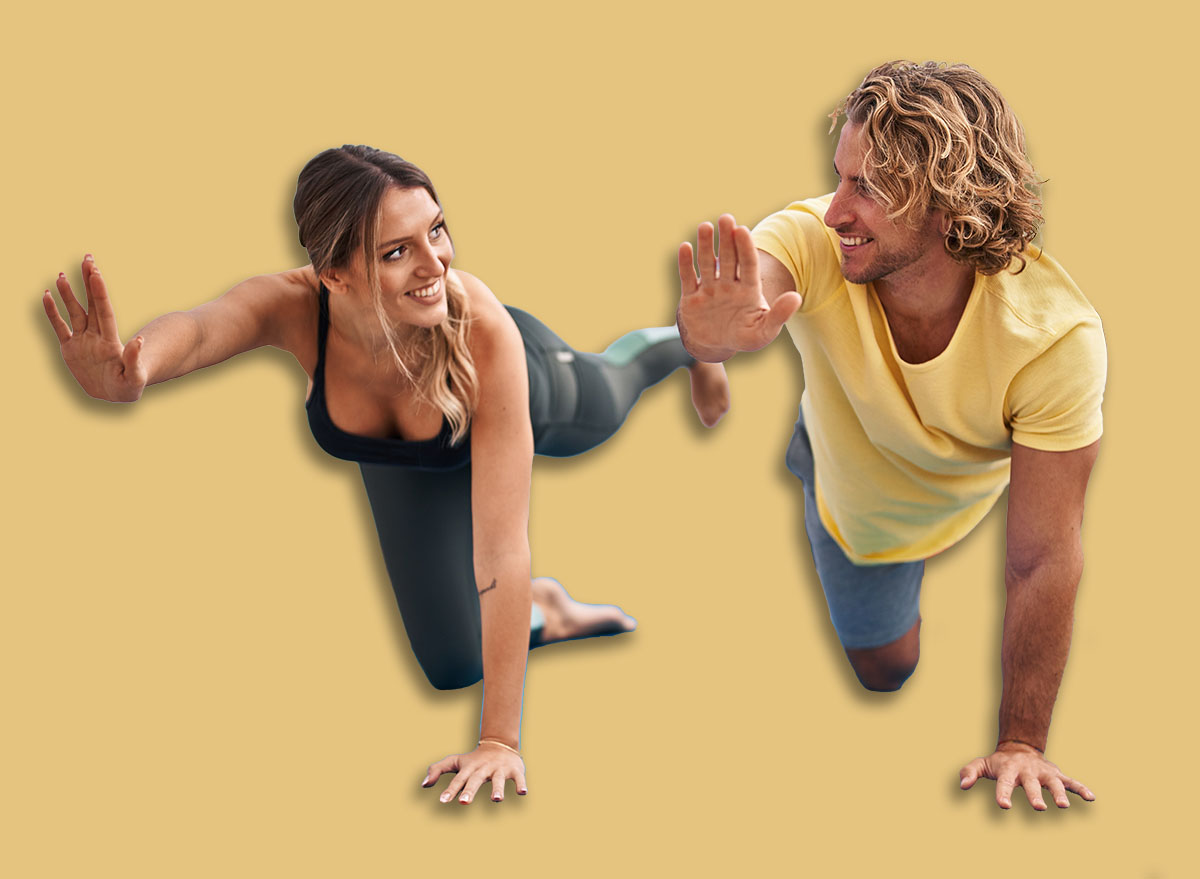

When you hear the term “core strength,” what likely comes to mind is six-pack abs or endless crunches. But after 50, core fitness has much less to do with aesthetics and much more to do with how well your body moves and functions during daily life.
Your core acts as your body’s central support system, helping to improve your posture, transfer force between your upper and lower body, and reduce stress on your joints. A strong core can also boost your balance and mobility, both of which become essential for healthy aging. Additionally, research shows that reduced core strength is associated with reduced balance and increased fall risk in older adults.
But with all the online noise, how can you determine which core moves are best for determining your core strength after 50? To find out, we spoke with James Brady, CPT, a certified personal trainer at OriGym, who shares his top five moves. If you can perform these movements with good form and control, you’re likely in far better shape than many people your age.
Read on for the exercises and detailed instructions. Then, when you’re finished, be sure to check out these 5 Morning Exercises That Improve Balance Faster Than Yoga After 60.
Plank
Planks require you to hold your body in a straight line, which creates coordinated tension through your abs, shoulders, glutes, and lower back. “The plank is one of the best indicators of core endurance and overall stability after 50,” says Brady.
How to do it:
- Start on the floor resting on your forearms and toes.
- Position your elbows directly beneath your shoulders.
- Extend your legs behind you with your feet hip-width apart.
- Keep your entire body in a straight line.
- Engage your core and glutes.
- Avoid letting your hips sag or rise too high.
- Maintain steady breathing through your nose.
- Hold for 20 to 60 seconds, repeating for two to three rounds with 60 seconds of rest between.
Dead Bugs
Dead bugs challenge your coordination and core control while reducing strain on your lower back. Since your opposite limbs move simultaneously, dead bugs train your core to stabilize your spine during movement.
How to do it:
- Lie on your back with your arms extended toward the ceiling.
- Bend your knees to 90 degrees with your shins parallel to the floor.
- Press your lower back gently into the floor.
- Engage your core and slowly lower your right arm and left leg toward the floor.
- Stop before your lower back begins lifting off the ground.
- Return to the starting position with control.
- Repeat on the opposite side.
- Perform two to three sets of 10 to 12 reps per side, resting for 45 to 60 seconds between sets.
Bird Dogs
“Bird dogs strengthen the core while also improving balance and posture,” Brady explains. Plus, bird dogs train your body to stabilize itself during cross-body movement patterns.
How to do it:
- Start on all fours with your hands under your shoulders and your knees under your hips.
- Keep your spine neutral and your core engaged.
- Slowly extend your right arm forward while extending your left leg backward.
- Keep your hips level and avoid rotating your torso.
- Pause for one to two seconds at full extension.
- Return to the starting position and repeat on the opposite side.
- Complete two to three sets of 8 to 12 reps per side. Rest for 45 to 60 seconds between sets.
Russian Twists
Russian twists target your obliques (side abs) and rotational core muscles. Rotational strength becomes increasingly important with age because many daily activities, such as reaching, turning, and carrying objects, involve controlled twisting.
How to do it:
- Sit on the floor with your knees bent and your feet flat.
- Lean back slightly while keeping your spine neutral.
- Engage your core and lift your chest.
- Hold your hands together in front of your body.
- Rotate your torso to one side in a controlled motion.
- Return to the center.
- Rotate to the opposite side.
- Continue alternating sides.
- Aim for two to three sets of 16 to 20 total twists and rest for 45 to 60 seconds between sets.
Glute Bridges
“A strong core is not just about the abs,” Brady explains. “The glutes play a major role in pelvic stability and lower back support.”
How to do it:
- Lie on your back with your knees bent and your feet flat on the floor.
- Position your feet hip-width apart and rest your arms at your sides.
- Engage your core and press through your heels.
- Lift your hips until your body forms a straight line from shoulders to knees.
- Squeeze your glutes at the top of the movement.
- Pause for one to two seconds before lowering.
- Perform two to three sets of 12 to 15 reps. Rest for 45 to 60 seconds between sets.
- Source: https://pmc.ncbi.nlm.nih.gov/articles/PMC10588579/
- Source: https://www.academia.edu/20256785/Relationship_Between_Core_Stability_Functional_Movement_and_Performance
- Source: https://www.sciencedirect.com/science/article/abs/pii/S2468781222001217
- Source: https://pubmed.ncbi.nlm.nih.gov/41142736/
- Source: https://pubmed.ncbi.nlm.nih.gov/35428169/
- Source: https://pmc.ncbi.nlm.nih.gov/articles/PMC12548199/