4 Morning Exercises That Restore Hamstring Strength Faster Than Lunges After 60
Hamstrings are easy to ignore until they start acting like the parking brake got left on. You notice them when bending over feels tighter than it should, walking uphill takes more effort, or standing back up from a hinge makes your lower back volunteer for a job it didn’t apply for. After 60, the back of the legs can lose strength pretty quickly as sitting time increases and lower-body training becomes less consistent.
Lunges are useful, but they don’t always give the hamstrings the direct work they need. A lunge trains the whole leg, especially the quads and glutes, while hamstring strength usually comes back faster when you spend more time hinging, bridging, holding, and curling. Those patterns make the back of the legs control length, create tension, and help the hips drive movement.
In coaching, hamstrings are among the areas I like to rebuild with patience and precision. Fast reps don’t do much here. The sweet spot is controlled lowering, strong hip extension, and enough tension to make the hamstrings work without turning every rep into a lower-back negotiation. These four morning exercises fit that approach well because they’re simple, repeatable, and strong enough to wake up the backside of your legs before the day gets moving.
Banded Good Mornings
Banded good mornings train your hamstrings, glutes, and lower back while teaching your hips to hinge with control. As you push your hips back, your hamstrings lengthen under tension, which is exactly the kind of work they need to regain strength. Lunges can miss that direct hinge demand, but good mornings put the back of your legs in the driver’s seat. Better hinge strength carries into bending, lifting, walking uphill, and standing taller without your lower back taking over.
Muscles Trained: Hamstrings, glutes, lower back, core
How to Do It:
- Stand on the middle of a resistance band with your feet hip-width apart.
- Loop the band around your upper back or hold the ends near your shoulders.
- Brace your core and keep a slight bend in your knees.
- Push your hips back as your torso leans forward.
- Drive your hips forward to return to standing.
- Squeeze your glutes at the top of the rep.
Recommended Sets and Reps: Perform 3 sets of 10 to 15 reps. Rest for 45 seconds between each set.
Best Variations: Bodyweight good mornings, slower tempo good mornings, staggered-stance good mornings
Form Tip: Keep your back flat and move through your hips, not your spine.
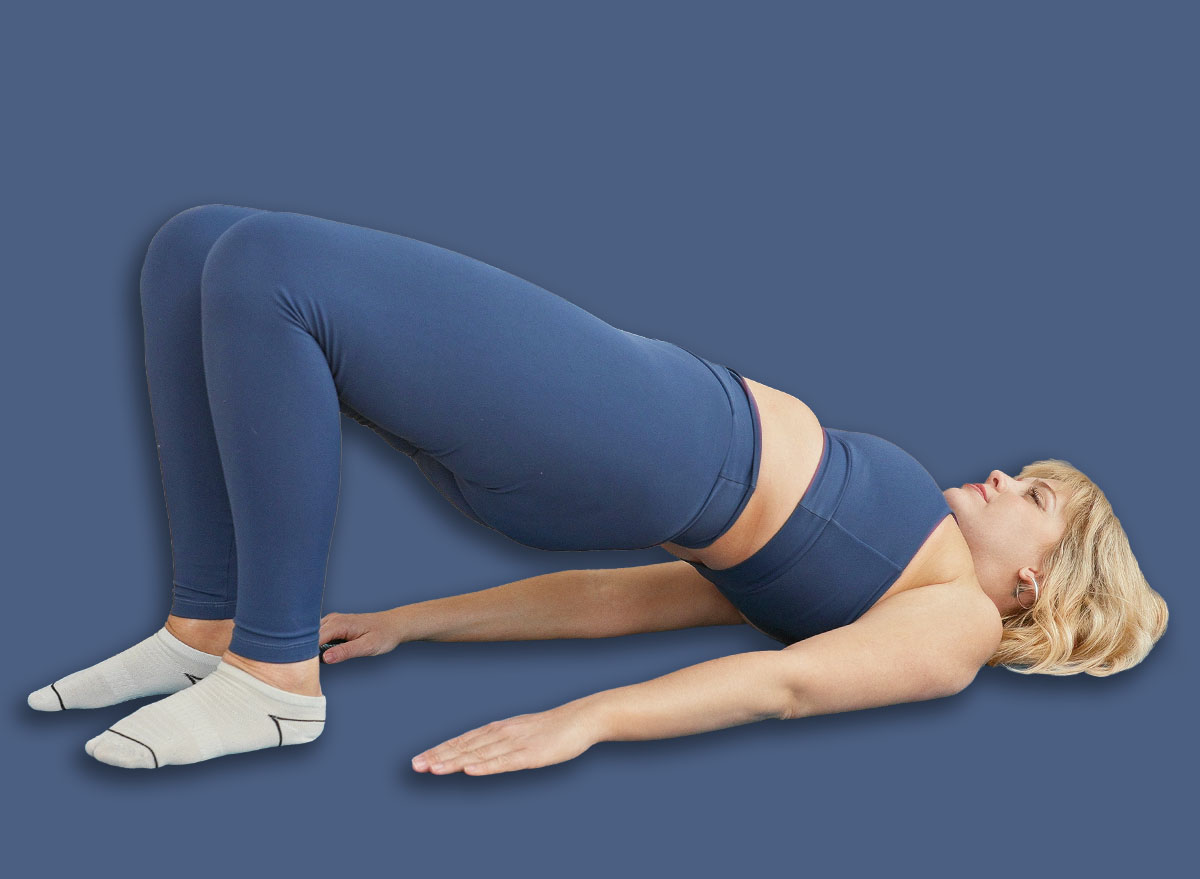
Glute Bridge Walkout
Glute bridge walkouts train your hamstrings and glutes while your core keeps your hips steady. As your feet move farther from your body, your hamstrings have to work harder to keep your hips lifted and maintain proper posture. That makes the movement a strong choice for restoring hamstring strength because the tension builds quickly without needing heavy equipment. Stronger bridge walkouts support walking, stairs, standing up, and keeping your hips active during daily movement.
Muscles Trained:
Hamstrings, glutes, core
How to Do It:
- Lie on your back with your knees bent and your feet flat on the floor.
- Press through your heels and lift your hips.
- Brace your core and squeeze your glutes.
- Walk your feet forward one small step at a time.
- Walk your feet back toward your body while keeping your hips lifted.
- Lower your hips with control when the set is complete.
Recommended Sets and Reps: Perform 3 sets of 6 to 8 walkouts. Rest for 45 to 60 seconds between each set.
Best Variations: Shorter walkouts, glute bridge holds, mini-band bridge walkouts
Form Tip: Keep your hips high and stop before your lower back starts doing the work.
Single-Leg Glute Bridge Hold
Single-leg glute bridge holds train one hamstring and glute at a time while your core keeps your pelvis from twisting. Holding the top position forces the working leg to stay under tension, which helps rebuild strength through the back of the leg without rushing through reps. Compared with lunges, this provides the hamstrings with a more focused challenge while still training hip control. That control matters every time you push off while walking, climb stairs, or stand from a seated position.
Muscles Trained: Hamstrings, glutes, core
How to Do It:
- Lie on your back with your knees bent and one foot flat on the floor.
- Extend your opposite leg or keep it bent over your hip.
- Brace your core and press through your planted heel.
- Lift your hips until your body forms a straight line from your shoulders to your knees.
- Hold the top position while squeezing your glute.
- Lower your hips with control and switch sides.
Recommended Sets and Reps: Perform 3 sets of 15 to 25 second holds per side. Rest for 30 to 45 seconds between each set.
Best Variations: Two-leg bridge holds, single-leg bridge reps, elevated bridge holds
Form Tip: Keep your hips level and press through your heel.
Slider Hamstring Curls
Slider hamstring curls train your hamstrings through a direct curl pattern while your glutes and core hold your hips up. As your heels slide away, the hamstrings have to control the lengthening phase, then pull your feet back in to finish the rep. This gives you hamstring work; lunges can’t fully match it because the backs of your legs handle the main action from start to finish. Stronger hamstring curls help with knee control, hip strength, walking power, and lower back protection during everyday movement.
Muscles Trained: Hamstrings, glutes, core
How to Do It:
- Lie on your back with your heels on sliders, towels, or a smooth surface.
- Press through your heels and lift your hips into a bridge.
- Brace your core and keep your hips lifted.
- Slide your heels away from your body with control.
- Pull your heels back toward your glutes.
- Lower your hips after completing each set.
Recommended Sets and Reps: Perform 3 sets of 6 to 10 reps. Rest for 60 seconds between each set.
Best Variations: Short-range slider curls, single-leg slider curls, eccentric-only slider curls
Form Tip: Move slowly on the way out and keep your hips from dropping.
How to Make Hamstring Work Pay Off After 60

Hamstrings respond well when you train them with control instead of speed. The back of your legs needs time under tension, a good hinge pattern, and enough direct work to rebuild strength without irritating your lower back. A few focused mornings each week can make a real difference, especially when the reps stay smooth and the positions stay clean.
- Own the hinge first: Good mornings teach your hips to move while your hamstrings control the motion. Keep the range comfortable and make your hips lead the rep.
- Use holds to build tension: Single-leg bridge holds give your hamstrings and glutes a steady strength signal. Hold a strong position instead of bouncing through quick reps.
- Control the lowering phase: Slider curls and good mornings give the hamstrings a lot of work on the way out or down. Slow that phase and keep tension through the back of your legs.
- Keep your lower back quiet: Brace your core, keep your ribs down, and stop the set when your lower back starts taking over. The hamstrings should feel like the main worker.
- Progress in small steps: Add a few seconds to your holds, use a stronger band, increase reps, or slow your tempo. Small changes build strength without making the routine feel like a grind.
Start with clean reps and a range you can control. When your hamstrings get stronger, bending, walking, climbing stairs, and standing up tend to feel smoother because the backs of your legs finally start pulling their weight again.
References
- Alshammari, Faris et al. “A novel approach to improve hamstring flexibility: A single-blinded randomised clinical trial.” The South African journal of physiotherapy vol. 75,1 465. 23 Apr. 2019, doi:10.4102/sajp.v75i1.465
- van den Tillaar, Roland et al. “COMPARISON OF HAMSTRING MUSCLE ACTIVATION DURING HIGH-SPEED RUNNING AND VARIOUS HAMSTRING STRENGTHENING EXERCISES.” International journal of sports physical therapy vol. 12,5 (2017): 718-727.