4 Standing Exercises That Restore Posture Faster Than Yoga After 60
Posture changes dramatically after 60. Tight hips, weak upper-back muscles, reduced core strength, and years of sitting often pull the body forward into rounded shoulders and a stiff spine. That posture shift affects much more than appearance. Poor alignment places extra strain on the neck, shoulders, hips, and lower back while reducing balance, walking efficiency, and overall movement confidence. Many adults turn to yoga hoping to fix posture, but difficult floor transitions and advanced flexibility demands often make consistent practice challenging.
Standing exercises offer a more practical solution because they train posture directly during upright movement. Instead of holding long stretches, these exercises strengthen the muscles responsible for keeping the spine tall and stable throughout daily life. The body learns how to maintain better alignment while standing, walking, reaching, and moving naturally. Many adults over 60 also find standing posture drills easier on the joints and more approachable than complex yoga routines.
The four exercises below strengthen the upper back, shoulders, hips, and core while improving spinal positioning and balance. Each movement restores muscular support around the spine without aggressive stretching or difficult transitions. Practice them consistently, and your posture will start feeling taller, stronger, and more natural throughout the day.
Wall Angels
Wall angels strengthen the upper back and shoulders while teaching the body how proper posture should feel. Many adults over 60 develop rounded shoulders from years of sitting, driving, and looking downward during daily activity. This exercise reverses that pattern by forcing the upper spine and shoulder blades into stronger alignment against the wall. The sliding arm motion also improves shoulder mobility while strengthening the muscles responsible for keeping the chest lifted. Unlike many yoga poses that depend heavily on flexibility, wall angels focus on muscular control and posture awareness simultaneously. Adults often notice immediate improvement in upper-body positioning after performing this movement consistently.
How to Do It
- Stand with your back against a wall
- Press your head, upper back, and hips gently into the wall
- Raise your arms into a goalpost position
- Keep your elbows and wrists near the wall
- Slowly slide your arms upward
- Pause briefly at the top
- Lower with control
- Perform 10 to 12 repetitions.
Standing Shoulder Blade Squeezes
Strong posture depends heavily on strong muscles between the shoulder blades. When those muscles weaken, the chest collapses forward and the neck absorbs extra stress throughout the day. Shoulder blade squeezes strengthen the upper back while restoring better alignment through the shoulders and spine. Many adults over 60 carry chronic tension through the neck because the upper-back muscles stop supporting posture properly. This movement rebuilds that support while encouraging the chest to stay open and upright during standing movement. Controlled repetition creates stronger muscular endurance through the exact muscles responsible for healthy posture.
How to Do It
- Stand tall with your chest lifted
- Relax your shoulders downward
- Pull your shoulder blades backward slowly
- Squeeze gently between the shoulder blades
- Hold for 2 to 3 seconds
- Release with control
- Avoid shrugging your shoulders upward
- Perform 12 to 15 repetitions.
Standing Marches
Standing marches improve posture by strengthening the core, hips, and stabilizing muscles that support upright movement. Many adults lose posture control because the deep abdominal muscles stop activating consistently during walking and standing. This exercise forces the core to stabilize while the legs move rhythmically beneath the body. The repeated balancing action also strengthens coordination and lower-body control simultaneously. Adults over 60 often notice smoother walking mechanics and improved balance after practicing standing marches regularly. The exercise trains posture dynamically instead of relying only on static stretching positions.
How to Do It
- Stand tall with feet hip-width apart
- Tighten your core gently
- Lift one knee upward
- Swing the opposite arm naturally
- Lower slowly with control
- Alternate sides continuously
- Keep your chest lifted throughout
- Perform 20 total marches.
Overhead Reach Pulls
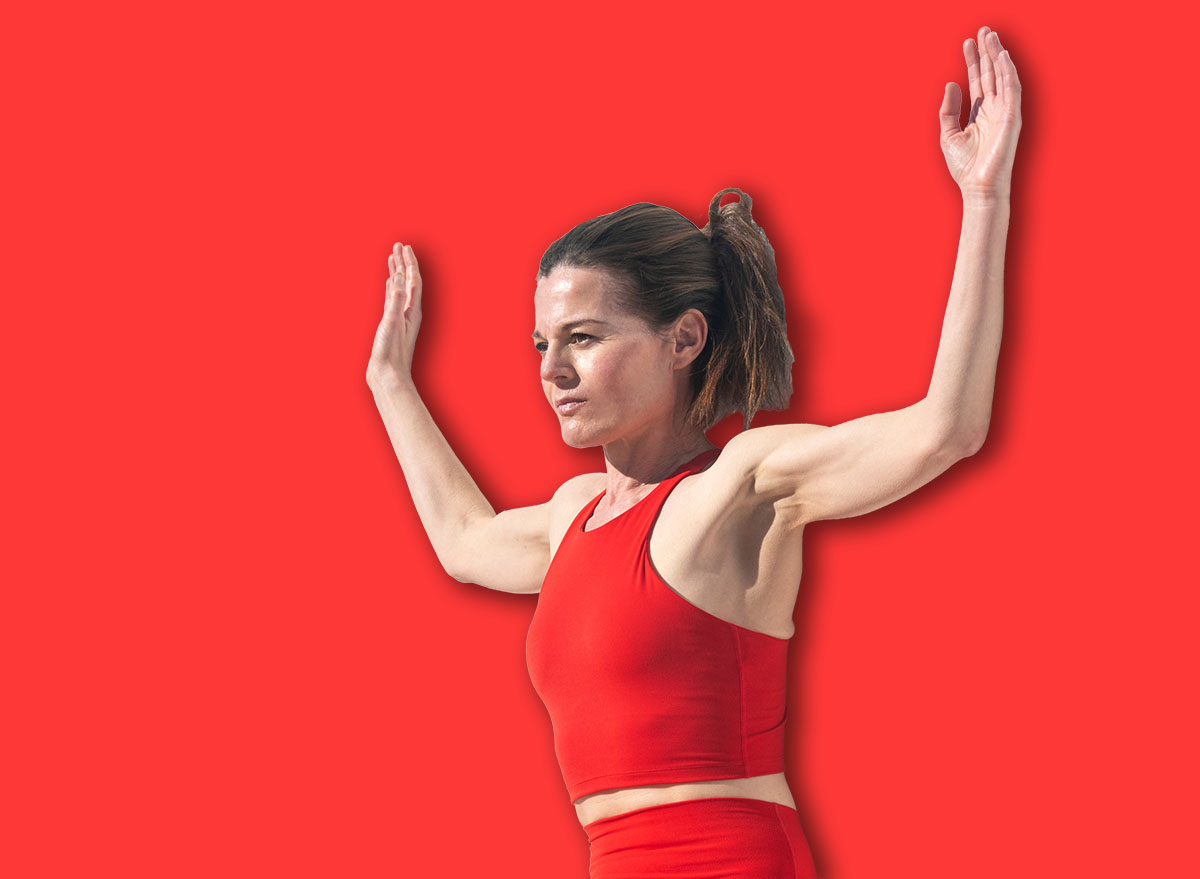
Overhead reach pulls strengthen the upper back, shoulders, and core while improving spinal extension and mobility. Many adults over 60 stop reaching overhead regularly, causing the shoulders and upper spine to stiffen into a rounded position. This movement restores overhead mobility while forcing the upper back to stabilize during every repetition. The pulling action also activates the muscles surrounding the shoulder blades, which play a massive role in maintaining upright posture. Adults often feel taller and looser in the upper body after adding overhead movement consistently. Controlled repetition improves both mobility and muscular endurance without aggressive stretching.
How to Do It
- Stand tall with feet shoulder-width apart
- Raise both arms overhead
- Tighten your core slightly
- Pull your elbows downward toward your sides
- Squeeze your shoulder blades together
- Extend your arms upward again
- Move slowly with control
- Perform 12 to 15 repetitions.